


by Peter Morrell

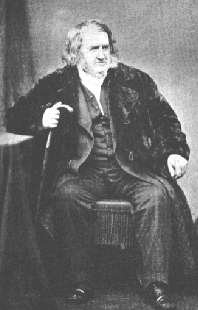
Dr Thomas SkinnerDr. Thomas Skinner MD [1825-1906]
Dr. Skinner was born and educated in
Edinburgh. Before becoming a homeopath he was a respected gynaecologist and obstetrician who
had worked very closely with Sir James Young Simpson [1811-1870], Professor of Midwifery at
Edinburgh and pioneer of the use of Chloroform anaesthesia [Concise Dictionary National
Biography, 1995, p.1751].
‘Eventually Professor J Y Simpson of Edinburgh himself inhaled a number
of vapours, and in 1847 he found that chloroform was the most useful…it soon came into
general use as the first anaesthetic.’ [Derry & Jarman, 1979, p.179]Skinner maintained to the end that
chloroform is ‘as safe as milk’. He also developed the Skinner mask for the
administration of chloroform during anaesthesia.Skinner began his medical studies in 1849,
graduating MD 1853 at St Andrews. Skinner took Simpson’s Gold Medal in Gynaecology and
Obstetrics in 1855-6, after being about 3 years in practice in Dumfriesshire. He became
Simpson’s private assistant at his residence in Edinburgh and could scarcely have avoided
taking on his views and bias as regards the great contest between the old school of medicine
and homeopathy. He went to Liverpool in 1859 and here he enjoyed a busy consulting practice
[allopathic] for a number of years.He became converted to homeopathy in 1875
in Liverpool, through treatment for his own health problems, by Dr. Edward Berridge
[1844-1920]. Having been cured with a single dose of high potency Sulphur [MM powder], the
Dramatic effect this dose had upon him was so profound and so unexpected on his part, that
it is hardly surprising that Skinner became such a thoroughgoing high-potency advocate
[Blackie, The Patient Not the Cure, 1976, London, p.158].He visited the US in 1876 and developed a
centesimal fluxion machine for making high potencies and named after him the Skinner Machine
[see also Munz, 1997, pp.26-29; see also Bodman, 1970, p.189]. Skinner thus became a very
influential figure, linking US and British homeopathy, and is often linked by name to other
high-potency prescribers of that period [‘high potency fanatics’ as Dudgeon sometimes
referred to them: see his Lectures, 1853, p.143 and p.407] like Fincke, Swan, Lippe,
Guernsey, Boericke et al. These were people who were at the forefront of the development of
the higher centesimal potencies and of investigating their clinical use, mainly in the
1860-80 period.
Dr A. Lippe
Dr H.N. Guernsey
Dr W. BoerickeDr. Clarke knew him well, and wrote ‘A
Biographical Sketch of Dr. Skinner’…
“There is evidence that Skinner did remarkable things with
homeopathic remedies during the succeeding years of his life. . . the following quote from
his own book is proof of how through he was in his learning. “Let every physician and
student of medicine do as I have done, carefully peruse for himself The Organon of
Hahnemann, his Chronic Diseases and his Materia Medica Pura and I warrant him that he will
rise from the perusal thereof a wiser man..’ [Speight, “Homeopathy, A Practical Guide
to Natural Medicine” Panther, 1979]


At one period of time he took a position as
a medical officer on board one of the transatlantic liners. After years of travel by land
and sea, though his general health was greatly improved, he was in no sense cured. It was
just at this time that he was incidentally ‘in a very remarkable way’ thrown into the arms
of homeopathy.
Skinner was a high potency man who went to
the US and developed a high potency centesimal fluxion machine and thus became very
influential as a figure linking US and British homeopathy. He was thus linked to other
high-potency prescribers like Fincke and Swann, and later Boericke and Kent
Dr. Skinner introduced Melitagrinum
[Allen, 1909, p.565] and has given a brief account of it in Homeopathic World xvii
p.89 [Allen, 1909]; Homeopathy and Gynaecology [4th edition 1903, mentioned in
Barker, 1931, p.403] and numerous articles chiefly to American homeopathic journals:
Medical Advance, Homeopathic Physician and N American quarterly
[see Homeopathic Medical Directory, 1895] Dynamization of Medicines, The
Organon, 1, 1878 p.45, and 2, 1879 p.400, Dr. Skinner’s Centesimal Fluxion
Potentiser, The Organon, 1, 1878, p.53 [see Winston, 1989; also Munz,
1997, pp.26-29], Homeopathy in Relation to The Diseases of Females [1875],
Melitagrinum, Homeopathic World XVII, 1882, p.89, Nectrianinum, Homeopathic
World XXXV, 1900, p.533.
Sir James Young
Simpson
Professor Sir James Young Simpson
, 1811-70, Professor of Obstetrics at Edinburgh University Medical School, 1st to
use chloroform in surgery and in labour as an anaesthetic; friend and teacher of Skinner and
Drysdale; not a homeopath, but ahead of his time as developer of single remedy prescribing;
fierce critic of polypharmacy; great influence over Skinner [his protégé].
Skinner published: Homeopathy, Its
Tenets and Tendencies [1853, Barker, 1931, p.403], A Practical View of Homeopathy
[BHA Lib]. Simpson was an allopath who taught Skinner in Edinburgh, and was certainly ‘the
foremost gynaecologist of his day’ [Barker, 1931, p.3].
Dr. Edward William Berridge [1844-1920]

The Liverpool
Homoeopathic Hospital
Dr. Berridge taught & influenced
Skinner. He was an early ‘Kentian’ prescriber. He graduated MB BS London 1867, and MD
Homeopathic Medical College Philadelphia 1869, post-graduate school of homeopathy 1892,
Member International Hahnemannian Association 1880, Member Hahnemann Academy of New York
1875, Medical Officer at Liverpool Homeopathic Dispensary 1868-9.
Berridge is widely acknowledged as one of
the most important teachers of homeopathy in England and especially in Liverpool. He was a
high potency prescriber who had trained in Philadelphia. He trained Clarke, Burnett,
Skinner, Goldsborough and many others. He is also very typical in the fact that he held
formally accepted British medical qualifications as well as those in homeopathy from the USA
[see Bodman, 1970, p.189]. Almost a ‘belt and braces’ approach which guaranteed him work on
both sides of the Atlantic if he so wished.