

by Peter Morrell

Kent’s Morality
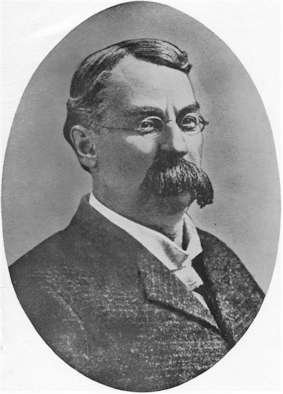
Dr J.T. KentDisease might be seen as an entirely human
phenomenon. It probably also reflects the fact that nature ‘in the raw’ is in a state of
near-perfect balance and harmony, which contrasts with the many conflicts and disharmonies
of the world of human affairs.We can also argue that perhaps it is the
‘moral uprightness’ of animals which protects them from disease. By ‘moral uprightness’
I mean their purity and the way they stick very strictly to their received pathways in life,
never deviating from ingrained habit patterns and conventionalised patterns of accepted
behaviour. By contrast, humans seem to lack these ingrained habit patterns and to conduct
themselves in various diverse ways driven on according to their own innate willpower. No
doubt Kent, and other religious moralists, would tend to regard ‘the way you live your
life’ as being very intimately bound up with the quality of such a life [on a spiritual
basis] and its relative ‘sickness’ with regard to the possible experience of suffering,
symptoms and signs of disorder, imbalance and disease. Such moralists, as we shall see, do
regard disease as having a moral dimension, and of very largely deriving from slack morals.Kent took the view that the basis for this
human ‘origin’ of disease is moral. That means that we have disease because we have lost
a moral order for our lives, and that it is a direct and inevitable result. Are the two
equated at all?We don’t have to search very hard to find a
mass of moral ideas within homeopathy which illustrate how puritanical and moralising
homeopaths tend to be. The following quotes from Kent’s Lectures and from his
Lesser Writings reveal a very rich seam of such material:
“You cannot divorce medicine and theology. Man exists all the way
down from his innermost spiritual to his outermost natural” [Kent, 1926, Lesser
Writings, p.641]“A man who cannot believe in God cannot become a homeopath.”
[ibid., p.671]‘The body became corrupt because man’s interior will became corrupt.’
[ibid., p.681]‘Man…becomes disposed to sickness by doing evil, through thinking
wrong…’ [ibid., p.664]‘Psora is the evolution of the state of man’s will, the ultimates
of sin.’ [ibid., p.654]‘This outgrowth, which has come upon man from living a life of evil
willing, is Psora.’ [ibid., p.654]‘Thinking, willing and doing are the 3 things in life from which
finally proceed the chronic miasms.’ [ibid., p.654]‘..had Psora never been established as a miasm upon the human
race…susceptibility to acute diseases would have been impossible…it is the
foundation of all sickness.’ [Kent, 1900, Lectures on Homeopathic Philosophy, p.126]‘Psora…is a state of susceptibility to disease from willing
evils.’ [ibid., p.135]‘The human race today walking the face of the earth, is but little
better than a moral leper. Such is the state of the human mind at the present day. To
put it another way everyone is Psoric.’ [ibid., p.135]‘Psora…would not exist in a perfectly healthy race.’ [ibid.,
p.133]‘As long as man continued to think that which was true and held
that which was good to the neighbour, that which was uprightness and justice, so long
man remained free from disease, because that was the state in which he was created.’
[ibid., p.134]‘The internal state of man is prior to that which surrounds him;
therefore, the environment is not the cause…’ [ibid., p.136]‘Diseases correspond to man’s affections, and the diseases upon the
human race today are but the outward expression of man’s interiors…man hates his
neighbour, he is willing to violate every commandment; such is the state of man today.
This state is represented in man’s diseases.’ [ibid., p.136]
‘The Itch is looked upon as a disgraceful affair; so is everything that
has a similar correspondence; because the Itch in itself has a correspondence with
adultery…’ [ibid., p.137]‘How long can this thing go on before the human race is swept from the
earth with the results of the suppression of Psora?’ [ibid., pp.137-8]‘Psora is the beginning of all physical sickness…is the underlying
cause and is the primitive or primary disorder of the human race.’ [ibid., p.126]‘…for it goes to the very primitive wrong of the human race, the very
first sickness of the human race that is the spiritual sickness…which in turn laid the
foundation for other diseases. [ibid., p.126]It seems pretty clear from these quotes
that Kent took a very puritanical and moral line about the origins of disease within the
human race and he apparently felt that Psora was equivalent to Original Sin or the Fall of
Man. That is the clear implication of the above remarks he made. He got himself into this
very strange position very largely from insisting that homeopathy necessarily involves a
religious dimension which places a moral duty upon the practitioner, and thus the homeopath
has a morally redeeming influence through cure. Thus he viewed the homeopath as a Godly
saviour who dispenses spiritual as well as physical cures; and that illness stems from a
corrupted state of man, which homeopathy can cure. Kent’s logic is rather like…’all sick
men are bad; Socrates is sick, therefore Socrates is bad’. And he also contends:‘all sickness originates from internal
causes; internal causes are spiritual; therefore all sickness has a spiritual basis’And then from there he equates internal and
spiritual causes as the miasms. Thus in his view the miasms are to be viewed as internal
spiritual sins, or derivatives of them.He also avers another line of argument:
‘all disease causes [inner world] are
invisible and nebulous; all potentised remedies are of a similar nature; thus potentised
substance, and especially the higher potencies, are the only means of curing disease [by
reaching into the subtle interior realm of disease causes]’ This also leads to his
oft-repeated adage of ‘the higher the deeper’. This probably also forms the basis for
his strong advocacy and use of the very highest potencies. In this manner we can analyse and
dissect Kent’s brand of homeopathy.Like the Mediaeval Churchmen, Kent shows a
remarkable devotion to deductive logic and an apparent ignorance of induction [knowledge
based upon experiment, data and the evidence of the senses] to which he also remains either
oblivious or contemptuous. There are some good parallels between Kent and Thomas Aquinas
[1225-74] in that both treat their subject matter with immense reverence as received dogma
which cannot even be questioned, and then build upon that base their towers of speculation
and philosophy. Both also tend in the direction of rigid dogmatism, excessive preciousness
and zealous devotion to ‘truth’ as received dogma, not as freedom of thought or
experimentation, towards which both seem utterly opposed.Kent, like many others seems to regard
illness as an unwanted evil, obtained through contamination, which must be ‘cleansed’ out of
the system by the healer. In most cultures the healer is thus regarded as an agent of divine
assistance, a cleanser, or purifier of souls.Kent seems to have causally linked together
two otherwise distinct and separate observations, which may not be causally connected at
all. Is it really true that lack of morals leads to disease? Are the sick to be viewed as
bad? And the bad as sick? And what of those who die of cancer, disfigured by arthritis,
ravaged by Human BSE, muscular dystrophy or MS? Are we to truly believe they ‘deserved’
those illnesses? And to have reaped what they have sown? Or is this all a nonsense? It is so
very hard to say. Perhaps Kent has mistaken ‘moral rectitude’ with health and purity and
hence concluded that disease must therefore stem, pretty fundamentally, from an amoral or
immoral position. But it is surely quite a different thing to arrive at such a conclusion
from sustained observation and contemplation of the natural world, than it is by deciding
that is the way things have to be, because some religious dogmas say so.
KENT’S INFLUENCE ON UK HOMEOPATHY
A very easy way to illustrate the effect
Kent had on UK homeopathy is to simply compare the potencies in use by several British
homeopaths from the early part of the century and from the 1930-80 period.It is well-known that all the early UK
homeopaths used the very lowest potencies. In the early days they used 1x to 6x in the main,
with most work being done by 1x, 3x and 6x [see Morrell, 1995]. From c.1870-1920 they tended
to use 3x to 12c with very occasional use of 30 or 200 for nosodes. Still, most work was
done with the 1x, 3x and 6x. Then from c.1920-90 there was a gradually increased use of the
higher potencies, ranging from 30 to DM, more especially in the USA, but also in the UK,
though with a predominant and continued use of lower potencies on the Continent.Skinner and Clarke stood out as very
unusual in routinely using the 30 and 200. Cooper and Burnett mainly used tinctures and 3x.
Most UK homeopaths continued to get their best work from low potencies like 1x, 3x and 6x.
At that time 6c, 12c and 30c were regarded sceptically as unacceptably high potencies. Yet
the beginnings of change were certainly apparent in experimentation before 1890. There has
been a gradual shift away from 3x and 6x as ‘standards’ and a move towards making 6c and 30c
as standard starter potencies.We should be under no illusions about these
material doses which dominated nineteenth century practice. Their use as the legitimised
potencies for the entire movement, was little more than a thinly-disguised concession to
allopaths, to whose criticisms the early English homeopaths had become peculiarly sensitive.
It was also a cleverly-inspired and expedient political device. By keeping to low potencies
they sought to deflect accusations of homeopathy being mere ‘faith healing’ and thus
rather than lose converts, they hoped to win more from the ranks of regular physicians by
employing this tactic. But the more full-blooded, ‘heavy duty’ homeopaths, who were
committed to using whatever potencies they liked, and who deferred to no authority and no
dogma [e.g. Clarke and Burnett] called this a sell-out, a betrayal and ‘pandering to
allopathy.’
