American Homeopathy in the World War
by Frederick M. Dearborn, A.B.,
M.D.
Presented
by Sylvain Cazalet
The Battle of Pougues-les-Eaux
A History of U.S. Army
Base Hospital No. 44
– – – – –
Fall In !
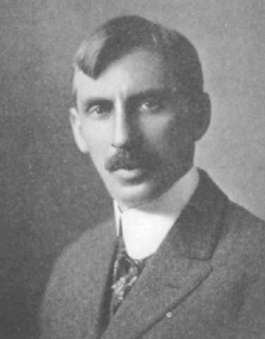
Lieutenant
Colonel
William F. Wesselhoeft
Director, Base Hospital No. 44There were approximately
twenty-five base hospitals partially or completely organized in this
country when the United States Government declared war upon the German
Empire on the sixth day of April, 1917, a number manifestly inadequate to
meet the needs of such a military establishment as would have to be
developed. It was necessary that other large medical institutions than
those already included should organize base hospitals under the
authorization of the American Red Cross; and the Trustees and Staff of the
Massachusetts Homeopathic Hospital were not slow to recognize the
opportunity to “do their bit” for the country and for the
medical profession. A meeting of the hospital staff was held early in May,
and it was unanimously voted to recommend that an offer be made to the
American Red Cross to organize a base hospital in connection with this
institution. Such an offer was forwarded by the Board of Trustees, and,
after some correspondence and explanation, a definite promise was made by
the Red Cross that the authorization for the formation of a base hospital
would be forthcoming, provided that the sum of $30,000 should be raised
for the purchase of its equipment. A plan was immediately developed for
securing the required amount of money, and an intensive ten days financial
campaign was inaugurated in the latter part of May, which resulted in a
large oversubscription of the amount needed. The Red Cross was at once
notified that its conditions had been fulfilled, and a little later the
funds were transferred to that organization. Early in June authorization
by the American Red Cross was received to organize Base Hospital
Thirty-Nine in behalf of the War Department of the United States.
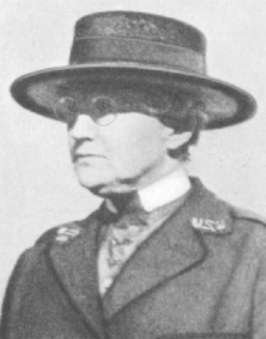
Chief Nurse Mrs.
Alice H. Flash
Base Hospital No. 44
Distinguished
Service MedalAt a meeting of the executive
committee of the hospital Dr. William F. Wesselhoeft was nominated as the
Director, and Mrs. Alice H. Flash as the Chief Nurse, and these
nominations were subsequently accepted, and the appointments formally made
by the authorities at Washington. Mr. Arthur F. Estabrook was named the
disbursing agent, and the money which had been raised was transferred to
him by the Red Cross. Col. Peabody of the Metropolitan Chapter of the
American Red Cross in Boston, was appointed purchasing agent, and he
delegated the task of procuring the equipment for the hospital to Dr. H.
M. Pollock, Superintendent of the Massachusetts Homeopathic Hospital.In response to an appeal to
the members of the profession associated with the hospital about seventy
physicians offered their services, and the task of selecting a personnel
was begun. This proved a most difficult undertaking, as it was essential
that the work of the parent institution should not be seriously interfered
with, while it was of the utmost importance that a congenial aggregation
of men should be chosen, with skill and attainments covering a large
portion of the requirements of surgical and medical practice. After due
consideration, the twenty-two professional men allowed by the table of
organization of a five hundred bed hospital were selected, a chaplain was
appointed and sixty-five graduate registered nurses were chosen from a
much larger number volunteering. To Dr. Allan W. Rowe was delegated the
authority to enroll the one hundred and fifty-three men comprising the
enlisted personnel, and to tentatively assign them to the departments of
the prospective hospital in which they were best fitted to work.
Henry M. Pollock,
M.D.
Superintendent
Massachusetts Homeopathic HospitalDuring the summer the task of
organizing and equipping the Unit progressed rapidly. The officers
received their commissions; physical examinations, vaccinations and
inoculations were done; and the enlisted personnel was chosen from over
seventeen hundred applicants. Many of the enlisted men received training
in the hospital wards, and the tremendous task of purchasing the vast
amount of required supplies was carried forward. Every effort was made to
complete the work as quickly as possible, for it was supposed that the
Unit would be called into active service early in the fall. A library of
medical books was collected through purchase or gifts of members of the
profession; a supply of homeopathic medicines was donated by Otis Clapp and Son of Boston; a special gift of
money for the purchase of sleeping bags for the nurses was made by Mrs.
Pierce of Wakefield, and a beautiful flag was given by Mr. Francis Stearns
of Boston.
As the weeks slipped by and
nothing more substantial developed than innumerable rumors concerning the
future movements of the Unit, some alterations in the plans were made and
several changes in the personnels became desirable for special reasons.
Owing to a misunderstanding in the original assignment of numbers by the
Red Cross, it was necessary to change the number of the Unit, and the
organization became Base Hospital Forty-Four.
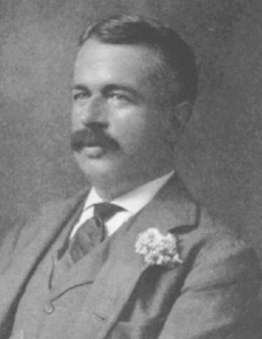
Ezra H. Baker
President, Board of Trustees
Massachusetts Homeopathic HospitalDuring this period of waiting,
opportunity was given to develop and perfect plans for the future work of
the Base Hospital; to select apparatus which would be especially useful in
the work of the members of the staff; and for the special training of many
of the officers in the military schools, camps and hospitals. Twenty of
the nurses volunteered for temporary service, and were assigned for duty
in some of the cantonments on the nineteenth of November.Early in February, 1918,
notification was received that the capacity of the Hospital was to be
increased from five hundred to one thousand beds, and authorization was
shortly obtained to make the necessary additions to the personnels. The
commissioned staff was enlarged to thirty-two medical officers;
thirty-five nurses were added to the nurse corps, making a total of one
hundred, and forty-seven enlisted men were enrolled, bringing the number
of the enlisted personnel up to two hundred.
Article