Main
Pioneers
of homeopathy
by Dr Thomas
Lindsey Bradford
Presented by Dr Robert Séror
Bigel
|
Photo
|
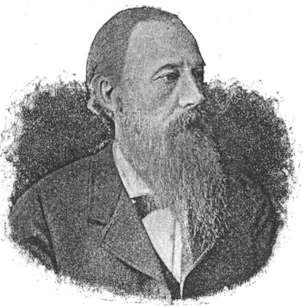
Dr. BIGEL
was one of the pioneers of Homoeopathy in
Russia.
His name appears among the contributors to the Hahnemann Jubilee of 1829.
He is mentioned as physician to the Grand Duke Constantine in Warsaw.
In the Zeitung list of 1832 he
is located at St.
Petersburg ; also in
the Quin list of 1834.
Dr.
Bojanus says that :
” In
1824 Dr. Bigel, of Strasburg, was appointed physician to the
Grand Duke Constantine Paulovitch, and accompanying him to Dresden.
He there became acquainted with Homoeopathy during a fierce medical
controversy then raging, and was led to the study of
Hahnemann’s Organon.
Convinced of the truth of Homoeopathy,
Bigel published in 1825
his :
Justification de la Nouvelle méthode Curative du Dr. Hahnemann nommée
Homoeopathique
, the effect of which was
proportionate to the high position and talents of its author.
Dr Bojanus
In
1829 he was entrusted by the Grand Duke Constantine with the care of a hospital for the children of
soldiers in Warsaw, and he treated them
homoeopathically.
In
1836 he published a Domestic Homoeopathic Guide. Dr.
Bigel introduced
Homoeopathy into Warsaw.”
Everest
writes :
” In the year
1824 Bigel,
the chief physician of the Grand Duke Constantine, accompanied to the baths of Ems the Duchess and her family ; and on their return they spent some time
at Dresden, in which city Homoeopathy had at
that time a few warm partisans.
Attracted by the conflict between the advocates of the new and old
systems, which had made much noise and excited considerable attention, he
resolved to spend the leisure time afforded him by his accidental stay ill
the
Saxon metropolis in investigating the
question he found so acrimoniously litigated.
“Je lus (he says)
Hahnemann et ses adversaires avec la froide impartialité d’un
homme qui cherche la vérité ; – like every other individual without one
single exception who has done the same, the sceptic became a convert – the
convert a partisan.
He studied
Hahnemann and renounced his own practice, and
that renunciation he followed tip by publishing in 1827 in his native tongue (the French) a work in
three volumes in which he zealously advocated and recommended to his
countrymen the doctrines he himself had adopted.
Bigel
published this
work at Warsaw, where he resided.
Few copies of it, if any, reached
Paris,
and in what is called the capitol of the civilized world, the world’s
latest blessing was still a spring shut up, a fountain sealed.
Hahnemann
, in a
letter written April 10, 1829,
says :
“In
Warsaw, Dr. Bigel has received from Grand Duke Constantine 500 sons of soldiers for homoeopathic treatment, and Dr. Cosmo de Horatiis, in Naples, has received from his king the transfer of a large
homoeopathic clinic. Thus things are progressing in foreign parts.”
(World’s Cons. vol. 2, p. 247. Brit. Jour. Hom. vol. 38, p. 306.
” Popular View of Homoeopathy, New York,” 1842, p. 126).
Numérisation,
vérification, mise en page,