Homeopathy is not a ‘doctrinal
system’by Peter Morrell
Sir,
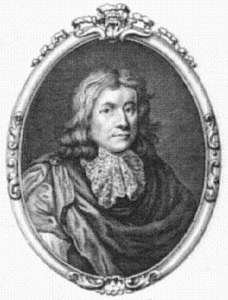
Dr Thomas
SydenhamSaunders [1] should be asked to explain in more
detail what he means by saying “complementary medicine represents a
retreat into a world that is essentially anti-intellectual.” [1].
He might also consider on what basis chemical medicine might claim to be
intellectual. If by this term he means rational or scientific,
then he should be cautioned that there are many highly respected and
valuable fields of intellectual endeavour – such as in his beloved humanities
– which would not even describe themselves as either, just as there are
many things in medicine that are neither rational nor scientific. While
he is at it, he might as well sober up for a few minutes more and
reflect on his use of the term magical.As is usually the case, this letter arises from that
familiar and distorting impulse, that appears from time to time, of a
drooling over-affection for science and a marked aversion for the CAM
modalities that is, as usual, based upon no practical use of these
healing systems, negligible study, and inspired mostly by a desire to
criticise them. Words alone are pretty cheap; deeper and more
respectable understanding can only be gained through prolonged study and
use.For anyone to seriously try to portray homeopathy
specifically as anti-intellectual would comprise a peculiar and
futile endeavour. I rather doubt that he cares very much for
intellectual honesty, but purely to set the record straight, and as an
enjoyable diversion for me, I will briefly explain why homeopathy is not
a doctrinal system, as Saunders claims, but a practical medical
approach rooted in truly scientific experiments.
Friedrich
HoffmannEven though gifted reforming physicians like Sydenham
[1624-89], Boerhaave [1668-1738] and Hoffmann [1660-1742] had pointed
the way for some improvement and refinement of medieval medical
practice, yet by the 1780s the chaotic state of medicine was still a
monumental embarrassment to the rest of natural science. Hahnemann
[1755-1843] trained first at Leipzig, in 1775, then for a year under von
Quarin in Vienna, a first rate medical school, but being a poor pottery
painters lad from Meissen, he was unable to afford the high fees, and
switched to Erlangen, graduating MD in 1779.
Herman BoerhaaveHis first medical practice was in the copper-mining
area of Mansfeld in Saxony, but he soon became appalled to find that
everything he had been taught was dismally ineffective, and the
barbarity of medical practice plunged him into despair, being barely
able to stomach it for long. It became a huge disappointment to him.
Having also mastered eight languages, including Greek, Hebrew and
Arabic, he began to focus his energies into translating medical texts
from English and French into German, making a modest living from this.Eventually, and with a heavy heart, he gave up
medical practice on his move to Dresden in 1784, devoting his time
entirely to translations and chemistry. At that very point, he was
profoundly despondent, despairing that he had devoted his whole life to
an illusion – a medical system that sorely betrayed both practitioners
and patients alike. He thus resolved to try and salvage something out of
this chaos that could be worked up into a decent and effective medical
system. Boiling down the medical system of his day [Old Physic] to its
bare bones, he could see it was essentially a form of Galenical
medicine founded upon four principles – contraries, mixed drugs, strong
doses, and the doctrine of signatures. He soon realised that they were
all bogus.Searching the vast medical literature at such a
linguist’s disposal, he began to find as much evidence for similars [as
a medical principle] as for contraries. He was also amazed to find much
better evidence for using single drugs than for the complex concoctions
approved by the apothecaries. In his translation work, he idly collected
examples of these medical ideas and inserted passionate disagreements in
footnotes to all the texts he translated. He soon became more famous for
these extensive footnotes and disputatious interjections, than for the
major medical texts he translated, such that they became revered in
German speaking lands as collectors items, vastly superior to the
English and French originals. Clearly, his impudence struck a chord.
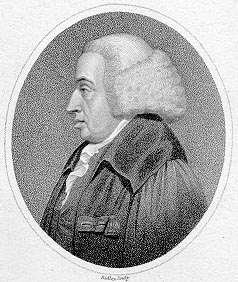
Dr William
CullenLittle did he realise at that stage how immeasurably
this translation phase was to enrich all his later thinking and
research. Having long held grave reservations about signatures, and a
natural aversion to strong drugs, we might say he soon became primed
to research the opposite principles of Old Physic, viz.: similars, small
doses, single drugs and something to replace signatures. He had no
time for those medieval pastimes – astrology, alchemy, or magical
incantations. He was not an overtly religious man, but primarily
interested in scientific experiments. He also corresponded with great
chemists of his day like Lavoisier. In 1790, in searching for something
to replace signatures he ingested some powdered Cinchona bark
himself, because he disagreed with Cullen [the Scottish Hippocrates]
about its curative action upon the stomach during fever. At the time, he
was translating into German Cullens Materia Medica for the Dresden
Economical Society.His impudence clearly had its limits, for he
hesitated to publish any major disagreement with such a universally
respected figure like Cullen, until he was absolutely sure what the
precise effects of Cinchona were. Cinchona induced in him many symptoms
reminiscent of malaria itself, including tingling in the fingers,
tremors and sweating but no actual fever. The more he increased the
dose, the more aggravated the symptoms became; when he reduced the dose
the symptoms subsided. Clearly, he felt he had unearthed a new
principle. With this one act he confirmed the validity of single drugs,
similars and subtle dose effects and demolished not only Cullen, but
also the main principles of Old Physic. More important still, he now had
a revolutionary new tool in his hands, which was indeed something to
replace signatures and which he called the proving. In his
published translation of Cullen, Hahnemann had no hesitation in boldly
repudiating the master and giving an account in footnotes, of his own
theory for the action of Cinchona.In a further 20 years or so, he went on to prove
dozens of other drugs, delineating in each case their individual,
peculiar and uniquely idiosyncratic powers to induce transient
artificial disease states. Furthermore, he found that only by matching
minutely these disease states with real patients, could illnesses be
radically and gently cured. Discovering the peculiarly strong power of
these similar drugs to cause aggravations of symptoms [much greater than
contrary drugs], his investigations led him to continually amend dosage,
and this consistently led him to reduce doses further. Progressive dose
reduction led eventually to the tiny doses for which homeopathy has been
consistently ridiculed, but which were always found to be gentler and
more efficacious than strong doses. Being based entirely upon
experiment, they do seem to fly in the face of science, but they are
real. They are not based upon any theory, preconception or magic – they
were simply discovered.So much for all the historical facts. All that has
happened since about 1810 is that homeopathy has continued developing
along the same lines. It is clearly founded in careful analysis and
experimentation; there is absolutely no magic anywhere in it.For brevitys sake, I have deliberately not
referenced this account, nor added quotations, nor referred to my own
extensive publications on this subject. I can supply all that as well if
required to do so. If Saunders is seriously suggesting that the
thousands of doctors who have taken up homeopathy since those early
days, are all consistently deluded about their clinical success with
this system of therapy, then he had better provide some evidence. All he
has thusfar supplied is rhetoric. Were he also to read some of Hahnemanns
works, he would soon realise that anti-intellectual is not a word
that springs to mind when dealing with it.Source:
[1] BMJ letter, looking for medicine’s lost soul 1
March 2001, John Saunders, consultant physician, Nevill Hall Hospital
Article