

by Peter Morrell

4b. BACH’S BOWEL NOSODES
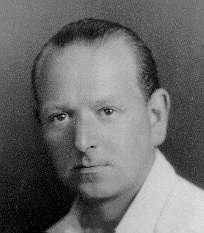
Dr Edward BachIt is convenient here to address an
extension of this topic arising in the 1920s. Dr. Edward Bach [1886-1936] was a
microbiologist at the London Homeopathic Hospital in the 1920s and 30s. There is some
dispute over whether Bach personally practised homeopathy, but he did spend all his working
life immersed in the movement and he did have a medical practice in Harley Street, London.
It therefore seems safe to assume that he was at least a homeopath of sorts.Bach did groundbreaking work along with Dr.
John Paterson [b1890] and the Australian physician Charles Wheeler [1868-1939], on the bowel
flora, developing a series of Bowel Nosodes [see also Wheeler Obituary, BHJ, 1947].
Their use was later refined in more detail by Paterson who died in 1954. Paterson was a very
interesting figure, a Glaswegian and very outspoken for a pragmatic and undogmatic form of
homeopathy. He also worked in Bradford twice a week [Brown, 1989, 1990]. These nosodes were
potentised gut bacteria, grown from cultures in the laboratory. They were given to patients
and found to fall into different groups each with its own cluster of associated remedies.
Examples include Proteus which is associated with many metal chloride remedies, most
notably Natrum mur.; Gaertner, with many Calc., flour. and phosphates; Bacillus
No.7 with most iodides and Kalis [see Paterson, 1950, p.12].Their use is mainly for ‘unsticking’ stuck
cases, already taking a certain remedy, and they seem to reveal constitutional patterns
within the materia medica [see Paterson, 1950].The Bowel Nosodes are in effect nosodes of
‘disease-causing agents’ not from the outer world, nor from disease itself, but from the
body’s own waste products and the gut flora contained in the colon. These are in constant
use in homeopathic treatment of chronic disease and are generally considered by homeopaths
to be therapeutically indispensable [see for example, Logan, 1995, Ortega, 1983 and Speight,
1948].Although these great homeopaths of the past
were working with some of the most terrible scourges of their day, with the grossest
physical symptoms imaginable, they were nevertheless, pursuing an essentially metaphysical
approach for understanding the underlying nature of the disease-force and how healing agents
could be prepared from and utilised against these conditions [see Winston, 1999, pp.186-8].This is what remains so remarkable about
that whole era, the dark physical force [disease products and bacteria] and the light
spiritual force [flower and living plant extracts] cooperating creatively to produce new
ideas [see Gale, 1995, 1996; Mukherjee, 1994].
