
A
BRIEF HISTORY OF BRITISH LAY HOMOEOPATHY
by Peter Morrell
Ball, 1998 – Peter Morrell
(based upon a Paper given at the 1st International
Conference on the History of Homoeopathy at the Robert Bosch Institute
for the History of Medicine in Stuttgart 4-6 April 1995)
In this outline sketch of British homoeopathic history
we shall concentrate only on the main events and a small number of
important figures.
Origines
Homoeopathy is a form of medicine developed in the
late 1780’s in Saxony by the illustrious German physician, linguist and
chemist Samuel Hahnemann (1755-1843). It depends upon the use of mainly
herbal and mineral drugs that are used singly, in minute dosage and
after the maxim `like cures like’ or the law of similars. The drugs are
‘proved’ or tested on healthy volunteers and are generally without
side-effects.
Homoeopathy mounted a succession of vigorous and often
acrimonious challenges to medical orthodoxy throughout the last century,
eliciting subtle changes in the medical practice and theory of Regular
physicians. By the 1870’s, Regular practice had been purged of its many
barbaric practices, leading to gentler techniques, the abandonment of
complex mixtures of drugs (polypharmacy) and the move towards theories
of disease based upon infectious agents. All these had originally been
features of the homoeopaths. Finally, the wholesale plundering of the
homoeopathic materia medica by the Regular school was the highest
unwitting compliment allopaths ever paid to homoeopathy. By 1900 for
example, Aconite, Belladonna and Nux vomica were in common use
throughout medicine. All had been originally proved and brought into use
by the homoeopaths.
Homoeopathy spread rapidly throughout Germany and
France and eventually to Russia, Austria, India, the Americas and
southern Europe. It claimed particular success in the treatment of acute
epidemic diseases like Cholera and quickly became the favoured medical
system of the European Royals and aristocracy.
Britain
Homoeopathy first came to Britain in the 1830’s,
mainly through the stronglyinterconnected German and British Royal
families. Homoeopathy was very popu-lar with the Kings of Saxony,
Prussia, Wurttenburg and Westphalia, who patronised a range of
homoeopathic physicians including the founder of homoeopathy, Dr
Hahnemann.
British Royals and aristocrats soon followed suit and
the therapy became very popular with the nobility, who not only
patronised homoeopathic physicians, but they also gave generous
financial assistance with the setting up of homoeopathic hospitals,
pharmacies and free homoeopathic dispensaries for the poor.

Dr Frederick Hervey Foster Quin, in 1820
The first UK homoeopaths were all close colleagues of
Dr Samuel Hahnemann(1755-1843) in Paris and they came to England
specifically to set up homoeopathic practice in the 1830’s (1).
They were Dr F F H Quin
(1799-1878), Dr Paul Curie (1799-1853) – grandfather of the scientist
Pierre Curie (1859-1906) – Mr William Leaf (1790-1874), a rich London
Silk Merchant, and Rev Thomas Rapoul Everest (1801-1855), reputedly a
younger brother of Sir George Everest (1790-1866), sometime
Surveyor-General of India and after whom Mount Everest is named. Quin’s
practice in London was established in Sept 1832 at 19 King Street (1b),
while in 1844 he established the British Homoeopathic Society (BHS) with
10 colleagues (1c) . All these figures had been close
confidant’s of Hahnemann during the last 10 or so years of his life (2).
Because all the earliest homoeopaths learned
homoeopathy through apprenticeship, so we can depict homoeopathic
history in terms of teaching lineages. Hahnemann was practising
homoeopathy in Paris from 1835 until his death in 1843 (3).
Lay Practitioners
Another interesting aspect of homoeopathy in general
is the growth of the medically unqualified or plebeian practitioners.
This aspect homoeopathy shared with herbalism, the practitioners of
which were almost entirely medically unqualified. Almost from the start,
there were lay practitioners of homoeopathy springing up in all places
where it became popular. In the 1850’s they even formed their own
English Homoeopathic Association in London. In the 1930’s and again
since the late 1970’s they became important aspects of the popular
movement.
It is often hard to find evidence of lay practitioners
in Britain in the last century. That is not to say they did not exist.
The difficulty revolves around their thinly dispersed nature, their lack
of publications and organisations, and their ‘hand-to-mouth’ existence,
relying mostly on grassroots community presence and word-of-mouth
referrals, rather than upon advertising or listings. Nor did they tend
to make publications. Thus they left few traces behind.
Hahnemann’s second wife Melanie (1800-1878) and the
Director of the Munster Botanic Garden, Carl von Bonninghausen
(1785-1864), were the first lay practitioners (4).
Melanie was successfully tried in 1847 in Paris for practising medicine
without a licence (5).
Quin, Leaf, Curie and Everest were part of the inner
sanctum of Hahnemann’s proteges. They established practices in the UK
and later free dispensaries for the poor and also several hospitals.
Leaf and Everest might perhaps be better described as `lay homoeopathic
zealots’, as was Curie and this was distasteful to Quin who distanced
himself from their excesses, concentrating instead on converting the
medically qualified (6). In 1848, Rosenstein lists 73
homoeopathic practitioners in England and Scotland, of which 51 are
doctors and 22 laypersons (7).
In the 1840’s the London School of Homoeopathy was
established as a teaching centre. This merged in the late 1870’s (after
Quin’s death) with the London Homoeopathic Hospital. It was chiefly run
by Dr Robert Dudgeon (1820-1904) and Dr William Bayes (c1823-c1890).

Thomas Skinner
Drs Drysdale (1817-1892) and Berridge (c1846-c1910) in
Liverpool also established some teaching and two Homoeopathic
Dispensaries for the poor of that city and later a hospital. Clarke and Skinner,
for example, both trained in Liverpool (8). This
pattern became repeated many times throughout Britain such that at their
peak in the 1860’s there were 62 such dispensaries operating (9).
Many converted into small hospitals, while others closed down
altogetehr. By the 1890’s they had declined to less than 40 (10).
By 1909 there were only 31 and declining rapidly (11).
These included Liverpool,
Birmingham, Plymouth, Leicester and Bromley homoeopathic hospitals. In
their heyday the Birmingham and Liverpool hospitals were fairly large
thriving institutions.

Liverpool hospitals
Homoeopathy in the UK also contained peripheral trades
like homoeopathic chemists and publishers, keen to become involved in
the growing movement. Examples include Nelson’s (est 1860), E Gould and
Son of Moorgate (est. 1849), Butcher Curnow of Blackheath, Keene and
Ashwell of New Cavendish Street (est 1862) and Epps
Thatcher of Jermyn Street and Threadneedle Street (est
1839). In the north of England there were several branches of the
homoeopathic pharmacy Thompson and Capper in the industrial towns of
Lancashire and Yorkshire (12). Early publishers
included the Homoeopathic Publishing Co based in London and Henry Turner
& Co, based in London and Manchester.

Epps Thatcher
Much of this early expansion of homoeopathy only
became possible through rich patrons. Quin himself was a son of the
Duchess of Devonshire (c1765-1824) and was thus an aristocrat (13).
When he began to practise homoeopathy in London, he mainly treated
members of his own class – other members of the nobility. This was very
common at that time as poor people could not afford treatment from
doctors and tended to use the services of amateur herbalists and
apothecaries for their medical needs (14).
Quin had the money, the qualifications and the
numerous contacts within the aristocracy to establish homoeopathy in
Britain with relative ease. Leaf had been a patient of Hahnemann and a
letter from the good doctor proves this (see note 6)
The benefit of Quin being aristocratic very quickly became apparent.
Quin was allegedly the illegitimate son of the Duchess of Devonshire,
Lady Elizabeth Cavendish:
“He is a mystery man. His names Hervey and
Foster suggest a relationship to the Duchess of Devonshire. Indeed, he
is often depicted as her illegitimate son. The Duchess was born Lady
Elizabeth Hervey and her first marriage was to John Foster.However,
there is absolutely no evidence that the Duchess was Quin’s mother
although obviously with those names there must have been some sort of
relationship, possibly that of godson.” (14a)
Homoeopathy soon attracted many followers amongst the
upper classes including Royalty, and many of these turned into stoutly
loyal rich patrons of the emerging homoeopathic hospitals and
dispensaries. This `smoothed the pas-sage’ of the new therapy in the UK (15).
This loyal devotion to homoeopathy has been passed down through all
these titled families and continues to this day.

Sir Henry Tyler
Sir Henry Tyler
(1827-1908) was one such rich patron. He personally contributed huge
sums of money for the expansion of the London Homoeopathic Hospital and
his daughter Margaret (1857-1943) became an influential homoeopathic
doctor in London after and corresponded with with Dr James Tyler Kent
(1849-1916) (16). Her mother later consolidated this
link as the ‘Sir Henry Tyler Scholarship’, a Trust Fund to send young
doctors over to the USA for further training in homoeopathy. Drs Fergie
Woods, Douglas Borland and Sir John Weir
all went to Chicago in this way in the early years of this century.
Robert Gibson Miller (1862-1919) is especially important for
revitalising Scottish homoeopathy, centred mainly in Glasgow (17).
He had also trained with Kent, earlier, in the 1880’s, in St Louis.

Margerie Blackie & Sir John Weir
Other patrons include HRH the Duchess of Teck
(1833-1897) and the Lord Mayor of London Sir George Wyatt Truscott
(1857-c1940). There were dozens of these rich patrons of homoeopathy
throughout Britain at the turn of the century. It spread like wild fire
through the ruling classes. Little wonder then that it became called the
‘rich-man’s therapy’. Other examples of rich patrons include the Duchess
of Hamilton and Brandon (c1870-c1940), Lord Cawdor (1870-1914), Lord
Robert Grosvenor (1801-1893), the Earl of Wemyss and March (1857-1937)
and the Earl of Donoughmore
(1875-1944) (18). Clear evidence of rich patronage can
be seen in the funding of the Hahnemann Hospital in Liverpool, by the Tate
family, of Tate Gallery and Tate and Lyle sugar fame; and the Bristol
Homoeopathic Hospital by members of the Wills tobacco family.
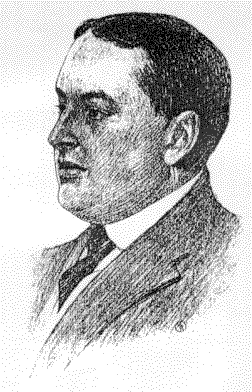
Lord Donoughmore
The arrival of homoeopathy in Britain also coincided
with mass obsession with a range of other medical fads, like Medical
Botany, Spiritualism, Medical Galvanism, Mesmerism and Phrenology. As a
result, homoeopathy became fairly popular and its numerous cheap and
harmless remedies were sold in most chemist’s shops, often as
do-it-yourself dispensatory medicine chests complete with a hand-book
for treating common ailments.

Sir Edwin Tate
Also in London there came to be established the
‘Cooper Club’, which was an informal gathering of several leading
homoeopathic doctors. They met regu-larly andshared their notes and
experiences over a period roughly from 1880 to 1903. It chiefly
consisted of Drs Thomas Skinner (1825-1906), James
Compton Burnett (1840-1901) and Robert Cooper
(1844-1903). Later they were joined by the much younger Dr John Henry
Clarke (1853-1931) (19).
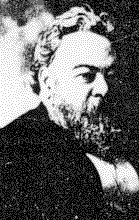
James Compton Burnett
A terrible hiatus then overtook the movement, with
many of the early homoeopathic doctors dying within a 20 year period.
Seven or so important figures like Cooper, Hughes, Bayes, Burnett,
Dudgeon and Skinner all died between 1890 and 1906. The movement was
clearly in rapid decline and was not to recover for over 70 years!
Clarke soon became a very important UK homoeopath,
publishing many influen-tial works, many aimed – like ‘The Prescriber’ –
at the amateur practitioner. Embittered by the hostile reaction of his
orthodox brethren to homoeopathy and by its sinking into further
decline, Clarke left the British Homoeopathic Society (BHS) in disgust
c1900 and never returned to the fold despite repeated attempts to woo
him back (20). Meanwhile he taught many laypersons the
rudiments of homoeopathy, some of whom later became important in their
own right. Three such were Canon Roland
Upcher, (21) Noel Puddephatt (22)
and J Ellis Barker. Other members of the Cooper Club might also have
taught laypersons.

Canon Roland Upcher
J Ellis Barker was a very interesting figure. Born in
Cologne, the son of a doctor, he emigrated to the UK in the 1920’s (23).
A close confidant of Dr Clarke, he was handed the Editorship of ‘The
Homoeopathic World’ early in 1932, soon after Clarke’s death. (This
surprising move was very probably a further snub by Clarke to the BHS
and UK homoeopathic doctors in general, most of whom he by then despised
as traitors of the homoeopathic cause and largely responsible for its
decline). Barker restyled the journal and re-named it `Heal Thyself’,
then launched into bitter attacks on medical orthodoxy and the apathy of
the BHS, both of whom he blamed for the lack of any further expansion of
homoeopathy. He stirred up a great deal of interest in homoeopathy at
grassroots level and inspired a renaissance of lay practice throughout
the 1930’s and 1940’s as a result. The journal `Heal Thyself’ reached a
peak of popularity in the late 1930’s (24).
YEAR No. OF PAGES
1932 550
1933 673
1934 791
1935 793
1936 903
1937 1073
1938 906
1939 715
1940 581
1941 547
1942 391
1943 297
1944 400
1945 347
1946 345
1947 345
1948 341
1949 332
1950 320
1951 319
1952 320
1953 318
He castigated both the BHS and the British
Homoeopathic Association (BHA) as little more than rich-men’s
talking-shops that blocked any further expansion or popularisation of
homoeopathy. Editorial after editorial of his lamblasted them
mercilessly just as Clarke had done as Editor in the 1880’s and 1890’s.
Barker also incited the lay practitioners to `take homoeopathy to the
masses’. He was also a keen Naturopath. He was thus the inspiration of
the first, brief though glorious mass movement of alternative medicine
in Britain (25). He died in August 1948 after which
the journal changed hands several times and then became an obscure
health magazine, finally ending in 1967 (26).
After the War homoeopathy again collapsed back into a
30 year period of obscurity, becoming a quiet and quaint backwater of UK
medical practice, totally marginalised by orthodox medicine, subservient
to the BHS and BHA and widely regarded (if at all) as the domain of
cranks. During this period we see the influence of Edwin Tomkins in
London and also The Speights and Noel Puddephatt, unsuccessfully trying
to fan the embers of the mass move-ment back into the glory of the two
previous decades (27).

Frank Parker Wood
Several other important though hazy figures dominated
the lay movement at that time, mainly in London. They include Darnall
Cooper, F Parker Wood, Dr
Otto Leeser, Edward Cotter and Ephraim Connor (c1890-c1987), the latter
practising first in Glasgow and then in the Scottish Highlands (28).
In the 40’s he published a small book on the homoeopathic treatment of
dogs (29). His son Jim became a homoeopathic doctor
and then emigrated to Canada. One of his sons, also Jim, is a medical
historian in Toronto and has written a PhD thesis on the history of
homoeopathy in Canada (30).
Based in High Wycombe, Dr Leeser (c1890-1964) taught
Tomkins, the homoeopathic pharmacist John Pert and others as well as
running a homoeopathic supply company, publishing house – Hippocrates
Publishing Co – and a homoeopathicmanufacturing chemists, The London
Homoeopathy Laboratories (31). He returned to Germany
in the 1950’s to run the Robert Bosch Homoeopathic Hospital in Stuttgart
(32).
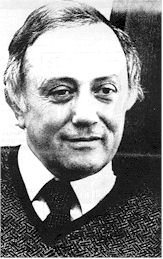
George Vithoulkas
Puddephatt is an important influence throughout the
1950’s. He was a strongKentian, taught Phyllis Speight (33)
(later his partner in practice), Sheilagh Creasy (now teaching at the
LCCH) (34), and George
Vithoulkas (35), founder of the
influential Athens School of Homoeopathy. Puddephatt emigrated to South
Africa in 1963 and died there some years later of cancer (36).
The Speights (Leslie and Phyllis) were important as
publishers of homoeopathic books, first through The Homoeopathic
Publishing Co and then through Health Science Press (37).
They published many reprints of 19th century classics like Clarke’s
‘Dictionary’ and Dudgeon’s translation of Hahnemann’s ‘Organon’ as well
as many modern works. This work greatly helped UK homoeop-athy through
those dark days of stagnation and decline.

Thomas Maughan
This quality of `quiet backwater’ continued into the
1950’s with H.E.A.L. (the Homoeopathic Educational Association for the
Layman) (38) and Thomas
Maughan (1901-1976) who then became an important teacher
along with the Gibraltarian John Da Monte
(1916-75) (39). They taught homoeopathy to groups of
London students for over ten years, until their deaths in 1975-76. These
students then came together to form the Society of Homoeopaths in 1977,
forming a Register, a Journal and the first teaching college, the London
College of Homoeopathy, in 1978 (40). There are now
some 14 of these colleges in London, the Provinces and Scotland (41).

John Da Monte
Two other important landmarks in British homoeopathy
were the NHS Act of 1944 and the Medicines Act of 1968. Both had
detrimental effects upon the lay movement, temporarily causing panic and
pandemonium. In response to the NHS Act, Tomkins formed the shortlived
Incorporated Institute of Homoeopaths Ltd in 1946 to protect the
interests of lay prescribers (42). In response to the
Medicines Act, Tomkins, Maughan, Da Monte and several others formed the
first Society of Homoeopaths in Jan 1970 (43). The
anticipated threat to lay practice failed to materialise and the Society
faded.
The resurgence of homoeopathy as a medical specialism
began in the late 1970’s and has continued unabated since. Currently,
lay homoeopaths are rapidly undergoing professionalisation and are
integrating gradually into the NHS, increasing numbers working as
consultants to General Practitioners or in clinics, working on a
referral basis (44). Successive Governments have shown
no inclination to legislate against lay practitioners. Indirectly
therefore, and through the influence of a leaner and more market-driven
health service, lay homoeopaths are becoming a legitimised part of the
NHS, inhabiting a similar niche to Chiropracters, Acupuncturists and
Osteopaths. The Colleges of lay homoeopathy continue to produce dozens
of graduates each year and the movement is still growing rapidly. With
unified and demanding 3-year teaching curricula, the Colleges offer a
training programme widely seen as considerably superior to that of the
Faculty of Homoeopathy (45). Licensed and Registered
lay prescribers now easily outnumber homoeopathicdoctors (46).
Additions (1997-8)
As we have seen, homeopathy has been practised in
Britain continuously since the 1830’s, mainly by doctors. It reached its
peak of popularity, and hence highest numbers, in the 1860’s, with
around 300 doctors registered as homeopaths, though there were probably
the same number again undeclared homeopaths who wished to avoid
persecution from allopathic colleagues (47). From then
until the 1920’s it went into decline and there were approximately 180
doctors practising it on a regular basis (48). This
number remained steady well into the 1960’s and then began to slowly
increase. Since the late seventies there has been moderate growth and
there are now something like 400 doctors practising homeopathy on a
regular basis (49).
This picture fails of course to show the homeopathic
activity of the laypractitioners, who have always played a prominent and
important part in the UK homeopathic scene. They were not very common in
the last century, but expanded rapidly after the first war and underwent
a resurgence in the 1930’s, 40’s and 50’s. They completely dominated the
scene at that time, with an estimated 500 regular lay practitioners at
their height in the mid-30’s (50). A pattern that was
of course, to repeat itself 50 years later.
Many of the lay practitioners were initially taught by
doctors who had become disillusioned with the decline of homeopathy and
fearful that it might die out completely (51). Others
were self-taught or apprenticed to each other. An oral tradition thus
emerged and all the books and remedies were freely available from
specialist publishers and pharmacies. The lay scene went into a lull
after the NHS act of 1948 and declined further into the 1960’s.
Since 1978 there has been a massive revival of the
therapy, based almost entirely upon the foundation of lay Colleges in
London and the provinces, the Society of Homoeopaths and their Journal
and Register (52). From around 10 members in 1978, the
number of registered practitioners has gradually increased to its
present size of 300+. There are 20+ colleges throughout the country,
being most numerous in London and the south (53). They
each produce on average 20 graduates per year, thus 400 per year in
total approximately. Many of these do not get into practice for various
reasons, others become registered after clinical experience and then
become full-time practitioners within a year or two. It is of interest
to note that over 3/4 of the students and graduates of the Colleges and
of registered homeopaths are women (54).
There are two other routes to practise. One is still
the self-taught path or through sharing knowledge with others and
learning through doing, study and reflection. Secondly there are two
other Registers with approximately 200 lay practitioners each. One is
from the UKHMA based in Kent and with offices in USA, Canada, India,
etc. Then there is also the ICM Register of homeopaths. The UKHMA has
its own colleges, its own vigorous and expanding teaching programmes,
and its own registration procedures. The ICM just has a Register. Both
are also keen to accept graduates of the lay colleges onto their
registers (55).
There are probably approaching 1000 registered lay
practitioners operating in the UK at this time, and the number is
expanding at the rate of 200-300 per year. The total number is difficult
to estimate as there are also many unregistered and self-taught lay
practitioners operating in what is a laissez-faire market-place. The
teaching programme for doctors is also expanding, run by the Faculty of
Homeopathy based at the London Homoeopathic Hospital. They are probably
producing at least 50 newly trained homeopathic doctors per year. There
are clearly far more homoeopaths working in Britain today than at any
previous time.
The effect of this massive expansion of homeopathy in
the UK has not beenconfined to Britain, but has also occurred in many
other countries, most notably USA, Canada, Ireland, New Zealand and
Australia where teaching programmes, Societies and Colleges have been
established along with visiting lecturer programmes, along similar lines
to those in the UK (56). This has stimulated a revival
of the therapy in these countries also. Some of the former Eastern Block
countries like Czechia and Rumania have also benefitted from visits and
teaching programmes etsablished by notable British homeopaths (57).
Homeopathy in the UK is currently undergoing
professionalisation, with registration of practitioners and degree
status of courses rapidly becoming a reality. The recent passing of the
Chiropracters and Osteopaths Acts (1993 & 1994) have paved the way
for a legal framework for the gradual registration of all alternative
therapists as specialists who can work within the NHS. This process is
not likely to take more than 5 years, by which time there will be well
over 2000 lay practitioners and approx 1000 homeopathic doctors. The
future for UK homeopathy is therefore very bright and in less than 20
years it has become a major player in the global homeopathic scene.

Brian Inglis
References:
1. see Trevor Cook, 1981, Samuel
Hahnemann the Founder of Homoeopathy,Thorson’s, p146; Margery
Blackie, 1976, The Patient Not the Cure, MacDonald and
James, pp32-33; also Brian Inglis,
1964, Fringe Medicine, Collins, p79; also Hilary Jenkins, 1989, The
History of the Royal London Homoeopathic Hospital, BHJ 78, pp198-202
2. see Thomas L. Bradford, 1895, Life
and Letters of Hahnemann, Jain Edition, p46; also Richard Haehl, 1922,
Samuel Hahnemann His Life and Work, 2 vols, Jain Edition, Vol 2,
pp505-507,
3. see Haehl, 1922, Vol 1,
pp226-233, and Vol 2, pp341-351; also in Brad-ford, 1895, pp333-341.
4. see Haehl, 1922, Vol 1, p396:
Bonninghausen was cured of tuberculosis in 1829 by a homoeopathic doctor
– Dr A Weihe of Munster – and then commenced the study and practise of
homoeopathy with great enthusiasm. In July 1843 he was granted a special
Medical Licence by the Prussian King, Friedrich Wilhelm IV (1795-1861).
However, according to Professor Robert Jutte, Director of the Robert
Bosch Institute for the History of Medicine in Stuttgart, (in a private
communication) the Bonninghausen casebooks held in Stuttgart, commence
in 1829, in his own handwriting, so it is quite clear that he was a
practising lay homoeopath some years prior to Melanie Hahnemann, who
first encountered Hahnemann in October 1834 (Haehl, 1922, Vol 2, p322).
5. see Haehl, 1922, Vol 1, pp347-8
& vol 2, pp447-451
6. see Philip A Nicholls, 1988,
Homoeopathy & The Medical Profession, Croom Helm; and Philip
Nicholls & Peter Morrell, 1995, Lay Practitioners & Medical
Heretics, an Introduction to the History of Homoeopathy in Britain,
Paper to 1st International Conference on the History of Homoeopathy,
Robert Bosch Institute for the History of Medicine, Stuttgart, April
1995, p5; also Inglis, 1964, p79, pp80-81; also Haehl, 1922, op cit, Vol
2 pp505-507; also op cit, Jenkins, 1989, p200.
‘Everest was a zealous homoeopath and promoter of
homoeopathy in England, he published a Sermon in 1851 delivered in
favour of the London Homoeopathic Hospital, also wrote to Hahnemann
1-5-1834 and 30-3-1838; he died 15 June 1855’ condensed from Haehl,
1922, Vol 2, pp508-9
7. see J.G. Rosenstein,
(c1800-c1870?), Evidence of the Truth of the Homoeo-pathic Medical
Practice, Its Progress and Development, 1849, published by Thomas Mark,
Kidderminster, pp7-8
8. see Clarke’s Obituary &
Appreciation, BHJ 1932, Vol 22, pp116-125
9. see The Homoeopathic Medical
Directory for 1867, Homoeopathic Publishing Co, London.
10. see The British, Colonial and
Continental Homoeopathic Medical Directory for 1895, Homoeopathic
Publishing Company, London, pp59-76.
11. see The International
Homoeopathic Medical Directory, 1909, Hom Publishing Co, London,
pp70-86.
12. see adverts in Heal Thyself,
1930-50, (eg vol 75, July 1940, p337)
13. see Inglis, 1964, p79; also
Blackie, 1976, pp32-33; also Cook, 1981, p146; also Bernard Leary, 1989,
Frederic Quin, founder of the Hospital, BHJ 78, pp204-209.
14. see Ivan Waddington, 1984, The
Medical Profession In The Nineteenth Century, Gill & Macmillan,
pp26-27 & note 65, p209 for an excellent example of this
14a. see Dr Leary, in ‘Homoeopathy’,
Vol 41 No 1, Feb 1991, pp19 et seq
15. see Inglis, 1964, p85; also op
cit Leary, 1989, pp204-209
16. see Sixty Five Years Work, The
History of The London Homoeopathic Hospital, 1914, publ by LHH, London,
pp75-80; also Celia McConnell, 1992, Women In Homoeopathy, unpublished
Thesis, London College of Classical Homoeopathy, pp15-23.
17. see letter John Pert, 1990; also
Obituary, BHJ 1919, p107
18. see Homoeopathic Medical
Directories, 1867-1911/12 and op cit Sixty-five Years Work; also many
figures mentioned in the pages of Health Through Homoeopathy, (official
journal of the BHA), 1940-50 and of Heal Thyself, 1932-55; also op cit
Leary, 1989, p209, & op cit Jenkins, 1989, p200.
19. see Clarke’s Obituary &
Appreciation, BHJ 1932, Vol 22, pp116-125; also PhyllisSpeight, 1979,
Homoeopathy, a Practical Guide to Natural Medicine, Granada, p152
21. see The Prescriber, 1924,
pp55-58; also Eastern Daily Press, Obituary to Upcher,
28 Oct 1929
22. see op cit, Speight, 1979, p152
23. see Who Was Who 1941-50 and
J.Ellis Barker, 1931, Miracles Of Healing and How They are Done, John
Murray, London
24. see length in pages of issues
1932-53, which peaked in 1937
25. see Heal Thyself, 1932-34,
especially June 1932, pp221-224; July 1932, pp267-266, p279 & p290;
September 1932, pp367, pp371-2 & pp394-8.
26. see Heal Thyself, 1948-55; also
Vital Forces – a profile of Phyllis Speight, by Rebecca Gethin, Devon
Life, April 1990, pp36-37
27. see Jerome Whitney, 1986,
Regarding Edward Tompkins (sic), Society of Homoeopaths Newsletter 10,
Jan 1986, p7; also Edwin Tomkins Interview with P Morrell, Enfield, 20
July 1990.
28. see Treuherz profile, The
Homoeopath, 5:3, 1986, pp143-144; also Geof-frey Brown, 1990, Recorded
Interview with P Morrell, August, 1990, Bradford
29. see Simplified Dog Cures, 1946;
see Heal Thyself, 1946 for book review; also op cit Brown.
30. see Dr James Connor, Paper
presented to the Stuttgart Conference, ‘Homeopathy in Nineteenth century
Canada’, April 1995; also conversations with Jim Connor, Stuttgart
Conference, April 1995.
31. see Interview with Edwin Tomkins,
1990; also letters from John Pert, 1990; see also adverts in Heal
Thyself, 1930-50; see also Leeser’s publications; also the British
Telephone Directories for High Wycombe, 1930-60, held at the BT Archive,
Millbank, London
32. see his Obituary, BHJ, 1965, p69
33. see op cit, Speight, 1979,
preface, p1; also op cit Gethin, 1990, pp36-37
34. see letter from Sheilagh
Creasy, 1990
35. ibid
36. see Heal Thyself, March &
April 1963; also Speight, 1990, Letter, 6-6-90; also op cit Gethin,
Devon Life, April 1990, pp36-37; also UK Telephone Directories, 1930-60,
held at the BT Archive, Millbank, London
37. see British Books in Print,
1968-90; also op cit, Gethin, 1990, pp36-37
39. see Recorded Interview with
Elizabeth Danciger, Islington, London, 26 May 1990; also Karen
Ludwinski, 1993, Thomas Maughan
His Life and Teachings, Unpublished Thesis, London College of Classical
Homoeopathy, London; also Madeline Evans, 1990, Homoeopathy, Druidism
and related matters, conversation, 13-6-90; also Thomas Maughan, 1973,
Talking with Dr Laundy, tape (courtesy of Patrick Derham in New
Zealand); Martin Miles, 1990, Letter, August 1990; Martin Miles, 1990,
Letter to P Morrell; Martin Miles, 1992, Interview with Karen Ludwinski,
(transcript); Bob Withers, 1990, Telephone conversation with P Morrell
about Thomas Maughan Study Group, August 1992; also Patrick Derham,
1990, The Thomas Maughan Study Group, taped interview, August 1990,
Auckland, New Zealand
40. see Robert Davidson, 1980, The
College of Homoeopathy, Homoeopath 1:1, summer 1980; Robert Davidson,
1987, Origins of the College of Homoeopathy, Newsletter 17, Dec 1987;
also Peter Chappell, 1980, The Society of Homoeopaths Emerges, The
Homoeopath 1:1, pp2-3; Peter Chappell, 1989, letter to P Morrell, July
1989; Peter Chappell, 1990, The Thomas Maughan Group, letter to P
Morrell, June 1990; Berenice Benjelloun, 1989, The Origins of the
Society of Homoeopaths, letter June 1989; also Misha Norland, 1989a,
History of Lay Homoeopathy, letter 23-5-89; Misha Norland, 1989b, The
School of Homoeopathy, Devon, letter 30-5-89; Misha Norland, 1990,
Telephone conversation with P Morrell, 9-6-90; also Ernest Roberts,
1989a, Origins of the Society of Homoeopaths, conversation, April 1989;
Ernest Roberts, 1989b, History of Lay Homoeopathy, letter 8-5-89; Ernest
Roberts, 1989c, The North West College of Homoeopathy, letter 23-5-89;
also Kay Samuel, 1989, Origins of the Society of Homoeopaths, letter,
12-6-89.
41. see Society of Homoeopaths
Newsletters, 1982-95
42. see Interview with Edwin Tomkins,
Enfield, 20 July 1990; also a facsimile of the Codes and Rules for the
Incorporated Institute of Homoeopaths Ltd, Dec 1946
43. see letter from John Wilcox,
Devon, 15-5-1990; John Wilcox, 1990a, The History of Lay Homoeopathy in
Britain, letter 9-5-90; John Wilcox, 1990b, The History of Lay
Homoeopathy in Britain, letter 17-5-90; John Wilcox, 1990c, Letter,
7-6-90; interview with Edwin Tomkins, Enfield, July 1990; also Jerome
Whitney, 1986, Regarding Edward Tompkins (sic), Newsletter 10, Jan 1986,
p7; Jerome Whitney, 1990a, Letter, 15-6-90; Interview with Jerome
Whitney, Dulwich, 18 June 1990; Jerome Whitney, 1994, Conversations at a
Conference, Nov 19 1994, London.
44. The Student Homoeopath Education
in Homoeopathy Conference, London, 19 Nov 1994, included several
presentations on this theme, especially one by Alistair Dempster of
Huddersfield.
45. see College Prospectuses compared
with Faculty training programme prospectus; see also The Homoeopathic
Handbook, 1982, Nelson’s, pp90-92 re Faculty training courses for
doctors
46. see Faculty lists compared with
Registers of Society of Homoeopaths 1981-94; also Faculty of Homeopathy
Lists of Members 1939, 1953, 1969, 1974, 1979, 1982,1987, 1992;
Homoeopathic Medical Directories 1867, 1874, 1895, 1909, 1911-12 and
1932; also Brit Hom Journal (1990) Obituaries from the BHJ index
1911-90, courtesy of Glasgow Homoeopathic Hospital Librarian – Mary
Gooch; also Medical Registers and Directories (British), various years
(1931-1989)
47. see lists in British Homoeopathic
Directories; and also in Nicholls, 1988, re persecution of homoeopaths
by their colleagues.
48. This is based upon the lists
published in the British Homoeopathic Society’s publications such as
their Homoeopathic Directories.
49. ibid re the Faculty lists which
are still published annually.
50. This is based upon study of the
journal Heal Thyself, which reached a peak of readership, length and
popularity in 1937. 500 is a fair estimate based upon listings of names
in this journal over the period in question. It may well have been
double that figure.
51. see previous reference re Drs
John Henry Clarke, Percival Quinton and William W Rorke, who all taught
lay persons. This remark applies equally to the late homoeopathic vet
George McLeod
52. The Soc Hom Register was first
published in 1981, the journal The Homeoopath in 1979.
53. In London itself you have the
College of Homoeopathy, the College of Practical Homoeopathy, the
College of Classical Homoeopathy and the Guild of Homoeopaths; in the
south you have the London School of Homoeopathy, the Purton House
College and the School of Homoeopathy in Devon. Compare this with
Northern College, NorthWestern College, the Sheffield School of
Homoeopathy, the Soluna School in Derbyshire and Midlands College in the
north and midlands.
54. see Registers of Soc Hom 1990-96
and also letters regarding this in The Homoeopath issues 55-61
55. I am indebted to Michael Endacott
of the ICM and to Derek Cole of the UKHMA for this information.
56. see Prospectuses of the Colleges
and also Soc Hom Newsletters.
57. eg Peter Chappell of the London
College of Classical Homeopathy