ON
DEVIANCE AND CONFORMITY IN HOMEOPATHY
by Peter Morrell
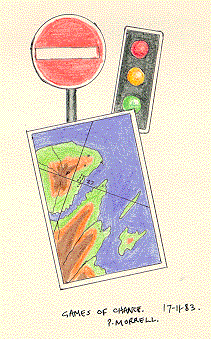
Games of Chance, 1983 – Peter Morrell
Preamble
This essay discusses the relevance of understanding the sociological
concepts of ‘deviance’ and ‘conformity’ as a foundation for gaining some meaningful insights
about homeopathic history. In particular, we examine: Hahnemann and his development of
homeopathy; the reactions of allopaths to it; later rebels within the movement and how they
were received; and homeopathic history viewed as a series of alternating phases of heresy
and conformity, which is similar to Kuhn’s view of revolutionary change in science. All of
this is then related as a valid method of seeing the movement today.

(Courtesy Sylvain Cazalet)
Dr James Compton BURNETT (1840-1901)
“Dr Burnett had left University with strictly orthodox medical views,
“having been taught by good men and true that Homeopathy was therapeutic
nihilism.” This was the current view at the time, often expressed with a great deal
more virulence. Homeopathy in Britain was confined to a more or less persecuted sect,
actively ridiculed in the universities and widely despised outside them. Its followers were
looked upon as quacks or cranks, its practice had narrowly escaped being declared illegal in
the 1850s and the British Medical Association prohibited homeopaths from joining its ranks.
“The professor of anatomy at Glasgow in 1873 had begged his most
promising pupil not to throw his life away, for it is true that, as Dr Burnett himself
afterwards bitterly put it, ‘the social value of [surgery] is a baronetcy. The social value
of [homeopathic remedies] is slander and contempt.’ When urged not to abandon orthodox
medicine, Dr Burnett had declared that ‘he could not buy worldly honours at the cost of his
conscience’, but one may readily detect behind his conscientious objection an equally keen
resentment of received authority. Perhaps because of his early hardships, there was
something about social ostracism which suited him . . .” [J H Clarke, The Life and
Times of Dr Burnett, 1902 — my emphases]
What Burnett seems to have meant is that distinction in allopathy leads to
a baronetcy, while distinction in homeopathy merely leads to ridicule from one’s medical
peers. In his view it would be a form of ‘professional suicide’ for any good doctor to
become a homeopath.
Introduction
For the purposes of this essay we shall view homeopathy as a medical
heresy and its adherents, therefore, as social deviants. Heresy or deviance as a social
process can be defined as the failure of a person or group to follow the deeply
conventionalized, long-cherished and widely agreed-upon ‘group norms’ of a movement (or of
society at large), or an outright rejection of those norms willfully and deliberately.
Deviants always stand outside the main stream; they are outsiders through behavior, belief
or identity. We achieve and perceive an identity through various channels, such as clothes,
appearance, behavior, beliefs, speech, occupation, interests and the friends we keep. These
are all aspects of our identity both as seen by ourselves and as seen by others.
Defining Our Terms
Deviants socialize into what are often called minority groups. Some are
tolerated by the host society, though most are attacked and vilified, if only occasionally,
as an unwanted underclass. Examples of deviants include blacks, Jews, gays, the disabled,
ginger-haired people, fat people, criminals, left-handed people, giants and dwarfs and
various sexual deviants. They also include various religious non-conformist groups, down the
years, such as Protestants in Catholic countries and Catholics in Protestant countries,
Quakers, Methodists, Christians in Muslim countries, Muslims in Christian countries, etc.
Many of the early scientists were also deviantised as heretics by the Church for their
beliefs. Examples include Galileo (1564-1642) and Bruno (1548- 1600).
To be deviantised means both to behave as a deviant, standing apart from
group norms, and also to be ostracized and marginalised by the group, by members of the
group. One is persecuted because one possesses features of a recognizably ‘alien identity’
— a set of norms which are not regarded as acceptable by the majority of the group. For
example, the simple flouting of hair, dress or speech conventions (especially gender- based
ones) is enough to lead some people to regard you as ‘weird’ and thus of having an ‘alien
identity’ somewhat at odds with the group. Being dubbed as ‘weird’ is along the road towards
being branded as a deviant. The process of deviantisation mainly refers to the ostracism
which is meted out to the heretic or deviant. It is an action which is directed towards the
deviant by the wider group. To be deviantised therefore, means to be branded heretical,
unwanted, an outcast and as disobeying or conflicting in some way with group norms.
Conformity means to adhere closely to the group norms of society, a group
or movement. Conformists prefer to follow rather than to lead. They are often termed ‘sheep’
or ‘toadies’. They tend to be conventional, passive and to subordinate their personal will
to that of the group. Conformists tend to be easily manipulated by people with a stronger
will and who dominate such groups and movements. They prefer anonymity rather than any form
of personal distinction or publicity. They fear standing out from the group, and this
contrasts sharply with rebels and deviants who tend to court controversy and public
attention. Often psychologically shy and timid, conformists tend only to feel truly secure
and comfortable when blended invisibly into a larger group — they often lack personal
confidence or a distinctive self-identity. Understanding the behavior of individuals in
groups is vastly improved through some knowledge of deviance and conformity.
A person conforms to feel more comfortable and more socially secure. To
conform means one is prepared to surrender certain aspects of one’s own identity so as to
blend in with the group norms. Like wearing a uniform when at work. Another example is the
way many Asian families in Britain have started to give their children English first names
like David, Susan and John rather than Indian names. This gesture might be viewed as a
concession or sacrifice so that their children will be more easily accepted socially and
less easily identified as of Asian origin. Thus their ‘alien identity’ becomes
proportionally diluted by a change of name. As a result they blend-in more and stand-out
less.
Another good example is the way immigrants gradually start to speak with
regional accents, such as Scottish Chinese or Asians speaking with a perfectly recognizable
Scottish accent. These show they have moved towards group norms in these ways. Even greater
social conformity occurs amongst the second and third generations of the original
immigrants. It is as if the ‘rough edges’ of our personal identity become softened and
smoothed through sustained contact with the norms of a group.
Conformity and deviance also have very important >functions< within
the behavior of groups. Conformity has the function of strengthening and maintaining
ideological purity and reinforcing group norms. This enables people to know what their
identity is and to make moves to maintain it. By contrast, deviance challenges conformity
and the group norms, pushes at the boundaries, generates tensions and is continually
throwing up new ideas and techniques for consideration by the larger group. In this way
deviance is an important source of change within a group as it generates new ideas, some of
which might be incorporated into an otherwise rigid structure. In this sense, deviants and
heretics are always highly creative figures and freethinkers who question fundamentals and
challenge group norms. That is their social function. All groups need deviants.
Without deviance of any kind, a pure and fanatical form of conformity
would enslave people to a fixed and rigid structure which would disallow change of any kind,
and within which people would act like robotic clones of the group norms, with absolutely
no-one questioning the ideology of the group. Communist and dictatorial states operate in
this way, as also do some of the weirder religious sects. In such groups people lose their
distinctive personal identity completely. Such structures fear change of any kind, insist
upon and enforce rigid conformity; ultimately this leads to ideological stagnation,
sterility and extinction. A small dose of deviance is essential for the healthy functioning
of any group. However, excessive deviance leads to fragmentation of the group into a series
of sub-groups and general chaos, as group norms become diluted, blurred and abandoned. But
each new sub-group must formulate its own distinctive new norms. Group norms and conformity
about them are essential features for the functioning of all groups.
Thus the fluid interplay between a dominant conformity and a minority
deviance is the healthy norm for any dynamic group. Groups thus evolve through time and
slowly shift in their ideology with changing patterns of influence coming both from within
and from without. It is important for us to follow the dynamics of deviance and conformity
as they are both essential for the healthy functioning of any group. The formation of
homeopathy from allopathy can be viewed as very similar to the formation of Protestant
Christianity from the Church of Rome in the 1500’s. The two events and the behavior of
adherents within each show many interesting parallels and also illustrate virtually
everything we have said here about conformity and deviance in group dynamics. Religious and
medical sectarianism are very similar.
In the case of homeopathy, the whole movement began as a medical heresy,
and thus as a deviation from the accepted medical teachings (group norms) of allopathy. It
began as an utter rejection of the accepted medical ideology of the day. Hahnemann received
the usual treatment of any other heretic in history — ridicule, ostracism and emphatic
expulsion from the group of his medical peers. He spent the rest of his life on the margins
of medicine as a deviantised heretic. Thus knowing something about the sociology of deviance
helps us to understand the history of homeopathy and the treatment Hahnemann received at the
hands of his critics. It also enables us to understand the many interactions between
allopathy and homeopathy during the last century and to see how they both influenced each
other in varying degrees, softening and blending each other ideologically as the century
progressed.
A New Identity
At the outset, one of Hahnemann’s most urgent priorities was to establish
a new set of ideas and techniques (ideology and methodology) as well as to reject and break
free from allopathy. The first phase of his work consisted very clearly of this combined
disenchantment with and rejection of allopathy, and the gradual construction of a new
medical identity or ideology, which would serve as the uniquely new norms for a new medical
movement.
To break away from, criticize and reject something is, on its own, not
enough, as identity also requires the swift establishment of a new set of norms and a
belief-set for the new movement. Otherwise one drifts like a rudderless ship in some
ideological Sargasso Sea. One must have somewhere to go to at the same time as one is
leaving that which one has rejected — or very soon afterwards. Indeed, it can be argued
that we must have somewhere to go to BEFORE we leave.
The early history of homeopathy can be seen as a series of first tentative
moves away from allopathy, and then increasingly confident and rebellious rejections of its
ideas and techniques. Very few people abandon a destructive and unpleasant relationship
BEFORE they find something better, i.e. they do not tend to ‘depart’ until they have a clear
destination in mind, which represents a more attractive alternative. This is what is so
remarkable about Hahnemann. He literally abandoned allopathy BEFORE he had anything to put
in its place. It is quite remarkable that he gave up allopathic medical practice with no
alternative system to fall back on — with no ‘medical destination’. All he had to fall back
upon was his translation work. We can admire his courage in doing this, but it is also a
measure of his conceit and self-certainty and his intolerance of what was an imperfect
system. Very few people possess such courage to stand out from the mainstream willfully and
face the public ridicule which is certain to ensue. Hahnemann clearly possessed that
courage, though one might choose to call it a form of stubborn arrogance, depending on one’s
point of view.
As he moved along his chosen path, not only did he succeed in forging
something quite new, different and successful, from the basic tools of allopathy, but he
also became increasingly confident that a complete new system was being born. That was
destined to be his new medical destination and his savior.
His attitude towards allopathy became increasingly violent, ugly and
vitriolic up to his Leipzig years (he left Leipzig in 1821). After that he no longer had any
real need to fight allopathy or to denigrate it. He no longer had anything to prove to
anyone, because he was by then supremely confident that he had found something very.
important and successful — as he himself would have said: fundamentally curative.
From that point forwards his aim shifted away from attacks upon allopathy (which seem to
fade more into the background), as he moved towards refining and reasserting the fundamental
ideological basis of homeopathy, and increasingly, to refining and purifying its core
techniques and methodology. The separation from allopathy had therefore become complete, a
new child had been born, and there could be no turning back.
The Authoritarian
Hahnemann also spent a lot of time in the last 20 years of his life
expounding and reinforcing a new conformity within homeopathy, and trying to extinguish any
new deviance arising within the movement. This was to cost him dear, as the conformity soon
became a new form of dogmatism, which imbued homeopathy with a hardness and a fanaticism it
could have done without. Thus he passed through a series of further medical heresies, moving
homeopathy onto an even wider empirical base (e.g. miasms, LM’s, olfaction, liquid doses).
These were wider ideas and wider techniques, yet still very heretical compared with
allopathy.
Yet with all this came a strange new tension, for Hahnemann on the one
hand WAS quite clearly an heretic, yet at the same time he tried to stifle any further
heresy within the movement he had created. He repeatedly tried to downplay and dismiss any
heresy on the part of his own followers and denied them the freedom, which he himself had
enjoyed, to do as they wish. Indeed, he repeatedly purged the movement of deviance and
suppressed the creativity of others, denying them any say in the development of HIS system.
Indeed, he was acting in a very authoritarian way when he said: ‘follow me, but follow me
exactly’. He most certainly did not want his followers to formulate their own versions of
homeopathy, but to take on the new group norms of the movement exactly and unquestioningly,
so as to acquire a carbon- copy identity of the movement exactly as he had created it. That
is pure authoritarianism. So on the one hand he stands out as a creative heretic, and
freethinker, yet on the other a deeply conformist and authoritarian figure, who is very much
in charge of a new movement, with its own tight internal orthodoxy.
Faithful Conformists
Frightened by any thought of further deviance, what we might term ‘the
sheep’, his most faithful followers, rapidly acquired the group identity of the movement and
the deep and cohesive conformity that came with it. It must have been very comforting for
those early doctors to ‘stand together’. After the initial heresy of becoming a homeopath
(and the considerable public and professional discomfort which that involved), these devoted
followers then rather robotically asserted the new conformity, the new identity, the new
orthodoxy, against which any new deviants who might emerge within homeopathy would be
measured, and if necessary ridiculed and expelled as non-homeopaths or traitors of the pure
doctrine. Which is exactly what happened to some:
‘…the respected Dr Moritz Muller, who championed the heretical doctrine
[of homeopathy] in the noblest manner until – some years later – the impatient master
expelled him from his circle as a pseudo- homeopathist.’ [Gumpert, 1945, p.185]
One presumes therefore that such zealous conformists who dominated the
early movement tended to be people who lacked a strong identity of their own, and who were
therefore very keen to receive and blend with a strong group identity. They were passive and
non-assertive conformists, rather than strong-willed rebels –doves rather than hawks; lambs
rather than lions.
This fascinating tension between conformity and heresy led to the
formation of two opposing poles or urges within the movement. One always pushing towards
greater Puritanism, piety and a fanaticism for ‘hewing the line’; the other towards
increasingly bold experimentation and rebellion by creative and inventive freethinkers. Thus
the movement has often become polarized into two opposing camps: those who questioned little
and who were keen to keep quiet and toe the line; and those who were less unquestioning and
accepting of hard dogma. These latter wished, while remaining within the movement, to assert
their own individual identity and to exercise their own liberty and creativity as a new
breed of homeopaths. The movement still contains these two elements, these two forces
pushing in opposite directions.
Homeopathy today contains the conformists, the so-called pro- Hahnemannian
classicalists, and also the rebels, who question the alleged authority of hard dogma and who
prefer a more eclectic and experimental approach, forging new ideas of their own and coming
to knowledge, like Hahnemann himself, through their own personal experiment and free
thinking. These latter tend to be creative freethinkers who feel stifled by the constraints
of ‘received wisdom’ and who tend to despise dogma and authoritarianism. As we have said
before, to be a deviant means to challenge or reject group norms and to adopt an alien
identity or belief-set which conflicts with that of the group. Hopefully, we can see, that
initially this referred to all homeopaths viewed against the backcloth of allopathy. But it
soon became ‘some homeopaths’ viewed against the backcloth of ‘most homeopaths’. These
‘later rebels’, as we might call them, are therefore deviants within the movement who have
adopted an alien identity and who reject some or all of the group norms of the wider
movement as a whole.
Later Rebels
There are two chief ways in which deviance has become an important aspect
within homeopathy. First in the life of Hahnemann himself, how he lived his life and how he
created his system of medicine. Second, in the general history of the movement and how it
has evolved as a technique and ideology through time. In regard to the latter, of special
importance is the periodic emergence of further rebels within the movement, who have emerged
from time to time to ripple an otherwise calm surface.

John Henry CLARKE (1853-1931)
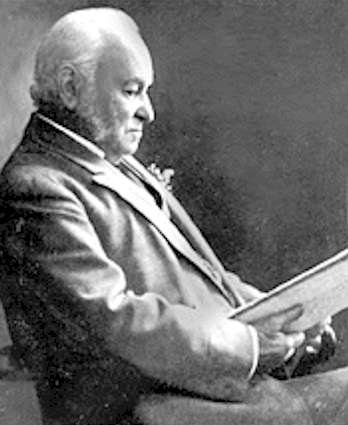
Thomas SKINNER (1825-1906)
These creative rebels include Clarke,
Burnett, Cooper
and less so Skinner. It also included many
American homeopaths who were the makers of the first high centesimal potencies and new
nosodes. Even before these, Schreter, Jenichen and von Boenninghaussen were all rebels of
sorts, especially with regard to making and using the high potencies. These stand out as
such very interesting figures precisely because of their non- conformity and inventiveness.
Creative and heretical, these later rebels formed schisms, tensions and breakaway
movements of their own, within the wider fabric of homeopathy itself. They retained the
widest core teachings of homeopathy, but also invented their own add-ons of ideas and
techniques, which they regarded as useful and important extensions, or peripheral dogmas.
They created their own versions of homeopathy and thereby evoked the disapproval of
classical dogmatists and ‘sheep’ like Dudgeon and Hughes.

Robert Thomas COOPER (1844-1903)
The same basic tensions were also created by those in the 1890’s who
advocated mixed remedies or tissue salts, and again, much later in the 1950’s by radionic
homeopaths, who used dowsing pendulums to investigate disease states and to find the
remedy. Cooper with his ‘arborivital medicine’ and Bach, both with his ‘Bowel Nosodes’
and later with his ‘Flower Essences’, are also quite clearly creative rebels and
freethinkers, who created their own versions of homeopathy and generated some frictions
within the movement. Anything viewed as new and different, as questioning central dogmas or
vaguely way out has generally been portrayed as enemy and ridiculed and
repulsed.
Their behavior, as with that of Hahnemann himself, can in my view, be
better appreciated and understood through a knowledge of the whole phenomenon of the
deviance/conformity axis. This theme raises two further aspects — 1. marginalisation and
disenfranchisement of the deviant heretic within the movement as a whole (and their possible
expulsion from it) and 2. excessive dogmatism and Puritanism on the part of the hardline
conformists, striving to reassert the ‘unnegotiable authority’ of central dogmas. To use a
nautical analogy, the former try their best to ‘rock the boat’, while the latter try to
‘steady its course’. These are trends which have surfaced repeatedly in different times and
places, and, like old fires which have once died down, periodically they have become
reignited, often flaring up with great passion, and taking on new life and power.
The later rebels, as we have termed them, were always inventive
experimenters and innovators, who kept the central teachings, but who also had an eye on new
developments in the wider field of medicine in general, and who tried anything new that came
along, which seemed useful to them. Nosodes, the higher centesimal potencies, isopathy,
tissue salts, combo remedies, olfaction, organ remedies, all of these techniques of the
1840-90 period, fall within this category and were seized upon, explored and used. They were
seen by these rebels as perfectly acceptable techniques when used in moderation, in
subordination to and in harness with the core techniques of pure homeopathy. Apart from
combo remedies, these techniques only rarely conflicted with the core dogmas; they were just
auxiliary techniques which bore good clinical results for certain practitioners. Most have
been retained within the movement and many are in regular use throughout the world.
Power
Who has power? A person who is an authority, who has knowledge and skills
which no-one else has. Power resides in the leaders of a movement, from whom all knowledge
and skill, expertise, authority, advice and guidance emanates and flows. Hahnemann was
certainly such a ‘power figure’, because he discovered and formulated homeopathy entirely
through his own thinking and experimentation and virtually unaided. He held all the main
strings and was the chief source of all authoritative advice and information on the subject.
A person with power controls the movement.
Another expression of power within homeopathy lies with the editors of
journals, who control, in effect, whatever is printed on the subject and which topics are
discussed and which are not. They also decide time and page length which is devoted to each
topic. In these senses they certainly exert considerable control of the movement. Another
source of control comes from the teachers at the colleges, who exert a controlling influence
for a time over the information content of the subject and its development through time.
Power also resides in certain key figures who dominate the movement and who are greatly
respected for their knowledge, inventiveness, intelligence and skills. Examples here include
Scholten, Paschero, Eizayaga, Timmerman, Vithoulkas
and Sherr. Power and control serve mainly to reinforce conformity with accepted teachings
and to expose and repulse the deviant heretic. Power thus cleanses and purifies the movement
and keeps it ideologically ‘on track’.
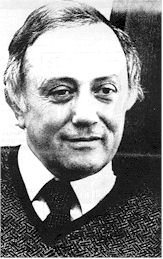
George Vithoulkas
Early Doctors
Other doctors in the early days became attracted to Hahnemann and
homeopathy and became converts to the new system. Why was this? The fact that they showed
any interest in it at all reveals several interesting factors about medicine at that time.
First, it shows that like Hahnemann himself, they must have nursed some pretty fundamental
dissatisfactions with the allopathic system they had been taught. Certainly they would have
shown no interest in homeopathy at all if they had been perfectly satisfied with the crude
allopathy of the 1790’s and its clinical results. Hahnemann would have been successfully
portrayed as a crank and his system would have died out very quickly as a nonsense.
Second, their interest also shows that homeopathy, as a set of ideas, must
have struck a chord with many doctors of the day, and must have appeared to them as an
attractive alternative medical system to the crude allopathy of their training. They had
doubts, of course, about the efficacy of small doses, but beyond that they must have found
homeopathy an interesting system. Otherwise, they would have wholly failed to show more than
a passing interest in it.
Third, unlike Hahnemann, these other doctors had not formulated, of their
own accord, through much thinking and experimentation, an alternative system of their own.
In all likelihood, therefore, they were probably attracted to homeopathy for the very same
reasons as Hahnemann — because it looked like a good system. This reveals to us that many
allopaths of the 1790’s were probably just as dissatisfied and disenchanted with allopathy
as Hahnemann was. The only major difference, therefore, between Hahnemann and them, was that
he 1. had abandoned allopathic practice completely; 2. had adopted his fallback position of
doing translations and research; 3. had undertaken many experiments with drugs and
poisonings, which had led him, inadvertently and quite fortuitously, to assert various new
and heretical ideas about the characteristic features of an ideal and truly curative system
of medicine.
Hahnemann therefore stands out from the mass as a truly revolutionary
figure for no other reason. He had the time on his hands and the mental capabilities to
pursue his own interest in chemistry and pharmacology. Time which other doctors lacked. Time
in which he reflected long and hard on these matters. Time in which he undertook many
experiments and gradually formulated his new system.
As we noted previously, there are many who are unhappy with their lot in
life, but who for want of a more attractive alternative (and for fear of the plague of
public ridicule), stay with what they have and try and make the best of it, even shrugging
off, their many failures. That would seem to describe very accurately the general situation
of most doctors of the 1780’s.
Hahnemann was temperamentally quite unsuited to deceive his patients and
‘calm their fears’ when he knew full-well that most treatments on offer were useless:
‘…he was not more clumsy or stupid than other doctors; he simply lacked that power to
shuffle off responsibility which enabled them to face every failure’. [Gumpert, 1945, p.43]
Hahnemann was different from other doctors chiefly in the intensity of his
disaffection for allopathy, and of how, fortuitously, he had the time, intelligence and
inclination to open up an entirely new path.
Thomas Kuhn
The deviance/conformity axis we have been discussing, might well be
regarded as just another version of the heterodox/orthodox revolution of Thomas Kuhn
(b.1922). It is worth briefly describing this in some detail.
Thomas Kuhn’s theory of scientific change (see Kuhn, 1962, The Structure
of Scientific Revolutions, Chicago Univ Press) portrays scientists as fundamentally rigid,
conservative and dogmatic people, stuck deep in their theories and fiercely resisting
change. They stick to their ideas as tightly as limpets to rocks. This, Kuhn calls ‘normal
science’. Then, periodically, some major new advance in human knowledge comes along and
though deeply skeptical at first, the scientists are finally won over and a revolution in
science occurs. Kuhn calls this ‘revolutionary science’ and also a ‘paradgim shift’. In
Kuhn’s view, Copernicus (1473-1543), Galileo, Descartes (1596-1650), Newton (1642-1726),
Kepler (1571-1630), Darwin (1809-82), Mendel (1822-84) and Einstein (1879-1955) all brought
about major paradigm shifts in science, between which intervened stretches of ‘normal
science’. After such a revolution, a new conformity breaks out again, during which new
dogmas are asserted and for a long stretch ‘normal science’ returns. Then another revolution
occurs and a new paradigm shift takes place.
In Kuhn’s view, science changes in this way and NOT through the piecemeal
and gradual change of a fluid situation with progressive open-minded change. The scientist
is not fluid and open-minded at all, but scholarly, pedantic and rigid, resents change, is
skeptical of new ideas, clings to the certainty of the structure he knows and only abandons
it with great discomfort under overwhelming pressure. That is their normal state. Change
only occurs suddenly and painfully through the overwhelming pressure of massive new
evidence. In certain respects, what I am describing here about deviance and conformity,
shows some parallels with Kuhn’s theory, though also some obvious differences.
Dilemmas of Deviance and Conformity
Hahnemann did not start out with a complete new system developed overnight
in the twinkling of an eye. He had to create it piece by painful piece. He started with a
profound disenchantment with allopathy, then launched into increasingly vociferous attacks
upon its more barbaric practices. Then he began to formulate, through his own research and
experimentation, definite medical ideas, or what we today might regard as ‘glimpses of the
full system’. He was in a difficult position to begin with and proceeded with caution, as it
is ONE thing to criticize something, but quite another to have a better alternative to put
in its place. He most certainly did not have an alternative, initially, but he pretty soon
formulated the bare bones of one.
From the advocation of smaller doses in general and fewer drugs, he then
moved on to promote similars, single drugs and provings, as a sounder basis for medical
practice. Once he had the full system sketched out as a working alternative and had
satisfied himself that it worked safely, reliably and predictably, he was then in a much
stronger position both to criticize allopathy more loudly, and to promote his own system
with greater vigor.
Those allopaths who we have identified as being just as disenchanted with
allopathy as Hahnemann himself was, had a further huge obstacle sitting across their path,
in terms of their coming to embrace homeopathy more fully. As soon as homeopathy was in the
public domain and attracting derision, so the face of social conformity and deviance became
manifest. It meant that a doctor would have a lot to lose by changing over to the new
system, and this would mean loss of reputation, ridicule from once close friends and
colleagues, and expulsion, in many cases, from medical societies. Homeopathy became rapidly
banned in certain states (e.g. Austria). As Burnett said, they became branded as medical
heretics and faced what amounted to professional suicide. Could a doctor face such ridicule
and unpleasantness? Obviously, many preferred not to, and either practiced in secret or
refused to support it publicly.
Thus although ‘on paper’ homeopathy might well have appeared like a sound
and attractive medical alternative to allopathic drugging, to embrace it would involve a
great deal of professional discomfort and even pain. It is now my view, from considerations
of this type, that this powerful social force of ridicule and deviantisation, was probably
more important in discouraging doctors from taking up homeopathy, than was their ‘on paper’
acceptance of some or all of its main doctrines. The ‘push’ seems to have been stronger,
therefore, than the ‘pull’.
Everyone in medicine at that time must have known that Hahnemann’s
critique of the barbaric methods of allopathy was perfectly valid, justified and sound. They
must also have seen very clearly that his alternative system, homeopathy, was sound, safe
and gentle. Yet still the majority held back from embracing it. Why? In part, the reason
must have been their conformity with accepted teachings and a desire to ‘stay with the
herd’, rather than ‘stand apart’ and face the great pain of public ridicule and attacks upon
their integrity. Such doctors must have been hesitant to join the new movement. Why? Because
all the university professors and all leading physicians and surgeons, almost with one
voice, had castigated Hahnemann’s new system as a puerile, ineffective nonsense, penned by a
dangerous heretic — ‘this new Theophrastus Paracelsus’, as Goethe called him in 1820 [see
Hobhouse, 1933, p.198].
Changes Evoked in Allopathy
Yet it is clear from the many changes in allopathic practice 1800 to 1900,
that Hahnemann’s critique must have hit deep into the heart of allopathy. Allopathy reduced
its high doses and moved to simpler mixtures of drugs, as the century progressed. They even
adopted many of the drugs proved and introduced by Hahnemann and regularly used in
homeopathy. Examples include Belladonna, Bryonia and Ipecac. It moved to single drugs and
also abandoned its most barbaric practices by 1900. In many ways allopathy stole Hahnemann’s
clothes and brought the two sects closer together, such that by 1900 it was harder to
distinguish between them in the medical marketplace. Undoubtedly, this worked out to the
advantage of allopaths.
In this sense, therefore, the allopathy of 1900 was a far more rational
and benign medical system than the heroic and damaging medicine of 1800. Only the fight with
homeopathy can have been responsible for eliciting these changes. Thus we find a peculiar
tension building up. First, doctors who privately liked homeopathy but who dare not practice
it publicly for fear of professional ridicule and retaliation (humiliation and
ostracisation). Second, allopathy making the exact changes in itself which Hahnemann had
demanded of it. So on the one hand the allopaths quietly accepted and acted upon some of
Hahnemanns new ideas, while on the other, they socially ostracized homeopaths and
publicly ridiculed homeopathy. And doctors in general feared for their professional status
lest they dare to adopt it. It is a weird tension, therefore, which developed between the
two systems covering the entire 19th century. And that tension can be explained through this
knowledge of deviance and conformity.
Summary
I hope to have shown that homeopathic history has seen a series of
alternating phases of heresy and conformity and that even today, the movement still contains
both elements in an active form. Arguments still break out over new techniques and ideas
which seem to divide the classicalists from the ‘inventive rebels’ within the movement.
As Dr Burnett so astutely observed, deviance and conformity tensions
abound between homeopathy and allopathy. But they also penetrate homeopathy itself like a
fault-line running through the movement. At any one time, any individual might find
themselves the wrong side of that line, and being branded as some kind of deviant heretic,
or creative rebel. We have also examined some of the dilemmas posed by deviance and
conformity in the very early days of the movement and how any allopath had to be
exceptionally brave to convert to practice homeopathy in the face of powerful social
pressures, public derision and often at the expense of future career prospects. Knowledge of
deviance and conformity therefore greatly informs, deepens and enriches our understanding of
the history of homeopathy, as well as the behavior in the modern world today of its growing
number of practitioners.
Final Message
But above all, perhaps, we must realize that conformity and deviance are
both absolutely natural group characteristics. Neither one nor the other should be allowed
to race ahead, dominate or take over a group as that leads to danger. Excessive conformity
leads to sterility and ideological paralysis, while excessive devaince leads to group
fragmentation, chaos and collapse with subsequent splintering into diverse sects and sub-
groups, all fighting each other. Both features are required in some balance for a group to
survive into the future and to behave and evolve healthily. Conformists need to learn to
love deviants, and deviants need to learn to love conformists. Both need to realize they
need each other to keep the group going and not to fall out too much. They must develop
greater tolerance of each other for the sake of the cohesion, growth and strengthening of
the group. And I imagine that is the biggest lesson homeopathy can learn from its own
history. A lesson which can take it into a much brighter future than its complex past.
Sources:
Gumpert, 1945, Hahnemann: the Adventurous Career
of a Medical Rebel, Fischer, New York
Hobhouse, 1933, Life of Hahnemann
Allport, Gordon, The Nature of Prejudice, Cambridge, Mass Addison Wesley l955. 537pp, 31
Ch’s. Prejudgment. In-Groups. Rejection of Out-Groups. Racial and ethnic differences.
Victimization. Stereotypes. Scapegoats. Acquiring prejudice demagogy. tolerant Personality.
3rd edition.
Rudoff Alvin, The paths to social deviance and conformity a model of the process,
Lewiston,N.Y.Lampeter
Antler, Joyce, THE EDUCATED WOMAN AND PROFESSIONALIZATION: THE STRUGGLE FOR A NEW FEMININE
IDENTITY 1890-1920. Garland. 1987. 448 pp. First. edition.
Becker, Howard Saul, OUTSIDERS; STUDIES IN THE SOCIOLOGY OF DEVIANCE London Free Press of
Glencoe 1963. “Studies in the Sociology of Deviance”
Becker, Howard S. (ed.), Other Side: Perspectives on Deviance, Free Press (1967) New York,
paperback;Sociology
BUCKNER, H. TAYLOR, DEVIANCE, REALITY, AND CHANGE, RANDOM HOUSE 1971. 8VO, 1st EDITION.
Cohen, Albert K., Deviance and Control Englewood Cliffs Prentice-Hall 1966. 120 pages. 9th
printing
Dinitz, Simon, Dynes, Russell, and Clarke, Alfred, DEVIANCE: STUDIES IN THE PROCESS OF
STIGMATIZATION AND SOCIETAL REACTION Oxford University Press London
DOWNES & ROCK, Understanding deviance:a guide to the sociology of crime & rule
breaking Oxford Clarendon 1982, 308pp
Edgerton, Robert B, Deviance: A Cross-Cultural Perspective Menlo Park Cummings Publishing
Co. 1976. 133 pages.
Endleman, Robert, Deviance and Psychopathology: The Sociology and Psychology of Outsiders.
Malabar, Florida: Krieger, 1990. 2nd printing.
Epstein, Cynthia Fuchs, Woman’s Place: Options and LImits in Professional Careers Berkeley
University of California. 221 pp. Perspectives on Gender.
Erikson, Kai T, Wayward Puritans: A Study in the Sociology of Deviance. 1966 NY: John Wiley
& Sons, Inc. . 228pp. Quality paperback.
Freedman, Jonathan and Doob, Anthony; Deviancy: The Psychology of Being Different NY.
Academic Press, 1968, 158 pages. 4th Printing edition.
GOFFMAN, ERVING, STIGMA : NOTES ON THE MANAGEMENT OF SPOILED IDENTITY. NJ PRENTICE HALL
1963. 147PP,
Hills, Stuart L, Demystifying Social Deviance. NY: McGraw-Hill, 1980 210pp. Kelly, Delos H,
Deviant Behavior: A Text-Reader in the Sociology of Deviance. 3rd ed. Martin’s Press, 1989
Deviant Behavior: A Text-Reader in the Sociology of Deviance. Third Edition. NY: St. .
648pp.
Kiesler, Charles, Conformity, Addison 1970. 1st edition.
Edwin M. Lemert, Human deviance, social problems and social control Prentice Hall Press New
Jersey 1972
Edwin Mellen, c1991, Deviance conformity and control in Canadian society edited by Vincent
F.Sacco Publisher: Scarborough, Ont. Prentice-Hall Canada c1988
Pfuhl,Erdwin H. & Henry, Stuart, THE DEVIANCE PROCESS. Aldine de Gruyler 1993. 3rd
edition, revised.
Rock, Paul, Deviant Behaviour, London: Hutchinson, 1973 Hardcover. 208pp.
Sagarin, Edward, Deviants and Deviance: An Introduction to the Study of Devalued People, NY:
Praeger, 1975 and Behavior. 458pp.
Schur, Edwin, The Politics of Deviance: Stigma Contests & the Uses of Power. Englewood:
Prentice-Hall, 1980 1st ed.
Simon, David R, Elite Deviance, Second Edition. 1986 and D. Stanley Eitzen. Boston, MA:
Allyn and Bacon, Inc. . 290pp.
Simmons, J. L, Deviants. Berkeley, CA: The Glendessary Press, 1969 (1975). 134pp.
Sokoloff, Natalie J., Black Women and White Women in the Professions: Occupational
Segregation by Race and Gender, 1960-1980 New York Routledge 1992. 175 pp.
Spitzer, Stephan P. and Norman K. Denzin, The Mental Patient: Studies in the Sociology of
Deviance New York, NY McGraw-Hill 1968. 486pp.
Walker, Edward L. Anatomy For Conformity. Englewood: Prentice-Hall, 1962. large paperback
Weiss, Richard M, Managerial Ideology and the Social Control of Deviance in Organization,
NY: Praeger, 1986 s. 268pp.
White, Winston. Beyond Conformity. NY: Free Press, 1961 v.g.copy, 1st ed.
Wilson, Paul R.; Braithwaite, John (Editors) TWO FACES OF DEVIANCE St Lucia Queensland,
University of Queensland Press, 1978 COMPARES CRIMES OF THE POWERLESS AND POWERFUL. STATES
THAT RULE MAKERS ARE THE MOST FLAGRANT RULE BREAKERS IN SOCIETY. INDEXED. 309 PP.
WINSLOW, ROBERT W. AND WINSLOW, VIRGINIA DEVIANT REALITY: ALTERNATIVE WORLD
VIEWS, ALLYN AND BACON, INC (1974) BOSTON 3RD edition