
THE
HOMEOPATHY OF JOHN DA MONTE (1916-75)
by Peter Morrell
Pencil Sketch of a rusty old boiler at a disused green marble quarry on the
southern tip of Iona in western Scotland, 1979
This is a profile of the second most important person in the post-war
history and recent revival of homeopathy in Britain since 1978. It is written as a
complement to my profile of the other important figure, Thomas
Maughan. I feel that some small introduction is required to try and locate
these two men in some kind of historical context.

Thomas Maughan
My research into the history of UK homeopathy, which began in 1988, has
thrown up many interesting features. But one thing has been very obvious from the start: the
revival and expansion of homeopathy since 1978 can be attributed directly and solely to the
work of just two people: Thomas Maughan and John Da Monte.
The reason for this is that between them they taught about 30 people the rudiments of
homeopathy between 1965 and 1976 many of whom have become important teachers and all of whom
together have spearheaded that revival. They taught them much more than just the rudiments
of homeopathy, of course – they taught them enough to become competent practitioners in
their own right.

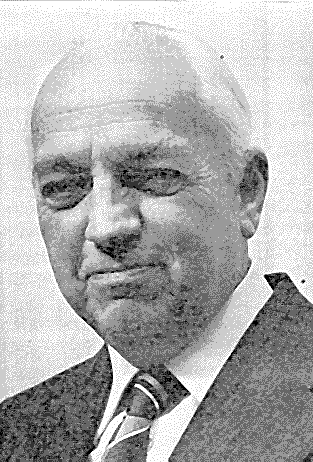
John Da Monte
They also taught them a lot more besides homeopathy. To what extent that
‘other stuff’ is now relevant depends upon your point of view about life, medicine and
homeopathy. Indeed, in Thomas and John’s view it was viewed as relevant enough to pass on to
all their students. Until homeopaths stop running away from and trying to hide the ‘esoteric
backdrop’ to homeopathy, then maybe they will not confront its true future! John and Thomas
were very fond of making aphoristic predictions like that and that one is offered in their
spirit.
It was the respect, admiration and love for these two men that caused
their students in 1978, after they both had died, to create a Society, College and Register
for lay homeopaths in Britain. All that has snowballed since to such an amazing degree. We
now have 20+ colleges and degree status of courses. Who could have dreamt all that was
possible back in the mid-70’s? And it all stems from these two men. And it has coincided
with a worldwide renaissance of interest in homeopathy, and especially throughout the
English-speaking world of USA, Canada, Australia and New Zealand.
John Da Monte & Thomas Maughan
It was around the MID 1960’S that 2 very important figures emerged, who
were to have a profound and lasting influence upon the future of lay homoeopathy in Britain.
These were John Da Monte and Dr Thomas L. Maughan. Both were charismatic figures, in tune
therefore with the mood of the times, enthusiastic and gifted teachers of homoeopathy as
well as successful prescribers.
Their importance derives from the fact that they both ran separate groups
in London for students wishing to learn homoeopathy. Many of these students were patients or
members of the Druid Order which between them they ran. The groups of ten or more members,
met weekly in various houses in the London area. It was Maughan who had introduced
homoeopathy to Da Monte during WW2 after which he came to England to study the subject
(Danciger, 1990).
At a meeting in Jan 1970 they formed the Society of Homoeopaths, electing
Maughan as Chairman and Da Monte as Honorary Secretary. The Society of Homoeopaths was
officially formed at a meeting on 10-1-1970 (Whitney, 1990, Wilcox, 1990). This was in fact
the second teaching group that Da Monte had formed in England as he had previously trained
mainly older students who were predominantly Healers. The meetings were primarily intended
for practitioners and people who wished to gain a good working knowledge of homoeopathic
materia medica and philosophy.
Da Monte’s meetings were informal discussions about homoeopathic
philosophy and the drug pictures of remedies. They also involved deeper discussion of actual
case histories in which Da Monte would give advice about the selection of a remedy, how to
handle the progress of a case and the choice of potency. However, the teaching style of
Maughan was much more formal (Danciger, 1990). However, the general subject matter covered
was the same in both groups.
According to Edith Eden, a Radionic practitioner, who met him several
times and also knew Da Monte well, Maughan was “one the most self-opinionated and
arrogant men I have ever met” (letter, aug 1990). A Meditation class, presumably along
Druid lines, also run by Maughan on Saturday mornings, was attended by most of the same
people (Roberts, Samuel, Withers, Whitney, 1990, 1994). Others found in him a fierce
benevolence (Miles, Chappell, 1990). The influence on this group both of Druidism and the
personality of Maughan were immense.
Apart from the friendship between the two figures who led the groups, the
study classes were entirely separate and unconnected. There was no social interaction
between the 2 groups. They were entirely separate ventures running parallel in the same city
but otherwise quite unconnected. The type of student attracted to and contented with the
style of Thomas Maughan would probably not have enjoyed the style of John Da Monte. And vice
versa. Because of the marked contrast in teaching style and therefore atmosphere of the two
groups, there was no interchange of students between them, nor did the two teachers exchange
lectures or notes. The only person to switch groups was Patrick Derham who joined Da Monte’s
study group after both had died. Da Monte did, however, occasionally fill-in for Maughan at
his study group whenever Thomas could not be there (Whitney, 1990).
John Da Monte (1916-75), N.London,
articles in the Homoeopath, associated now with Thomas Maughan and his students, a
Gibraltarian, Druid and prominent teacher of hom in UK, with interests in scientology,
radionics, E. philosophy, Jungian analysis, etc
Malcolm Rae
“John Damonte, who died in 1975, was a radionic practitioner,
homoeopath and psychotherapist. A naturally gifted radiesthetist, he studied under the
brothers Sevranx in Brussels and later with Malcolm Rae.
A valued Member of the Radionic Association, he became a Fellow in 1970.” (Rad
Quarterly 34:3, June 1988)
Some thought John Da Monte was either a Spanish Jew (Roberts, 1990)
or “Dutch and brought up in Morocco” (Samuel, 1990). Wilcox always believed him
to be French. (Wilcox, 1990)
“This fitted the name, his slight accent and…that he was first
and foremost a radiesthetist, the area in which France led the field.” (Wilcox,
1990b)
In fact he was a Gibraltarian of Spanish, Italian and Jewish descent
(Danciger, 1990). His father was the Gibraltarian Ambassador to Morocco. John had started a
medical degree at University of Montpellier in France in 1934 and failed to complete his
internship as he was called up for the British Army. As a result he never completed his
degree and worked throughout the war in British Intelligence, where he met and became
friends with Thomas Maughan. After the war he came to Britain to study homoeopathy and
Druidism with Maughan. His main teacher of homoeopathy apart from Maughan was Dr Donald
Foubister (Danciger, 1990).
He was involved with Radionics “for a year or two” (Samuel).
According to Wilcox and Danciger, his involvement with Radionics was far more extensive and
of much longer standing. Throughout the 1950-75 period, he was a very close friend of Hon
Rosemary Russell, Lavender Dower, Malcolm Rae and David Tansley, all prominent members of
the Radionic Association, and widely regarded as comprising the `inner sanctum’ of that
organisation. According to Danciger (1990) he had also taught homoeopathy to a class of
healers, during the early 1960’s. This group included the architect and astrologer Tad Mann,
Bill Fletcher (a Wimbledon acupuncurist), and the late David Tansley, the prominent Radionic
practitioner and Chiropractor (Danciger, 1990).
John had also set up and taught study and research groups in Portugal and
Zurich, presumably in the 50’s and 60’s. The Zurich group did important work collecting data
on the side-effects of the BCG Tuberculosis vaccine, according to Danciger (1990). He also
ran a Swiss group to help get people out of cults like scientology (Railton).
“Da Monte said `homoeopathy is an art, not a science’…He
taught homoeo pathy as an art. He gave us all the esoteric subjects he had come across. It
was all in bits and it was up to us to put it together.” (Samuel quoted in Sadler,
1989b, p44-5)
According to all sources Da Monte was an extremely likeable and pleasant
person, who worked and taught very much from intuition and by gaining immense rapport with
his students. The “..loveable and mysterious John Da Monte” (Haggiag, letter,
1990) had a great warmth and friendliness of personality and a well-developed sense of
humour. According to Danciger (1990), his lectures were interspersed with very amusing tales
about real people who served as illustrations of homoeopathic remedies or of key points in
homeopathic philosophy.
Homoeopathic knowledge was imparted by Da Monte to his students at his
weekly meetings over a 5 year period: 1970-75 (Samuel, 1990). He was also
“very knowledgable about esoteric philosophy, ancient wisdom of
the East, Theosophy and the Alchemists.” (Samuel). He “certainly had many
patients, both here, and in many parts of the world, Europe, USA and so on.” (Samuel,
1990).
He also achieved many “wonderful cures” (Samuel, 1990) and
helped a great many people. He died on November 5th 1975 at the age of 61 from a massive
heart attack. At that time he was “about 65 years old and Maughan 5-10 years
older” (Wilcox, 1990). Like Maughan, he was virtually a chain-smoker (Danciger, 1990).
He was greatly missed by the group, who carried on meeting and even took
over some of his patients for a short while. Julian Carlyon joined Da Monte’s study group in
1974. Like others in the group he was a relative newcomer and had received very little
tuition. As a result, the longer-serving members decided to collate all the lecture notes
and to continue teaching the later members of the group. This process lasted a further three
years.
John Da Monte & Thomas Maughan were both were rather colourful,
charismatic figures, interested in oriental philosophy and New Age thought, in tune
therefore with the mood of the times. Both were also enthusiastic and gifted teachers of
homoeopathy as well as successful homoeopathic prescribers.
They are described by those who knew them, with great affection, in
glowing terms. Their importance derives from the fact that they both ran separate groups for
interested students who wanted to learn homoeopathy. Many of these students were patients or
ex-patients of Da Monte and Maughan, or members of the Druid order which between them they
ran. The groups of twenty or so members, met weekly in various houses in the London area. Da
Monte’s group met on wednesday evenings in north London, while Maughan’s met on friday
evenings in south London. He lived in Dulwich. The two were great friends. It was Maughan
who had introduced homoeopathy to Da Monte during the war and got him interested in coming
to England to study the subject.
At one meeting they formed the Society of Homoeopaths, electing Maughan as
Chairman and Da Monte as Honorary Secretary. This was in 1970 according to Wilcox. It was in
June 1972 that Kay Samuel started attending these meetings. The Society of Homoeopaths was
officially formed at a meeting on 10-1-1970 (Whitney). Subscriptions were collected with a
view to financing lectures, visits and occasional publications. No events were organised,
however, and as a result the subs were returned, as requested by Wilcox. This was c.1973-4.
The disappointment here was probably based upon a misapprehension of the main purpose of the
Society formed at that time, which was largely educational in nature, rather than political.
It was designed to produce homoeopaths not to campaign for more of it in the NHS.
This was the second such group that Da Monte had formed in England and he
had previously trained mainly older students who were predominantly Healers.
The disappointment mentioned also reveals that there was probably a
conflict of expectations between different individuals who attended these early meetings. As
the meetings were primarily intended for budding practitioners or at the very least
individuals who wished to gain a good working knowledge of homoeopathic materia medica and
philosophy, it is not surprising that anyone attending them for any other purpose should
find them disappointing.
In the case of Da Monte’s meetings, they took the form of informal
discussions about homoeopathic philosophy and the drug pictures of remedies. They also
involved deeper discussion of actual case histories in which Da Monte would give advice
about the selection of a remedy, how to handle the progress of a case and the choice of
potency. However, the teaching style of Maughan was quite different, he being a severe
bearded Scot with strong views about who should be doing all the talking and who the writing
(Danciger 1990). However, the general subject matter covered was the same in both groups.
He had a colourful past, by all accounts, having lived and worked in
Paris, North Africa and Barking and having been involved with Radionics “for a year or
two” (Samuel). According to Wilcox and Danciger, his involvement with Radionics was far
more extensive and of much longer standing. Throughout the 1950-75 period, he was a very
close friend of Hon Rosemary Russell, Lavender Dower, Malcolm Rae and David Tansley, all
prominent members of the Radionic Association, and widely regarded as comprising the `inner
sanctum’ of that organisation. According to Danciger he had also taught homoeopathy to
another class, of healers, during the early 1960’s.
This group included the architect and astrologer Tad Mann, Bill Fletcher
(a Wimbledon acupuncurist), and the late David Tansley, the prominent Radionic practitioner
and Chiropractor (Danciger 1990). His main teacher was Dr Donald Foubister at the Faculty,
and Thomas Maughan.
Da Monte, being also a radionic practitioner was keenly interested in the
use of geometrical patterns both to treat disease and to make remedies (Danciger, Eden). He
may have been involved with Malcolm Rae in the invention of the Rae Potentiser, a device
that can produce homoeopathic remedies from geometrical patterns on card and a bar magnet.
This device was first produced in the early 1960’s by Malcolm Rae, a noted radionic
practitioner. Da Monte and Rae were such close friends that it is possible for Da Monte to
have been involved in the design and its development (Danciger 1990), though he is not
officially credited with this in the published works on the subject. It is possible as in
many highly creative friendships, that the two dreamed up some of the devices from extensive
discussions. A kind of creative rapport such as often develops between dynamic like-minded
individuals. This second profile therefore gives you, hopefully, an understanding of why
‘all roads lead back’ to Maughan and Da Monte. And hopefully explains not only why but also
how that is so much the case. In advance I would like to thank three people who have helped
me enormously in compiling this profile. They are Ian Railton, Misha Norland and the late
Liz Danciger, all of whom knew John very well indeed. Without their help this sketch would
be much hazier and not very helpful.
John Da Monte was born in July 1916, smack in the middle of the First War
and portentously at the start of the bloodiest, wickedest and most futile battle of this
century – the Somme. His father Nicolas was the Ambassador to Morocco and John studied
medicine at the University of Montpellier in southern France. Of course, Montpellier boasted
the finest medical school in the world, dominating medical thought, along with Padua,
throughout the Middle Ages. Whether he qualified or not is in some doubt – Liz always
maintained that he failed to complete his internship due to the War. Ian says John did
qualify, but either way his medical qualification was not recognised in Britain. However, he
thought and behaved entirely like a doctor. He had numerous close contacts within the
medical fraternity and was both a frequent and a welcome visitor both to the Faculty of
Homeopathy and to the upstairs private apartment above Nelson’s in Duke Street. He was an
intimate friend and colleague of Dr Foubister and of Dudley Everitt, head of Nelson’s.
It is thought that he met and became friends with Thomas Maughan during
the Second War and that John then came to England both to study homeopathy in greater depth
and to continue his friendship with Maughan. They shared so many interests. He also married
an English girl (Phyllis) and had 4 children. He had an earlier marriage that was unhappy
and bore no children. To what extent Maughan was the teacher of Da Monte, or the other way
around is still not certain. My own hunch is that Da Monte, though younger, was the more
‘spiritually advanced’ and was probably more Maughan’s teacher than the reverse.
John was also the ‘Scribe’ or second in command of the Druid Order of
which Thomas Maughan was Chief or Hierophant. Rumour has it that Thomas Maughan split the
Druid Order because he took the Chief’s post after being Scribe – a custom disallowed by
centuries of convention. Rumour also has it that John was offered the Chief’s position
first, but turned it down to become Scribe under Thomas. It is a remarkable fact that many
of the students of these two men had only scant knowledge of the Druid Order or of the
involvement of them both in it.
John was a naturally gifted radiesthetist. He could dowse hen’s eggs as a
boy and knew what the sex of the resultant chicken would be. However, it is not know with
any certainty where he obtained his other skills. It is clear that he must have received
extensive formal training in many things in order to have become so proficient. It may never
be known where he got his vast therapeutic knowledge from.
John emphasised a range of 8 or 9 different diagnostic and therapeutic
tools, and of which he was an unquestioned master. These include, Jungian psychotherapy,
astrology, Egyptian ideas, Kabbala and Tree of Life, radionics, face analysis based upon 12
archetypes, homeopathy, Theosophy and Druidism. But to just see these as tools and separate
ideas or ‘systems’ which he dabbled in or used is to miss the man completely. He was a
perfect master of them all. What this means is that he used them freely and interchangeably
with any and every patient he saw. Now that is talent enough for one person, but he was
gifted probably even more in yet another way.
Like the best anthropologists, he had a certain human quality that enabled
him to attune to the needs and problems of a person (to get inside their head) within
minutes of meeting them. That was undoubtedly his greatest and most unusual gift. This gift
has been variously referred to by those who knew him as ‘intuitive’, ‘warm’ and ‘loveable’.
He was certainly all three, but his gift was probably that of a born healer in the fullest
sense, who could ‘see’ the suffering a person had and could address it directly.
What it meant on the practical level was simply that he would meet a
person and within only a very short space of time was absorbing intuitively an enormous
amount about them, such that, as he felt his way along, a programme of ideas for their
healing would be forming in his mind. This also meant that for any one person he would use a
unique blend of the above tools. For some radionic treatment would be applicable, for others
a homeopathic remedy. For others long therapy sessions would be applicable. For another the
method was to train in esotericism or to study the face analysis sytem.
Having said that, however, there are three or four which he relied upon
most. These were homeopathy, radionics, psychotherapy, Theosophy and face analysis. He
relied on these more than any of the others to assess a case and to give some therapeutic
assistance to the patient. Again, we are out of the normally accepted boundaries of what we
term ‘therapy’. John saw all people as having problems of health or mind or being unhappy,
unfulfilled or incomplete in some way and thus saw it as his job to tune in to that and to
try and help them. It didn’t matter who they were, whether they were down and outs, TV
stars, drug addicts or minor royals. He tried to help them all.
We need to expand on this theme slightly to really convey what is meant,
as it is a very central aspect of the man himself. Indeed, he tried to help them ‘become who
and what they might be’. He was a great optimist, a great humanist and while he saw the
faults in people, he also saw the good in them. He ignored the bad, refrained from judging,
saw the wider picture and developed the good. Like an estate agent looking at a delapidated
property, perhaps (?!), he saw all people as having ‘great potential’. In this sense he did
not differentiate very much between a druggie, a drop-out or a minor royal. Such was the
wider sweep of his vision, compared to most of us.
In order therefore to give a balanced view of the man and his work, we
must try to gain at least a partial view of these systems and how he used them. It is no use
just focussing on what he said or did about homeopathy and expecting to understand his work.
One must view his ‘all-round’ approach to therapy if you are going to do it justice.
I think for simplicity, to do this we can play down two of them –
radionics and astrology, not because they played a minor role – they didn’t – but because
most people now have some idea of what they involve. Likewise we can downplay some of the
theosophy, as it was partly covered in the article on Thomas Maughan and is also found in
Martin Miles’ book ‘Homeopathy & Human Evolution’. Thus we can concentrate on his
homeopathic work and his use of colour therapy, psychotherapy and face analysis. The latter
especially is fascinating, most probably unheard of and strongly linked to theosophy,
astrology and the esoteric traditions. It is also of interest that he was raised by Jesuits
and knew the Bible intimately.
So, what I intend to give you here is an outline account of his face
analysis system and some of his ideas about homeopathy, radionics and psychotherapy.
Homeopathic work
It is difficult to pinpoint John’s precise attitude towards homeopathy and
whether in fact he saw it as a distinct or separarte discipline in its own right as we do
today. He used it intuitively and rather traditionally. He did like Thomas use some
combination remedies, but apart from that he was rather conservative in his use of remedies
and potencies.
Colour therapy
John was very interested in colours and often gave people instructions and
advice about how to change and integrate colours into their lives. This applied as much to
their dress and garden as it did to their bedroom and study. He used colour as an archetype
through which a person could be directed to bring about healing changes in their life. This
meant increasing their under-use of one colour that was ‘good for them’ and decreasing their
over-use of another colour that was ‘harmful’ to them. In this way, he could help subtly
change a person’s life for the better. This was often done through very jocular comments
like ‘You don’t want to use so much yellow! Try wearing blues more. What colour is your
bedroom? Try increasing the red in it and see if that makes you sleep and feel better.’
Suggestions of this type were then reported on in later sessions and discussed in depth.
Psychotherapy
John was very interested in psychology in all its forms. He was interested
in it as a tool for understanding people and the various problems they have. He was probably
more of a Jungian than anything else. But he also incorporated into that basic Jungian
position various other strands and threads from other traditions, such as Freud and
humanistic psychology. He wanted people to tell him their problems in a free-flow method
such as in psychoanalysis and he also followed a method like Maughan’s, of allowing someone
to psycho-dramatize their problems during therapy. This allowed him to point out to a person
some possible interpretations of things people said to them or events in their life so as to
allow a reintegration of past traumas.
He used psychology both in a traditional sense and in its more esoteric
form. What this meant is that he listened to people very compassionately and neutrally to
just ‘tell their story’ – and recognised the immense therapeutic value of just doing that.
But the esoteric aspect came in when he then initiated a narrative or commentary about what
they had said and placed it all into a more longitudinal context. For example, he would
discuss why they had said what they said, why they had become upset by a certain person, who
that person was from their past, how different events and types of event repeat themsleves
throughout one’s life and the deeper spiritual significance of their life. He stressed
repeatedly the power and opportunity of life and of the mind and attitude. He stressed that
people can become free of the hurst and problems of their past and can attain greater peace,
love and freedom as well as improved health.
The twelve Archetypes
The system of face analysis which John used was based upon the four
elements of earth water fire and air, combined into couplets like earth-water, air-fire,
etc. By deleting combinations of the same element (eg fire-fire, water-water), out of a
possible maximum range of 16 (4 X 4), you get a range of 12. The colour pictures for these
12 ‘face archetypes’ were painted by a London-based artist called Tammo in 1967. John
commissioned from him the twelve archetypes and then had them photographed for use. I have a
copy of these and will briefly describe them and how they were to be used therapeutically.
The twelve faces are as follows:
air-water – the picture shows an old philosopher, with a long face
and long white hairand long white beard and moustache; white bushy eyebrows; all around are
shapes like flowers or snowflakes; the brow is furrowed upwards from the nose in a fan-like
fashion; dominant colours white and yellow
air-fire – the picture shows a scientist or wizard type man with
long face, dark hair and long dark beard; he appears to hold a long stick or wand with his
right hand and his left is held aloft and surrounded by stars, which are also seen all
around him and a large star can be seen at the end of the wand and also on the palm of his
left hand, a cluster of stars twinkle and blaze about his left hand; he wears dark-rimmed
spectacles and his large watery dark eyes look away to the left (his right) and not at the
observer; his clothes appear in a triangular or harlequin design; his expression is blank
with mouth slightly open
air-earth – the picture shows a scientist type person with round
spectacles pushed up above his brow reflecting light; a grey face, mostly bald head with
white hair at the sides; his left hand is held up to his chin with thumb and fingers folded
together; he looks kind and thoughtful, but absorbed in solving some mathematical or
scientific problem; dominant colours white and grey
water-fire – the picture shows an egyptian girl with long pearl
earrings and many pearl necklaces around her neck; she is dark, Liz Taylor like with large
eyes with dark make-up on the lashes and tear droplets flowing down her face; she has a
half-moon facing upwards on her brow and long dark hair but with a fringe just above her
eyebrows; she gazes intently with clear p[eaceful eyes
water-earth – the picture shows a sad girl with watery eyes gazing
at the observer; her long dark hair is blown sideways across her face and brow from right to
left; her pale eyes are clear but sultry as if focussed on something faraway; her face is
otherwise expressionless
water-air – the picture shows a picture of innocence; a girl with
delicate sweet smile and butterfly shaped bows at each side in her long golden hair; her
eyes are large and watery and she has a delicate sweet smile on her mouth; she has a blowse
neatly buttoned at the neck with a dark pullover; around her neck she wears a gold chain, on
the end of which is a small golden key
fire-air – the picture in bright reds and yellows is of a smiling
twinkle-eyed ‘court jester’ with gold-stuccoed, triangular hat reminiscent of a matador;
clothes have a harlequin mutlicoloured design; dominant colours red and gold
fire-earth – the picture is of a dark and powerful warrior’s face
in blacks and reds. He wears a steel helmet and has dark deep-set eyes, broad square face,
open mouth with square teeth and a full black beard; his aura is one of stern aggression and
forcefulness.
fire-water – the picture shows a close up of a laughing face in
reds and yellows; it is fat and gnome-like with a wispy beard around the chin and a star on
the end of the small nose; the eyes and mouth smile radiantly with great joy exuding from
the face; they appear to be laughing in a very kind and affectionate way; the huge grin
dominates the whole face.
earth-air – the picture shows an old woman with much wrinkled face
wrapped up against the cold, peasant-like with slit-like eyes and thin mean mouth; she is
huddled and holds her clothing tight about her neck; she wears a head-scarf Russian-peasant
style and seems absorbed in sad thoughts of the past; dominant colours grey and brown
earth-fire – the picture shows in close-up a black African with
large gold earrings and a ring through his/her nose; the lips are full and pink, the eyes
half-closed, sultry and sensuous; the expression is warm and friendly
earth-water – the picture shows a close-up of a dark and
full-mouthed girl or boy lying asleep in the long grass of a meadow; their face in
silhouette is viewed from the left side and all around are the beautiful flowers and
butterflies of the meadow; above arch branches of a tree and a nice sky; there are snails
and toadstools among the foreground of grasses and delicate flowers; dominant colour green.
John used this system of face analysis in two main ways. First it could be
used for general discussion about which of the faces are more or less attractive to an
individual and thus revealing aspects of their underlying fears and aversions. This might be
seen as a ‘straight’ use of them. Second he used them to illustrate what tensions and
relationship upsets were going on in a patient’s life. He would get the person to directly
identify a troublesome person from their life in the terms of the archetypes, until such an
individual was clearly identified. Then John would offer a detailed description of that
person’s motives and psychology as well as their likely comments and actions. He would
reveal to the client a plan of action based upon the archetypes so as to enable them to deal
with these people and so improve their life.
Thus the archetypes offered in simplified form an access point into the
complexity of relationship- based traumas within a patient’s life. By laying bare their
relationship problems in this way – through the system of face archetypes – John was then
able to draw out from the patient immense detail of their relationship problems in real
life. And, by juxtaposing the face archetypes and discussing them in great depth, he could
help transfer problems and solutions from the realm of faces out into the person’s real
life. By so doing, he enabled the person to re-gain control of their damaged relationships
and so begin to develop strategies to heal their lives in the wider sense.
General remarks
One of the many interesting things about John was that he used all these
systems on the same client! So while they were having their radionic or homeopathic
treatment, for example, they would also be having these long-winded discussions with him
about their hurts and traumas and exploring through face analysis many aspects of their life
of relationships. In this way he seemed to mount a sustained attack on the patient’s
problems, on many fronts – simultaneously. Or they would rotate through various techniques.
But usually it meant at least two techniques being used in tandem. Rarely, if at all, did he
use only homeopathy or only psychotherapy. He saw them as largely inseparable systems that
would achieve maximum benefit from multiple and parallel use.
This approach had the advantage that he could discuss for example, the
psychological impact of a remedy they had taken or the beneficial effect of their last
interview upon their emotions and relationships. He could at the same time discuss how the
remedy affected their emotions and their relationships with certain key person’s in the
client’s life. Or he could discuss any changes to the face pattern in that person’s life and
see if any further predictions could be made about the behaviour of certain key people. He
could also explore possible likely remedies for those people who had been identified as
causing problems for the client. In this way, John could ‘mix and match’ the various
therapies he was using to a remarkable degree and all to the ultimate good of the client’s
life and happiness.
Of course, this approach stands in very marked contrast to the situation
today, in which all therapies have splintered into their own little factions and people
rarely use more than one technique. Indeed, as in allopathy, most therapists today operate
and are trained in only one therapy – they have become specialists. While it is true that
some homeopaths do use a little psychotherapy, dowsing or manipulation, MOST do not. Same
applies to other natural therapists. Being trained and licensed in only one technique, they
tend to stick to that.
In order to stress some aspects of John’s approach I add the following
useful quotes, which serve to emphasise –
- the central importance of the emotions in choosing the remedy;
- that homeopathy is very often deeply curative as a single medical
option even into deeper layers of a person’s life; and - that homeopathy may not address all causes of disease within a person’s
life, and thus other techniques are often helpful.
“The physician must penetrate into the Inner recesses of
symptoms; the very life of the patient must be opened and laid bare, Learn the fears,
instincts, desires and the aversions of the patient. The remedy often crops out through
the affections.” (J T Kent, Lesser Writings, 1900)
Misha says that John was very intuitive in his whole approach not only to
therapy or to people but to life in general. The two central themes in his life were
radionics and homeopathy. His central gift was his dowsing faculty, but he never used it to
find the remedy only to determine the best potency to use. He got this faculty as a child
and developed it as he grew up. He was taken up by various local Shamanic healers in his
native villages in Gibraltar and they taught him a lot. He went around with them as a sort
of apprentice as a young child and picked up a lot from them. He also received a lot of
teachings through ‘learning osmotically’ as he often termed it. He accentuated the intuition
faculty above everything.
He enjoyed a remarkable rapport with other people and could almost
instantly attune to their mental wavelength. This is probably one reason why different
people seem to say different things about him – they each had a view of him which was a
reflection of their own somewhat unique interaction with him. As Ian says, John had the
ability to tune into someone ‘with the least mutual damage or disrespect’. This meant that
he got a view of them and they got a view of him that maybe was not the same as what any
other individual got from him. And he never attempted, aparently, to give a single
broad-sweep definitive view of himself to anyone. Thus all we have now are fragments and
snapshots – each a different facet of the man.
I also suspect that he was Maughan’s teacher and not the other way around
as many have said. I don’t think he was the ‘lesser vehicle’ of the two and nor do I believe
that someone like Maughan could have been ‘more spiritually advanced’ than a man as sweet
and compassionate as John Da Monte. They were offering their students wholly different
role-models to emulate. I prefer to think that Da Monte was a kind person who it would be
very hard to screw up on. That is not true of Maughan as many of his students have testified
– he could be very difficult and hurtful, no matter how well-intentioned that might have
been. On the other hand they were a pair, rather like Don Juan and Don Genaro in the Carlos
Castaneda books – offering much the same insights and guidance but couched in wholly
different forms – one sweet and kinldy, the other more stern and hostile.
John was also heavily into Scientology for a time and on close terms with
Ron Hubbard down in East Grinstead. But later he withdrew from all that, after seeing the
darker side of it. ‘Touching, going deep and then withdrawing’ were things he often did and
show how he came to know so much about so many different systems of ideas. He picked up a
lot this way. Once out of scientology he helped many other people to get out and to get over
the ordeal and to re-orientate themselves after getting out. He led just such a group in
Zurich, for example, as Ian has stated.
Homeopathy & the twelve Archetypes
In a document written by John, obtained from Ian (‘The Elements and
Personalities – Archetypes’, c1974) which purports to delineate John’s views on potency, we
can make several points. The document gives an outline of certain ‘bridges’ John had built
between the 12 archetypes system and homeopathy. ‘The best way to enter the case is through
the essence of the person’ (p3). This means the combination of the earth or intuitive
faculty and the air or thinking faculty. These constitute the essence of a person (p1).
Other points also need to be considered:
‘You would not give Phosphorus to a fire-water person because it is
an earth-air remedy, and they couldn’t use it easily. Phos acid would be alright… as it
comes from a different vehicle.’ (p4)
‘Air needs lower potencies – 6x, 200 but not 10M or CM, though
occasionally 1M. Also low potencies for earth…’ (p4) ‘air – again a slow starter. High
potencies 1M’s work well, 200 is good; 10M in the polycrests is also good’ (p5).
‘Water are slow starters, 30 potency is good, but takes time. 200 is
also good, 10M is not so good. Give 30, followed three hours later with 200, which
followed another 3 hrs later with 1M.’ (p5).
‘Fire – low and high both work well – if low repeat often, as they
burn it up quickly, 6 daily doses. There is a good response in chronic cases with high
potencies.’ (p5)
‘But don’t use too much 200 potency in a fiery person – too much
adrenaline and they can get trouble with the liver’ (p4). ‘Don’t give sulphur 200 to a
fiery person, either much lower or 10M’ (p5)
Towards the end he was doing a lot of groundbreaking new work on the
elements and new remedies based upon the periodic table of elements and linking them into
psychological types and organs and pathognomic links. These ‘synthetic compounds’ was a
system he was still developing and was therefore ‘work in progress’ when he died. It is
broadly similar to what Burnett did with Rademacher’s and Paracelsus’ teachings on
signatures, organ remedies and drainage remedies, combined up with homeopathy and tissue
salts. John made extensive use of the tissue salts and also linked that into his system of
the 12 archetypes too.
That 12-fold system was not exclusively developed by John. It had been
worked on by several people, including Tammo, who wrote a book on it, as did someone else
who wrote a book called ‘The Purpose of Love’?
Misha also said that John was tremendously involved in radionics
throughout his life and had articles published in Rad Quarterly. Especially one about the
miasms.
Ian says that towards the end of his life John began to give more detailed
teachings upon Theosophy, which before that he had never mentioned. He also tended to just
‘deliver lectures’ upon these topics rather than give info in his own unique style of
discussions and witty stories. Looking back Ian thinks that these were very largely
‘received teachings’ that John more or less passed on verbatim and undigested as it were.
Normally you got commentary and detils of his own ideas mixed in with what he taught. They
were lacking from these later teachings, as if, Ian says, he wanted to pass them on in a
hurry, or as if they were an appendage to his other work, which he had forgotten to mention.
According to Ian Railton, John’s life took a major downward turn soon
after some flash-floods in 1975 when his house in Hampstead became flooded; the water ran in
the top of the split-level house and flowed right through and spilled out the other end into
the garden. This event greatly upset and depressed John and he freely admitted that it had
unsettled him and from which he never recovered. He died in the November from a heart
attack.
Sources:
Chappell, Peter, 1980, The Society of Homoepaths
Emerges, The Homeopath, 1:1, Summer 1980, pp2-3
Chappell, Peter, 1989, Another Personal Viewpoint, The Homeopath 8:3, Spring ’89, pp148- 153
Chappell, Peter, 1990, The Thomas Maughan Group, Letter, June 1990
Chappell, P, 1994, Letter, The Homeopath 52, pp180-81
Eden, Enid, 1990, Letter to P Morrell re History of Homeopathy & Da Monte & Maughan,
May 1990
Da Monte, John, A Study of the Miasms for Radionics, Rad Quart 34:3, june 1988, pp16-23,
Da Monte, John, Ignatia, The Homeopath, 1:2, 1980?,
Da Monte, John, Pulsatilla, The Homeopath, 1:3, 1981?, our
Da Monte, John, Fluorine Civilisation, The Homeopath, 1:4, 1981?,
Da Monte, John, 1972-4, Recorded Telephone Conversations with Ian Railton.
Da Monte, John, c1974, The Elements and Personalities – Archetypes, amended and edited by
Ian Railton, Nov 1995
Danciger, Liz, 1990, Recorded Interview with P Morrell, Islington, May 1990
Maughan Jennifer (1992) Interview with Karen Ludwinski (transcript)
Maughan, T.L (c1974) The Ancient Druid Order History & Organization, Lotus Press,
Dulwich, London
Maughan, Thomas (1973) Talking with Dr Laundy, tape
Miles, Martin, 1992, Homeopathy and Human Evolution, Winter Press, London
Miles, Martin, 1992, Interview with Karen Ludwinski (transcript)
Miles, Martin, 1995, Proving of Stonehenge Sol, Prometheus Unbound 2:1, Autumn 1995, pp9-14
Miles, Martin, 1995, Homeopathy In The 21st Century, Prometheus Unbound 2:1, Autumn 1995,
pp35-37
Miles, Martin, 1990, Letter to P Morrell
Miles, Martin (1990) Letter to P Morrell
Miles, Martin (1992) Interview with Karen Ludwinski (transcript)
Morrell, Peter, Thomas Maughan, The Homeopath 60, Dec 1995
Norland, Misha, 1990, Letters and Telephone Conversations, May-June 1990 & September
1996
Phatak, S (1978) Materia Medica of Hom Medicines, Delhi
Piggott, Stuart (1971) The Druids, Penguin
Railton, Ian, 1996, Recorded Interviews with P Morrell, August 1996, Doncaster
Roberts, Ernest, 1989b, History of Lay Homoeopathy, letter 8-5-89
Roberts, Ernest, 1989a, Origins of the Society of Homoeopaths, conversation, April 1989
Roberts, Ernest, 1989c, The North West College of Homoeopathy, letter 23-5-89
Sadler, Penny, 1989a, Profile of Julian Carlyon, Newsletter 24, Sept 1989, pp 52-55
Sadler, Penny, 1989b, Profile of Berenice Benjelloun, Newsletter 25, Dec 1989, pp44-47.
Samuel, Kay, 1989, , Letter to P Morrell re John Da Monte’s Homeopathy Group
Samuel, Kay, 1989, Origins of the Society of Homoeopaths, letter, 12-6-89
Samuel, Kay, 1996, Letters and Conversations, London
Whitney, Jerome, 1990, Letters, Dulwich, May June 1990
Whitney, Jerome, 1990b, Recorded Conversations, 18 June 1990, London
Withers, Bob, 1991, Telephone conversations with P Morrell, August 1991
Withers, Bob, 1992, Telephone conversation with P Morrell, august 1992
Wilcox, John, 1990a, The History of Lay Homeopathy in Britain, letter 9-5-90
Wilcox, John, 1990b, The History of Lay Homeopathy in Britain, letter 17-5-90
Wilcox, John, 1990c, Letter, 7-6-90