
The
history of homeopathy in the Russian Empire
until World War I, as compared with other European countries and the
USA: similarities and discrepancies
by Alexander Kotok, M.D.
On-line version of the Ph.D. thesis improved and enlarged
due to a special grant of the Pierre Schmidt foundation.Chapter
Four:
Homeopathy and clergy4.1 Introduction
The topic of collaboration between homeopaths and
clergymen, though being a part of the more general subject of the role
of laymen in the spread and support of homeopathy, will first be
analyzed, due to the great importance of the diffusion of homeopathy
into the clergy in the Russian Empire. Despite the paucity of previous
research hardly allowing me to draw far-reaching conclusions, I would
suggest that this role seems significant enough. There is no doubt that
in Russia, where the Orthodox Church had been one of the most important
social groups during the period under study, the tight collaboration
between homeopaths and their non-professional clerical supporters was
especially fruitful. In order to understand what induced this mutual
attraction, a short history of the Russian Church in the Russian society
in general and its role in the development of Russian medicine will be
analyzed.
4.2 The Russian Orthodox
clergy in Russian society4.2.1 Russian Orthodox
clergy and Russian medicineFrom the beginning of the Russian sovereignty the
clergy played a very important role in Russian medicine. The
Christianization of the Kievan Rus in the end of the 10th
century led to the establishment of strong connections between the young
Christian country and Byzantium. Obviously, Rus acquired not only a
spiritual teacher. The newly formed Christian clergy of Rus adopted much
of the art, medical and scientific knowledge of its Byzantian tutors.
Meaningful for our investigation is that “Equipped with medical
knowledge brought from Byzantium, the clergy undertook the supervision
of the medicine of the masses”. 1Mainly, the treatment rendered to everybody in need,
was performed in the monasteries which had been growing swiftly in the
11th century. For instance, referring to the Nikon Chronicle,
2 Nicholas Zagoskin reports that “…The Metropolitan
Efrem had established in 1091 hospitals and appointed physicians
[healers] there to offer healing to everybody, free of any charge”.
3In fact, till today we do not know exactly what kind
of medical facilities the Russian monasteries had. It may be speculated
thatThe infirmaries at the monasteries most probably
had the function to serve the local population […] as well as those
coming for the sake of healing. During unstable periods, when the mass
of people suffered, like during wars and epidemics, the infirmaries
were transformed into temporary hospitals. 4Another question is whether we should treat these
facilities at the monasteries as medical ones at all, taking into
account that the Russian Orthodoxy traditionally has tended to see
suffering and maladies as God’s punishment, whilst the first remedy is
penance. So, one of the authors writes:Almshouses, hospitals, cells […] were not really
medical institutions […]. They were asylums. No doubt, any kind of
medical skills were welcomed there. The treatment of the sick was not
the main object of the supervisors at monasteries, seeking the
Christian heroic dead in the care of the helpless.5There are other authors who agree with this point of
view:Reviewing the antique writings I could not find any
mention of the existence of hospitals in ancient Rus […]. Probably,
in the Church regulations, under ‘hospitals’ and ‘physicians’
were meant almshouses and the staff attached to them. But there were
neither hospitals where treatment might have been performed nor
physicians who were able to treat. 6
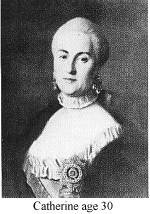
Catherine
the GreatI would like to stress that nevertheless the would-be
medical or rather charitable institutions at the Russian Orthodox
monasteries were, in fact, till the 18th (in some places even
till the 19th century), the only place where the poor
sick could get some help or care in difficult cases under in-patient
“hospitalization” conditions. This is clearly a very important
point which will later help us to understand the role of the Russian
Orthodox clergy in the spread of homeopathy. It must be remembered also
that besides its great spiritual influence, the Russian Orthodox church
had till the land reform of the Empress Catherine
the Great in 1764, extensive land possessions and maintained
effectively its economical affairs. Therefore, the Church could afford
to provide those medical and charitable facilities and offer its help.Furthermore, it should be mentioned that the use of
medical knowledge at that early Christian period (in Russia) had an
especially practical application as an excellent means of spreading the
Christian faith among the people still strongly influenced by pagan
tradition. Thus, healing soon became a field for the struggle between
the newly formed Russian Christian clergy, supported by the state power,
and its pagan adversaries, like wizards, sorcerers or exorcists. This
struggle took not only the form of a peaceful competition for the sake
of the people’s health, but it also happened that the most severe
measures were taken – the highest point of the repression was the
burning of wizards in 1227 in Novgorod. The almighty Russian princes did
not suffer rivals to the Church, even in “medicine”.
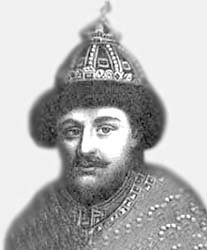
Tsar
Alexey Mikhailovich
(1629-1676)This symbiosis between state and clergy has always
been, from the beginning, very characteristic of Russian socio-political
life. The Russian Orthodox clergy has strongly kept to the so-called
Caesaropapist policy, inherited from its Byzantine teachers, a policy of
non-intervention in the State affairs. The exceptional experience of the
patriarch Nikon (1605-1681) [See :The Great Russian Brockhaus and Efron
Encyclopedia] of breaking down
the status quo by getting personally involved in the internal and
external affairs of the State, was not supported by the clergy. Those
events occurred under the rule of the Tsar Alexey
Mikhailovich (1629-1676). His son, the Tsar Peter the Great (1672-1725), realized that
this was a dangerous precedent for the monarchy. He abolished the
patriarchate and established the Holy Synod – the highest Church
authority controlled by the State. By these reforms the Russian Church
was transformed once and forever into a subordinate ally of the State.
Tsar
Peter the Great
(1672-1725)In the sources dealing with the history of the
Russian Church, we may find some passing testimonies that support the
fact that even distinguished clergymen had a hand in healing practices
although they cared in the first place for the spiritual needs of
congregations. The above mentioned rebellious patriarch Nikon, who had
been expelled from his order by the Holy Council of 1666-67, and was
later exiled, continued in exile to treat the sick who turned to him for
help. He composed himself some medicines made of camphor, olive oil,
vitriol, alum, etc. 7After the establishment of the first Russian medical
schools (by the end of the 17th century), the clergy played a
new and very important role in its capacity of providing medical
students, especially during the period when Pavel Kondoidi (1710-1760)
[See :The Great Russian
Brockhaus and Efron Encyclopedia] headed the sinskaia Kantselaria (1753-1760), the main
Russian medical administrative body at that time. The chief problem of
the Russian medical schools was the lack of candidates having the
appropriate general education and at least a basic knowledge of Latin
that was then the official language of instruction in medical schools.
The students of the Russian spiritual academies 8 after 2-3
years of training, were the single native Russian group with the ability
to become students in the medical schools. 9Thus,
From the beginning of the 18th century,
the Moscow and Kiev spiritual academies were the sources of the
candidates for the medico-surgical schools and in the later medical
faculties at the Russian universities, as well as at the St.
Petersburg Academy of Science. From 1707 the Moscow Hospital School
recruited all of its 50 pupils from among the students of the
Slavic-Greek-Latin Academy. 10The archiatre 11 Kondoidi attempted to
recruit as many as possible native Russians as medical students.
Although the enthusiasm of the spiritual authorities left much to be
desired, the clergymen carried out this recruitment. According to the
report of the Kiev eparchy,[…] By the written invitations of the
sinskaia Kantselaria and by the students’ own will, since 1754,
more than 300 students [of the Kiev – Mogilianskaia Academia – Mark
Mirsky] were released to go into medico-surgical science. Some of
those students are serving now in the medical [department] of the army
of His Majesty the Emperor as well as in the Moscow and St. Petersburg
hospitals… 12According to Bulgakov, 13 those 300
students were sent to study medicine over a period of 14 years, that is
to say from 1754 to 1768.The distinguished historian of the Russian Orthodox
Church Anton Kartashev (1875-1960), described the release of 300
students to medical science together with other events considered by him
as a “massacre” of the cleric estate by the state authorities
in the 1730s. 14 Kartashev wrote:Its [the Slavic-Greek-Latin Academy’s] staff was
almost completely emptied: one [the authorities] had decided that the
students, according to the previously given instructions, should be
sent to study surgical science. Those who show themselves as
deserving, will be assigned to serve as lekari in regiments.
15Kartashev continues describing “the howl of
despair raised by the founders of the not yet completely established
spiritual school”, then citing the complaints made by the rector of
the Moscow Spiritual Academy, Stefan Kalinovsky, to the Synod, “in
his obscure, clumsy Russian language” (Kalinovsky was Polish):[…] Only a small number of students get to
theology […]. Some of them are being sent to St. Petersburg to study
the oriental languages and for the Kamchadale expedition; others to
Astrakhan to teach the Kalmyks and study their language […]. Some
are being taken to the Moscow printing-house and to the Coin office.
Many run away and cannot be found […]. Only a few of them, after
two, three and four years of hard work […] seem to be reliable and
clever, and [who] are worthy of being accepted into rhetoric and
philosophy. [But even they] are being lured in studying medicine at
hospitals where their friends from the Slavic-Greek-Latin Academy had
earlier been recruited […]. Thus, all the prepared beer is being
drunk […], whilst in the theological schools only the yeast is left
[…]. 16Developing further the topic of “imaginary
surpluses” of the youth within the clerical estate, Kartashev
mentions that those children were used by the state as “human
material” for the building of Russian high schools:Once ordered in 1754 [to send people] to the St.
Petersburg Medico-Surgical Academy, the Synod was ready to let the
Academy have only the children of ‘raznochintsy’ [miscellaneous
ranks]. But this was insufficient. In 1755 the Medico-Surgical Academy
asked for the clergymen’s children too. The Synod refused this
demand. Later, in 1756 a new humble request was received from the
Academy, because of the extreme need for the medical staff, to send at
least 50 pupils. The fact that nowhere in Russia were there secondary
schools which could provide the knowledge in Latin, persuaded the
Synod to yield to the request this time. 17Excepting the “humble request” (no doubt,
the Academy’s authorities could have achieved their goal by just
turning to the Senate), the general picture presented above seems to be
true. This shows how the State freely derived its manpower resources
from the cleric estate in general and from students of its seminaries in
particular.Furthermore, the seminaries themselves had a short
basic medical curriculum. From 1802 till 1814, we find that medicine had
been taught in the theological academies in a 2-year course comprising a
basic medical curriculum. In the first year, anatomy, physiology,
general pathology and therapy were studied, and in the second year the
students learned so-called botanical philosophy and pharmacognosy. The
medical curriculum was approved by the sinskaia Kollegia.18 The
same course had also been taught in the spiritual seminaries (there were
36 such seminaries in Russia according to the amount of eparchies).
Medical instruction was so valued, that the teacher who taught medicine
in the Slavic-Greek-Latin Academy, enjoyed a very significant salary of
400 rubles per year, as much as the teachers of rhetoric or high
eloquence, whilst the teachers of the upper grammar classes, of German
or French languages had an annual salary of only 240 rubles. 19By the end of the 1760s, under Catherine the Great
(1729-1796), an improvement of the medical affairs in the Empire was
discussed:Several laymen [naturally, those who were close to
the Empress] suggested that the clergy receive basic medical
instructions so they could assist the peasantry of localities without
professional practitioners; but Baron Dr. Georg von Asch, a deputy
from the Medical Collegium, rejected that proposal as unnecessary and
potentially harmful because of the clergy’s lack of medical skills.
Some nationalistic Russian historians have derided Asch for blind
obstructionism… 20It is most probable that the teaching of medicine was
neither initiated, nor encouraged by the high church authorities, but
just imposed by the State. Generally speaking, the church authorities
(especially of the highest rank) had always resisted introducing any
“practical”, i.e., non-theological disciplines, into the
curriculum of the spiritual academies and seminaries, considering such
disciplines as an encroachment on their exclusive rights and also as
“taking away” the students from their natural spiritual
duties. Relying on the sources cited above, and upon the detailed study
of Gregory L. Freeze, 21 it is apparent that the story of the
appearance and disappearance of medicine in the curriculum of seminaries
and academies in Russia reflected the struggle between the highest state
(usually presented by a Chief Procurator of the Holy Synod) and the
church authorities for more or less stress on “applied”
characters of spiritual education. This struggle may be epitomized by
the conclusions submitted in 1814 by the Committee for the Improvement
of Ecclesiastical School: the spiritual institutions in Russia were
partly liberated from their non-spiritual disciplines and medicine
disappeared from the curriculum of the academies and the seminaries. But
only for a while. By the 1830s, the regime again found it necessary to
continue the transformation of the clergy “into more useful
temporal, not just spiritual, servitors”. 22 Appointed
as Chief Procurator of the Holy Synod in 1836, Count Nicholas A.
Protasov (?-1855) [See :The Great Russian Brockhaus and Efron
Encyclopedia], pressed for
introducing medicine and agronomy into the ecclesiastic curriculum.
This, in his opinion, would bring “profit to the [clergymen]
themselves and their future parishioners”. 23
Protasov’s designs aroused strong opposition among
Church hierarchs. Though sensitive to the seminary’s failings, they
regarded such schemes as inimical to the interests of the Church and
designed purely to serve the worldy needs of the State. This view was
clearly evident in 1836-37, when Protasov transmitted proposals to
incorporate medicine and agronomy into the curriculum, ideas that the
Synod brusquely rejected as unsuitable on practical and pedagogical
grounds. 24


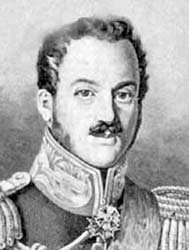
Pavel
Kiselev
(1788-1872)
Nevertheless, Protasov, supported in 1838 by another
high official, Minister of State Domains Pavel
Kiselev (1788-1872) [See :
The Great Russian Brockhaus and Efron
Encyclopedia], persuaded the
Tsar Nicholas I to replace the Commission of Ecclesiastical Schools (the
latter had been created by the initiative of the mentioned above
Committee for the Improvement of Ecclesiastical Schools and was in fact
the hard core of the opposition to the reforms) by the Bureau of
Ecclesiastical Schools directly subordinated to him and composed of
non-churchmen. After this proposal had been adopted by Nicholas I, the
church authorities were forced to surrender.
However, this achievement was not productive. A
historian of the Russian Church, Boris Titlianov, wrote:
Of course, it would be fine if everyone could be a
specialist in all the occupations. […]. However, except during the
Protasov epoch, such a fusion has always been recognized as impossible
and bringing nothing but harm, because a priest-physician or a
priest-agronomist will be a bad pastor, a bad physician and a bad
agronomist. Count Protasov would have liked to create the possible
from the impossible. Accordingly, the consequences were expectable. 25
The failure was soon apparent, although from 1848 and
till 1852, medicine had been introduced in all the seminaries as
required by the government.
With only a perfunctory knowledge of natural
science, pupils had neither preparation nor the time to master
medicine; at most, they could read through a medical textbook. 26
This failure was not only “anecdotal”; it
was reflected also in official inspection reports. Titlianov informs us
that no seminary reportedly had a general rating in medicine higher than
the modest “satisfactory”, whilst in many seminaries the
knowledge of medicine for more than half of the pupils was recognized as
“unsatisfactory”. 27 Most probably, the failure of
introducing medicine into seminaries’ curriculum was caused in first by
the relatively low educational level of candidates for the parish
clergy, whilst the persistent splitting of attention between spiritual
and non-spiritual disciplines made it impossible to get this problem
over.
With the establishment of zemstvo medicine 28 it
was hoped that the problem of intervention of non-professionals in
medical affairs would be removed. Nevertheless, around 1880, the
government sought again to impose additional extra-spiritual duties on
the clergy.
Before an epoch of wars and revolutions at the
beginning of the current century, this period was the last long lull
which gave the Russian Empire a chance for solving the problems caused
by modernization. 29
