Chapter IV
The Scope of HomœopathyAccuracy and efficiency in homœopathic
therapeutics is only possible to those who have a clearly defined idea of the field in which
the principle of Similia is operative.The scope of homœopathy is a subject which
has received took little consideration by teachers and practitioners alike. Hazy and
confused ideas prevail. As a result we find on the one hand a few sincere but misguided
enthusiasts attempting the impossible and bringing ridicule upon themselves, and on the
other hand, the great majority, ignorant of the higher possibilities, missing their
opportunities and bringing discredit upon themselves and their art by resorting to
unhomœopathic measures in cases which could readily be cured by homœopathic remedies. One
believes too much, the other too little. Neither one knows why he succeeds in one case and
fails in another.Haphazard cures do not justify boasting.
The art of pharmaco-therapeutics in general, and of homœopathy in particular, is not
advanced by such work. What we need is clean-cut, scientific work; work capable of being
rationally explained and verified; results attained by the intelligent application of a
definite principle and a perfected technic in a sharply delimited field.The therapeutic principle is known; the
technic of prescribing has been developed; a large number of remedies have been prepared;
but the field of action has not been clearly defined.In this respect we are like an army which
is wasting much good ammunition trying to search out a hidden enemy of whose exact location
it is ignorant.A philosophical aeroplane, sent into, the
upper regions. of the air, may be able to locate the enemy exactly and enable us to train
our guns directly upon him.Homœopathy as a therapeutic method is
concerned primarily only with the morbid vital processes in the
living organism, which are perceptibly represented by the symptoms, irrespective of what
caused them.In defining the scope of homœopathy
it is necessary first to discriminate between disease per se, as
a morbid vital process and the material results or products in which the morbid process
ultimates. With the latter, homœopathy primarily has nothing to do. It is concerned only
with disease per se, in its primary, functional or
dynamical aspect.Disease per se, Hahnemann
says, is “nothing more than an alteration in the state of health of a healthy
individual,” caused by the dynamic action of external, inimical forces upon the life principle of the living organism, making itself known
only by perceptible signs and symptoms, the totality of which represents
and for all practical purposes constitutes the disease.It becomes necessary, therefore, in homœopathic
prescribing to carefully separate the primary, functional symptoms which represent the
morbid process itself, from the secondary symptoms which represent the pathological
end-products of the disease.The gross, tangible lesions and products in
which disease ultimates are not the primary object of the homœopathic prescription. We do
not prescribed for the tumor which affects the patient, nor are we guided by the secondary
symptoms which arise from the mere physical presence of the tumor: We prescribe for the patient-selecting and being guided by the symptoms which
represent the morbid, vital process which preceded, accompanied and -ultimated in the
development of the tumor.If there is doubt as to which symptoms are
primary and which are secondary the history will decide. In the evolution of disease in the
living organism, functional changes precede organic or structural changes. “Function creates the organ,” is a maxim in biological and morphological science, from which it
follows that function reveals the condition of the organ.The order in which the symptoms
of a case appear, therefore, enables us to determine which are primary and which secondary,
as well as to, ascribe reflex symptoms to their source and correctly localize the disease.For the homœopathic prescriber the
totality of the functional symptoms of the patient is the disease, in the sense that such
symptoms constitute the only perceptible form of the disease and are the only rational basis
of curative treatment. Symptoms are the outwardly perceptible signs or phenomena of internal
morbid changes in the state of the previously healthy organism, and are our only means of
knowing what disease is. They represent a change from a state of order to a state of
disorder. When the symptoms are removed the disease ceases to exist.These phenomena result from and represent
the action upon the living organism of some external agent or influence inimical to life.
With the morbific agents themselves Homœopathy primarily has no more to do than it has with
the tangible products or ultimates of disease. It is taken for granted that the physician,
acting in another capacity than that of a prescriber of homœopathic medicine, will remove
the causes of the disease and the obstacles to cure as far as possible before he addresses
himself to the task of selecting and administering the remedy which is homœopathic to the
symptoms of the case, by which the cure is to be performed.In thus focusing attention upon the
individual and purely functional side of disease, upon disease per
se, the sphere of homœopathy may be clearly perceived.From this point of view, the most
significant and general feature to be observed about the phenomena or disease is the fact of
motion, action, change; change of states, forms and positions; change resulting from the
application of morbific force in the living organism; change from a state of health to a
state of disease; and the reverse; change of symptoms and their groupings; change of order
to disorder change of form of diseased structures; change of function; change of molecular
combination and arrangement; everywhere motion, change and transformation so long as life
lasts. In one word, we find ourselves in the realm of pure
dynamics. This is the true and only sphere of homœopathy, the sphere of vital dynamics. In fact, homœopathy might well be
defined as the Science of Vital Dynamics. Its field is the field of disordered vital
phenomena and functional changes in the individual patient, irrespective of the name of the
disease, or of its cause. Its object is the restoration of order and harmony in vital
functioning in the individual patient. Its laws are the laws of motion operating in the
vital realm, which govern all vital action. Its fundamental principle is the universal
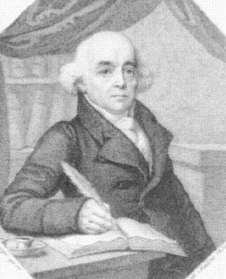
principle of Mutual Action. “Action and Reaction are Equal and Opposite.”Dr Samuel Hahnemann
“The unprejudiced observer,” says
Hahnemann, “well aware of the futility of transcendental speculation which can receive
no confirmation from experience-be his power of penetration ever so great – takes note of
nothing in every individual disease, except the changes in
the health of the body and the mind (morbid phenomena, accidents, symptoms) which can be
perceived externally by means of the senses; that is to say, he notices only the deviations
from a former healthy state of the diseased individual, which are felt by the patient
himself, remarked by those around him and observed by the physician. All these perceptible
signs represent the disease in its whole extent, that is, together they form the true and
only conceivable portrait of the disease.” (Organon, Par. 6.)The tangible things which the examining
physician finds in the body are not the disease, but merely its effects. It is as
impossible, and therefore as futile, to try to, find a disease in the hidden interior of the
organism as it would be to try to find a thought by an exploration of the interior of the
brain, the electricity in the interior of a dynamo or the song in the throat of a bird. Such
things are known only by their phenomena. Metaphysically considered, they may be said to
subsist in the dynamic realm as substantial entities, or forces, but as such they are
perceptible only to the “inner vision,” through the eyes of the mind. They are
“spiritually (that is, mentally) discerned.” The metaphysical conception serves as
an aid in the interpretation of the phenomena.Practically, however, we do not deal with
abstractions. We deal with facts and phenomena, with symptoms.“The totality of these, its symptoms, of this outwardly reflected Nature of the internal essence of disease, that
is, of the affection of the vital force, must
be the principal, or the sole means, whereby the disease can make known (its nature and)
what remedy is required.” (Organon, Par. 7.)The removal of all the perceptible symptoms
or phenomena of disease removes disease itself and restores health. Hahnemann thus
philosophically distinguishes between disease itself and its causes, occasions, conditions,
products and phenomena, and in so doing shows clearly that the sphere of homœopathy is
limited primarily to the functional changes from which the phenomena of disease arise. In
other words, homœopathy is confined to and operative only in the sphere of vital dynamics.Primarily homœopathy has nothing to do
with any tangible or physical cause, effect or product
of disease although secondarily it is related to all of them. Effects of disease in morbid
function and sensation may remain after the causes have been removed. Removal of the
tangible products of disease, if it be too far advanced, may have to be relegated to
surgery. Homœopathy deals directly only with disease itself, the morbid
vital processes manifested by perceptible symptoms, which may remain and continue
after the causes have been removed and conditions changed.It stands to reason, as Hahnemann says,
that every intelligent physician, having a knowledge of rational etiology, will first remove
by appropriate means, as far as possible, every exciting and maintaining cause of disease
and obstacle to cure, and endeavor to establish a correct and orderly course of living for
his patient, with due regard to mental and physical hygiene. Failing to do this, but little
impression can be made by homœopathic remedies, and what slight impression is made will be
of short duration.Having done this, he addresses himself to
the problem of finding that remedy, the symptoms of which in their nature, origin and order
of development are most similar to the symptoms of the patient, and to the proper management
of it, when found, as to size and frequency of doses.While gross pathological tissue changes,
organic lesions, morphological disproportions, neoplasms and the physical effects of
mechanical causes are not primarily within the domain of Similia, and
therefore are not the object of homœopathic treatment, the morbid processes from which they
arise, or to which they lead, are amenable to homœopathic medication. Homœopathic
remedies, by virtue of their power to control vital functions and increase resistance, often
exercise a favorable influence upon physical development as well as upon the tangible
products of disease or accident. Thus, the growth of tumors may be retarded or arrested;
absorption and repair promoted, even to a total removal of the morbid product or growth;
secretions and excretions may be increased or decreased; eruptions, sores and ulcers healed.
But all these happy tangible results are only incidental and Secondary to. the real cure
which takes place solely in the functional or dynamical sphere quelling
disturbance, controlling metabolism, antidoting poisons, raising resistance and bringing
about cure by the dynamical influence of the symptomatically similar remedy.Following the exclusion method adopted by
Dake, in his “Therapeutic Methods,” and using a modification of his phrasing, the
sphere of Similia may be defined as follows:1. Homœopathy relates primarily to no affection of health where the
exciting cause of disease is constantly present and operative.2. It relates primarily to no affections of health which will, of
themselves, cease after the removal of the exciting cause by physical, chemical or
hygienic measures.3. It relates primarily to no affections of health occasioned by the
injury of destruction of tissues which are incapable of restoration.4. It relates primarily to no affections of health where the vital
reactive power of the organism to medicines is exhausted, obstructed or prevented.5. It relates to no affection of health, the symptomatic likeness of
which may not be perceptibly produced in the healthy organism by medical means, nor to
affections in which such symptoms are not perceptible.The class not excluded, the one in
which homœopathy is universal and paramount to all other methods, must be made up of affections of the living organism in which perceptible symptoms exist,
similar to those producible by pathogenic means, in organisms hazing the integrity of tissue and reactive
power necessary to recovery, the exciting causes of the affections and obstacles to cure
having been removed, or having ceased to be operative.
The sphere of Similia in medicine is thus limited to those morbid functional
conditions and processes which result primarily from the dynamic action upon the living
organism of morbific agents inimical to life.The living organism may be acted upon or
affected primarily in three ways: (1) Mechanically. (2) Chemically. (3) Dynamically. The
causes of disease fall naturally under these three heads.Under the head of mechanical causes of
disease come all traumatic agencies, such as lesions, injuries and destruction of tissues
resulting from physical force; morbid growths, formations and foreign substances;
congenitally defective or absent organs or parts, prolapsed or displaced organs, etc. These
conditions are related primarily to surgery, physical therapeutics and hygiene.The destructive action of certain chemical
poisons such as the acids and alkalies is a sufficient illustration of the chemical causes
of disease, although all such agents have also secondary dynamical effects, which come
within the sphere of homœopathy. Diseases arising from these causes require the use of
chemical or physiological antidotes, combined in some cases with measures for the physical
expulsion of the offending substances, and followed by homœopathic treatment for the
functional derangements which remain or follow.Entozoa or organized living animal
parasites, when their presence in the body gives rise to disease, must be expelled by
mechanical measures or by the administration of medicines capable of weakening or destroying
them without endangering the person suffering from their presence. Dynamical treatment on
homœopathic principles may be required to remove the functional derangements and restore
the patient to health.The effects of dynamical causes of disease,
by which, is meant all those intangible and medicinal or toxic agents and influences which
primarily disturb the vital functions of mind and body, come legitimately within the sphere
of Similia. These are very numerous, but they may be roughly classified as (1) mental or
psychical, atmospheric, thermic, electric, telluric and climatic, (2) dietetic, hygienic,
contagious, infectious and specific-the last three including all disorders arising from the
use or abuse of drugs, and from all bacterial agents or pathogenic microorganisms which
produce their effects through their specific toxins or alkaloids. Homœopathy successfully
treats bacterial or zymotic diseases, such as cholera, yellow fever, typhus and typhoid
fever, malarial fever, diphtheria, tuberculosis and pneumonia by internal homœopathic
medicines, without resorting to bactericides, germicides or antiseptics. Such agents have
their use only in the field of sanitation, which is environmental, not personal. We
disinfect the typhoid patient’s excretions but not the patient himself.Again quoting Dake’s admirable exposition,
but qualifying his third proposition, and adding a fifth paragraph:“The domain of Similia may be reached by another route. Looking at the various
drugs and other agencies capable of influencing health, and advancing, as before, by the
method of exclusion, it may be said:“1. The homœopathic law relates to no agents intended to affect
the organism chemically.“2. It relates to none applied for mechanical effect simply.
“3. It relates to none required in the development or support of
the organism when in health.“4. It relates to none employed directly to remove or destroy
the parasites which infest or prey upon the human body.“Looking over the armamentarium of the
therapeutist for agents no excluded, one class is found, namely: those
agents which affect the organism, as to, health in ways not governed by chemistry,
mechanics, or hygiene, but those capable of producing ailments similar to those found in the
sick.”In regard to Dake’s third
proposition it can and will be shown that, inasmuch as the development and support of the
organism when in health depends upon the principle of assimilation,
as demonstrated by Fincke, the principle of Similia does relate to these
processes; for assimilation depends upon mutual action, upon action and reaction, and this
is the fundamental principle of homœopathy.To the foregoing propositions are
formulated by Dake one more should be added.5. The homœopathic law relates to no agents or drugs administered
for their direct or so-called physiological effects.Circumstances arise occasionally
which make it necessary, temporarily, for the homœopathic physician to use drugs in
“physiological” (really, pathogenic) doses for their palliative effect. Although
the ruling principle of his medical life is cure by
symptom-similarity, and that end is always held in view as an ideal, he is not
thereby forbidden the use of palliative measures in cases where they are appropriate and
necessary.Hahnemann, after showing the futility of
antipathic medication as a curative method, and pointing out the dangers incidental to its
use, admits the utility and necessity of resorting to palliation in certain emergencies. In
a note to Paragraph 67, he says:“Only in the most urgent cases, where
danger to life and imminent death allow no time for the action of a homœopathic remedy-not
hours, sometimes not even quarter hours and scarcely minutes-in sudden accidents occurring
to previously healthy individuals–for example, in asphyxia and suspended animation from
lightning, from suffocation, freezing, drowning, etc.-it is admissible and judicious at all
events as a preliminary measure, to stimulate the irritability and sensibility (the physical
life), with a palliative, as for instance, with gentle electric shocks, with clysters of
strong coffee, with a stimulating odor, gradual application of heat, etc. When this
stimulation is effected, the play of vital organs goes on again in its former healthy
manner, for there is here no disease to be removed, but merely an obstruction and
suppression of the healthy vital force. To this category belong various antidotes to sudden
poisonings; alkalies for mineral acids, hepar sulphuris for metallic poisons, coffee and
camphor (and ipecacuanha) for poisoning by opium, etc.”The principle of palliation is here
recognized and a few illustrations given of its legitimate application in one class of cases
If it is noted that all these illustrative cases are characterized by shock, or collapse, it will be seen that the principle has a
somewhat wider application than appears on first consideration of the cases enumerated by
Hahnemann. It may fairly be extended, for example, to cover certain cases where sudden and
unendurable pain occurs and collapse is threatened by such semi-mechanical conditions as the
presence or passage of renal calculi and gravel, or biliary concretions. In exceptional
cases of these and similar conditions, anal- my be und temporarily as anæsthesics are used
in surgical and dental operations, and for the same purpose, that is, to prevent or relieve
shock.When all has been said and the scope of homœopathy
has been defined as clearly as possible, it is evident that there is a border land between
homœopathy and its related sciences around which it is impossible to draw. sharp lines of
demarcation. In this region each physician must be governed by his own individual judgment
and the circumstances of the case. It follows that there will always be differences of
opinion between individual physicians under such circumstances. The physician who is imbued
with the spirit of homœopathy endeavors always to keep his mind open and free from
prejudice. While striving always to perfect his knowledge of homœopathic technic in order
that be may meet any emergency and extend the borders of his art to the farthest limits, he
never forgets that the necessities and the welfare of his patient are first. He will not
allow either pride or prejudice to obscure his sense of his own limitations, nor those of
his art. Circumstances sometimes arise when the strongest man and ablest prescriber, by
reason of the great moral pressure brought to bear upon him by the peculiarities of his
patient, of the environment, or from lack of time, will be compelled to tide over a period
of unendurable suffering by the use of analgesics, or of some other measure to meet
extraordinary emergencies. He does this as a charitable concession to the weakness of human
nature, his own perhaps as well as others, without in the least degree lowering his
standards, or bringing discredit upon himself or his art. He does this knowing, perhaps,
that if he had time and the circumstances permitted, he could do better. But time and
circumstances are sometimes, at least temporarily, beyond his control. It is possible to
violate the spirit by adhering too closely to the letter of the law. Victory is sometimes gained by appearing to
yield, which is quite in accord with the principle of Similia, a sort of moral homœopathy.
A strategic retreat to another line of defense in war often gives a stronger base from which
to launch a successful attack.In cases of renal or hepatic colic, for
example: If the physician is firm and calm as well as skillful, and possesses the entire
confidence of the patient and his family and friends, he may be able to alleviate the
agonizing pain and carry such cases through to a happy termination by the use of homœopathic
remedies alone. It has often been done and, when possible, is the ideal way.But the physician may have been newly
called to the case or family and not have had time to gain their complete confidence by the
results of his work and teaching. Patients have to be educated in the principles and methods
of homœopathy by discussion, instruction and demonstration, and this requires time. When
they have felt or witnessed the results of competent homœopathic prescribing they acquire
confidence. Some become enthusiastic advocates and propagandists of homœopathy, and are
always ready to uphold and cooperate with their physician in demonstrating its methods even
in the gravest emergencies. Others are interested only in quick results, caring little or
nothing about how they are obtained. The latter are very difficult to hold in such cases and
some of them will not continue with the conscientious homœopathician, no matter what he
does. Between these two classes exists a third, the members of which can be interested in
homœopathy to a degree that will enable the practitioner to hold them as patients and
retain their confidence and cooperation in homœopathic treatment in all but extreme cases.
It is in such cases that the pressure referred to will be brought to bear upon him, and he
may be compelled to resort temporarily to palliation to gain time and strengthen his
position. Unless he can do this there is but one honorable course left for him to
pursue-resign the case and withdraw. In pursuing either of those courses the conscientious
practitioner is beyond the criticism of all fair-minded persons. But he is always open and
frequently subjected to the attacks of prejudice, bigotry and jealousy, and to these the
best defense is silence and a clear conscience.
Article