INTRODUCTION
* * * * *
THE
ENCYCLOPEDIA
OF
PURE MATERIA MEDICA.A RECORD
OF THE
POSITIVE EFFECTS OF DRUGS UPON THE HEALTHY
HUMAN ORGANISM.EDITED BY
TIMOTHY F. ALLEN, A.M., M.D.,PROFESSOR
OF MATERIA MEDICA AND THERAPEUTICS IN THE NEW YORK HOMŒOPATHIC
MEDICAL COLLEGE; CORRESPONDING MEMBER OF THE BRITISH
HOMŒOPATHIC MEDICAL SOCIETY; HONORARY MEMBER OF THE
HOMŒOPATHIC MEDICAL SOCIETY OF FRANCE.
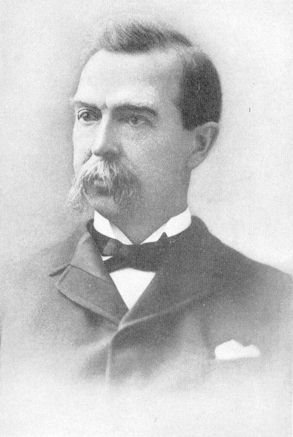
Timothy Field
Allen
WITH CONTRIBUTIONS FROM
DR. RICHARD HUGHES, OF ENGLAND.
DR. C. HERING, OF PHILADELPHIA.
DR. CARROLL DUNHAM, OF NEW YORK.
DR. AD. LIPPE, OF PHILADELPHIA, AND OTHERS.THE study of the
positive effects of drugs upon the healthy human organism is now
universally acknowledged to be the duty of every student of medicine. To
supply a complete and accurate record of these effects (pathological
anatomy excepted), is the aim of this work. These symptoms are recorded
as facts, which, while the interpretation of their physiological action
is as sure to change as physiology is to advance, will ever remain the
same, and be re-read and re-interpreted with increasing clearness and
satisfaction.
PREPARATION.
-The sources from which this compilation has been
made are three.
First.
Experiments made upon healthy
individuals for the purpose of noting the affects of the drug.
Second.
Effects observed after poisonous
doses (accidentally or maliciously administered).
Third.
Symptoms (cautiously admitted)
observed in the sick after the administration of the drug.To these must be added
a VERY FEW symptoms which have never been observed as affects of
drug-action, but which have been so repeatedly verified clinically, that
they clearly indicate the remedy; these are designated by a small cipher
(°) after the symptom.
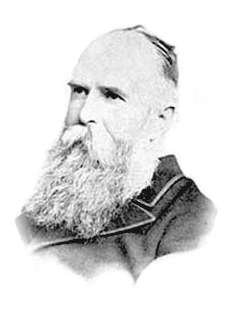
Dr Richard HughesA large amount of
literature has been searched that the work might be complete and
reliable. Original sources have been obtained and transcribed or
translated. The authorities quoted by Hahnemann (whose original
publications he was in many instances, unable to obtain), have been
referred to by DR. HUGHES, of England, the circumstances under which the
effects were noticed, furnished us, and, when necessary, corrections
made. The following simple will serve to illustrate the value and
accuracy of Dr. Hughes’s work:
ANTIMONIUM CRUDUM.
BONETUS. Statement of occasional effects of A.
CAMERARIUS. Effects of overdosing in adults.
EPH. NAT. CUR. Effects of overdosing in an adult.
DIOSCORIDES. Only mentions beneficial effects of its
external application to ulcers of the eyes.GARDANE. Not obtainable.
GMELIN. General statement (from authors) of effects
of A.GÖTZE. Effects of A, in a patient with syphilitic
ulceration.HILDANUS. Same case as that given in full by
Camerarius in Symptom 16.HOFFMAN. Statement of ill effects of antimonial
emetics.JAMES. Not obtainable.
JOUBERT. Not obtainable.
KUNCKEL v. LOWENSTEIN. Effects of continued use.
LINDESTOLPE. General statement of the noxious effects
of A. (one only of the eight symptoms referred to him appears).LOTICHIUS. Case of overdosing in an adult.
MATTHIOLUS. (No reference given), not in his Comm. in
Dioscorid.MORGENSTERN. General statement (from authors).
NICOLAI. Not traceable.
PLINIUS. As A. was not used internally in his time,
this must be as with Dioscorides.REINDEL. Not obtainable.
SAUNDERS. General statement from observation.
SCHULZ. Not obtainable.
STAHL. Not obtainable.
WEPFER. Several cases of poisoning in man and
animals.
NOTES.
Symptom 15. Note, “The case related in S.
16.”Symptom 16. Render last clause, “So obtuse was
her sensibility that when, from the acrimony of the evacuations and her
position on the back, a large and foul ulcer formed over the sacrum and
coccyx, she complained of no pain from it.”Symptom 17. Note, “Not found.”
Symptom 28. Note, “Not found.”
Symptom 56. Note, “Not found.”
Symptom 68. Bracket, note, “Preceding S.
73.”Symptom 73. Bracket, note, “After violent
vomiting, left ear soon recovered, but right remained permanently deaf;
reporter ascribes it to rupture of membrana tympani.”Symptom 112. Note, “Same case as S. 421.”
Symptom 113. Note, “Not mentioned by James in
his treatise on the Fever Powder.”Symptom 184. Note;” Hernia ventriculi after
violent vomiting,” and bracket.Symptom 206. Note, “Not found.”
Symptom 221. Add, “But rarely.”
Symptom 224. Note, “In a dog.”
Symptom 270. Render “Suffocative catarrh.”
Note, “Coming on fifteen days after amputation of foot (S. 381,
388), and ending in death.” Bracket.
NOTE BY DR. HUGHES.
“Dr. Allen has
wished me to state the nature of my contribution to his opus magnum.“It has regard
solely to the pathogenesies of Hahnemann. These are derived from two
sources: the first, observations made by himself and his disciples; the
second, cases of poisoning and overdosing recorded in medical
literature. The two elements are present in the several pathogenesies in
varying proportions, as may be seen from the lists given in the Monthly Homœopathic Review, for November,
1873, and the British Journal of Homœopathy
for October, 1813.“There are thus,
in Hahnemann contributions to the Materia Medica, a large number of
quotations. Now, in editing any work so characterized, you will add
greatly to its value if the quotations are verified
by reference to the originals. Errors will creep in, and they are much
more likely to occur to the citer, full of his other thoughts, than to a
corrector, whose one purpose is to see that no mistake is allowed to
stand. Hahnemann’s quotations, like those of any other author, need
verification, and experience has amply proved the usefulness of the
task.“But there is
something more. It has often been lamented that Hahnemann has given us
so little information as to the circumstances under which his symptoms
were observed. In the case of himself and his fellow-provers, we must
await for this, till (if ever they are) their day-books are published.
But as regards the observations he has cited from authors, the
information we desire is (in the main) accessible to us. It only needs a
search in the great libraries which aim at including all literature to
find the journals, transactions, and treatises, extant in Hahnemann’s
day, and from which he quoted. The result is illumination.
A flood of light is cast upon the separate symptoms he has furnished: we
learn their subjects, the dose and preparation of the drug, the order
pursued by the phenomena, and their termination. Many misconceptions
which we are liable to form of them, standing alone, are removed; and
the whole series becomes intelligible and available for practice.“Yet once again.
The investigations of this kind which have been hitherto carried out,
have disclosed a strange laxity on Hahnemann’s part, as regards the
materials he has used. Symptoms of the most questionable kind, condemned
by his own canons, and such as no one now would admit into a
pathogenesis or use in practice, find frequent place in the Materia
Medica Pura and the Chronic Diseases. This is the unanimous judgment of
all, of Rothe, Langhienz, Frank, Shipman, Reil, Sorge, Wurmb, Watzke,
who have examined any part of the subject. It has been suggested in
explanation, that Hahnemann left this part of his work to others, and
must not be blamed for their errors; and further, that he gave these
symptoms as corroborative only. But, however this may be, there they
stand; undistinguished in most collections (as in Jahr and Hempel), from
those which surround them, undistinguished always among themselves. They
need imperatively the fullest investigation, that their real character
may be exposed, and they be either dropped or stigmatized as dubious.“The facts thus
stated had for some time been before my mind, when I undertook to
arrange Belladonna for the Hahnemann Materia
Medica. It was my duty to consult the originals of the 1440
symptoms, cited by Hahnemann, in his pathogenesis of this drug; and the
results I arrived at (as detailed in the British
Journal of Homœopathy for 1873) both quickened my sense of
the need of such examinations, and showed me their feasibility for the
English student. In the Monthly Homœopathic
Review for November, 1873, I stated the matter at length,
illustrating it by the instance of Aconite; and urged the carrying out
of the investigation for all Hahnemann’s medicines. No response came,
and no public body took up the undertaking. My attention was then drawn
to Dr. Allen’s projected Encyclopedia, and it seemed to me a grievous
thing that Hahnemann’s pathogenesies should once more go forth to the
world with their citations unverified, unillumined, unrevised. I wrote
to Dr. Allen, offering to do this work for him. He closed with me at
once, and liberally provided the necessary means, and I have been
engaged in the investigation ever since.“Its results may
hereafter appear in some separate and more detailed form. At present,
they are incorporated into the Materia Medica as presented in these
pages. In the heading, instead of a bare list of names of authors from
whom Hahnemann has quoted, there is affixed to each a brief statement of
the nature of his observations, sufficient to show generally the value
of the symptoms derived from this source. Next, to each symptom that
requires it a note is appended, throwing light upon its causation and
connections. Last, all doubtful symptoms are bracketed squarely, to
distinguish them from those which Hahnemann himself has bracketed, with
like intent.[These symptoms will be readily distinguished by references
to the authorities and to footnotes. In succeeding volumes, two kinds of
brackets will be used as here suggested.] The reason for such stigma is
either stated in a note, or is obvious from the account given in the
heading of the nature of the author’s observations. I could myself have
wished, in many instances, to expunge rather than to bracket; but, in
reverence for the master, Dr. Allen desires to omit nothing which he has
given us, and it is left to the judgment of the reader to estimate all
according to the information supplied. My notes occupy a separate
division of the page, to keep them distinct from those which Hahnemann
has appended to his symptoms.“In this
Encyclopedia of Materia Medica, accordingly, the student may feel
confidence that no cited symptom of Hahnemann’s (save those of authors
whose works I have been unable to consult) stands unverified, and that
none is without the fullest light which can be cast upon its, nature and
probable value.”
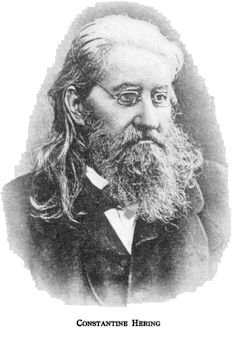
Dr Constantine HeringThe existence of
typographical and other errors in the original text of some provings,
has been brought to the notice of the editor, by DR. C. HERING, of
Philadelphia. The value of these notes will be recognized by the
following samples.Hahnemann, Chronische
Krankheiten Vierto Theil, Zweite Auflage. Natrum
muriat., page 382, symptom 785, “Bei kalten Becken instead of Backen.”
Pathogenetic Cyclopedia, part 1, by Dudgeon, 1850, page 261-4,
“Cold pelvis instead of cheeks.” Same Cyclopedia has, page
25-26, nine symptoms of anxiety under the head of Natr. mur.; one is not to be found in
Hahnemann (“on awaking,” etc.); and nine with anxiety, not to
be found in Cyclopedia.Chronische Krankheiten
Vierte Theile. Nitrum, page 475,
symptom 252, instead of “Nervengegend”
read Nierengegend! copied by Trinks
in his Handbuch; also by Jahr and some translators.Sabadilla, Archiv 4, 3,
page 122-156; full of errors. Stapf Beiträge, 1836, every one repeated;
have gone in all the Repertories. The worst are, page 126, instead of
“Wein-trinken read Warm-trinken,” etc.AUTHORITIES are given
at the beginning of each proving, and each symptom is followed by a
small number referring to this list of authorities, so that any symptom
may be readily traced, and reliance placed upon it according to its
authority, the dose which produced it, or the time when it occurred, the
time (when noted by the provers) being given in brackets after the
symptom.TRANSLATIONS have been
made with special care to preserve the accurate meaning of the original.
When existing translations have been found accurate, their phraseology
has been retained, in order to make as little change as possible in
existing Repertories or habitual use of symptoms.For several years the
editor has kept, added to, and elaborated a small manuscript vocabulary,
which includes the most obscure terms used in describing symptoms, the
translation of which has been adopted after numerous comparisons and
conferences with German scholars. Much aid has been obtained from a
table of terms published in the Vierteljahrschrift,
especially in the matter of provincialisms. A few extracts will
illustrate this part of the work.ABGESCHLAGENHEIT. Mental dejection; physical
prostration or weariness. (Compare Mattigkeit.)ANGEGRIFFENHEIT. Indisposed; sick. (Compare
Abspannung.)DAEMISCH (see Eingenommen).
Confused. (Compare Beneblung, Benommenheit, Befangenheit, and Wüstheit)FROST. Chill. (More severe than Kälte, coldness; a
more subjective or internal sensation.)MATT. A sensation of weakness; weariness (tired, like
Müde), but not such real loss of
Strength as Schwach.SCHLUND. The whole internal throat; Schlund-kopf, pharynx.
By such means the editor has endeavored to make the
translations as accurate and uniform as possible, and hopes that very
few errors will exist in this part of the work. The translations from
the French have mostly been made by DR. G. L. FREEMAN. a good French
scholar and conscientious translator.ARRANGEMENT. -The drugs have been arranged alphabetically, which arrangement has been
strictly followed, separating even Atropine and Belladonna. The only
scientific or satisfactory grouping of drugs possible must be in
accordance with their generic effects on the human body. Many of our
drugs are too imperfectly known, and, indeed, our bodies themselves are
too imperfectly known, to render such a classification possible at this
time. Theoretical grouping of drugs must be left to text-books, or
treatises on the Materia Medica; it is out of place in a work of this
character.SYMPTOMS are arranged in accordance with the
anatomical plan. Sub-grouping has been made in accordance with the
following general principles in any part:
First.
General symptoms not localized
definitely.
Second.
Localized symptoms.
Attention has been paid
to objective and subjective symptoms, and when possible the appearance of a part (objective) is first
given, and afterward sensations (subjective). Symptoms denoting increased action or activity are given first;
those denoting depression and loss of action or function follow.The following scheme
has been prepared and followed as strictly as possible: Scheme.
Dr Adolph LippeVERIFICATIONS.
-For the purpose of making the work practically useful (the great aim in
view), those symptoms which have been repeatedly cured by the drug are
distinguished by stars, with italics, or full-faced type; the latter
class is most important. Symptoms in italics, without stars, have been
repeatedly observed by provers, but not yet verified on the sick. Most
generous and efficient help in this portion of the work has been
rendered by two of our most distinguished therapeutists, DR. CARROLL
DUNHAM and DR. AD. LIPPE. Dr. Dunham has looked over nearly all the
manuscript when ready for the press, and put in his stars and italics;
in Argentum nitricum, for example, he starred symptoms 6, 31, 58, 61,
67, 73, 76, 82, 89, 104, 139, 141, 148, 275, 278, 333; 335, 403, 432,
435, 438, 439, 440, 446, 447, 499, 500, 504, 511, 536, 553. Dr. Lippe
has taken the trouble to send the editor the numbers of the symptoms in
his Text-book which he has verified; has also made additional
observations. The other verifications have been inserted by the editor,
after consulting nearly the whole of the homœopathic literature.
Doubtless numerous symptoms now undistinguished deserve stars. The
editor will be duly thankful for any suggestions in the matter.
Dr Carroll DunhamIt is obviously beyond
the power of any one man to do, in a limited time, all the clerical and
other labor which this work has required. DR. GEORGE L. FREEMAN has been
constantly employed upon it, for nearly two years preceding the issue of
the first volume; he has translated all, or nearly all, the French
provings, has visited libraries for the purpose of copying provings and
poison cases, has arranged the symptoms in accordance with the scheme,
and has made up the Conditions. My partner, DR. ST. CLAIR SMITH, has
furnished numerous verifications for the work, and has very efficiently
assisted its progress through the press. To both these gentlemen are due
our most grateful acknowledgments. To DR. H. M. SMITH we are especially
indebted, for the use of his most valuable English library, complete in
its files of early and recent Homœopathic literature.The work is now offered
to the profession with the hope that, by its accuracy and completeness,
it will advance the healing art, and be the means of more effectually
relieving suffering.
T. F. ALLEN.
No. 3 EAST THIRTY-THIRD ST., NEW YORK,
November 1st, 1874.® 2000
Article