Chapter III
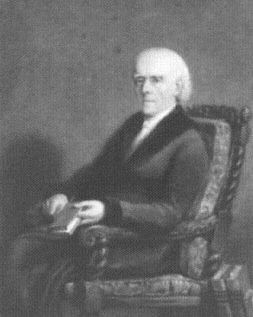
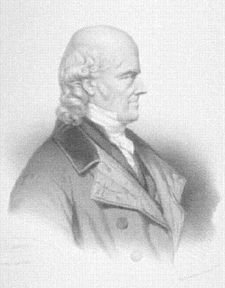
Schools of PhilosophyDr Samuel Hahnemann
It will be well to take a glance
at the various schools of philosophy in order to be able to understand his point of view and
identify the fundamental ideas and concepts out of which Hahnemann developed his system.The various schools of philosophy
may be broadly classified as materialistic, idealistic and substantialistic.Materialism – The
doctrine that the facts of experience are all to be explained by reference to the reality,
activities and laws of physical or material substance. In psychology this doctrine denies
the reality of the soul as psychical being; in cosmology, it denies the need. of assuming
the being of God as Absolute Spirit or of any other spiritual ground or first principle;
opposed to spiritualism. Materialistic theories have varied from the first, but the most
widely accepted form regards all species of sentiment and mental life as products of organism, and the universe itself as resolvable into
terms of physical elements and their motions.” (Standard Dictionary.)Here we should consider for a moment the
meaning of the words “reality” and “substance.” The “dyed in the
wool” materialist regards nothing as real and substantial which has not tangibility. He reduces everything to the terms of physical
matter, which is for him the only reality. If he uses the words, energy, power, force,
motion, principle, law, mind, life or thought, which represent intangible things, it is to
regard them merely as attributes, conditions or products of matter. For him the things
represented are neither real or substantial. They exist, as it were, only in the
imagination. Because they are not tangible they are not real. Not being real, according to
his way of looking at things, they I are not substantial and, therefore are not worthy of
consideration. The fact that he is compelled to act as if they were real makes no difference
in his mental attitude. He refuses to admit their existence as anything but properties of
matter.The unfortunate thing about this philosophy
is that it seems to induce and foster a peculiarly irritating, skeptical, antagonistic and
unscientific frame of mind toward many things which others feel and know in their inmost
consciousness, to be very real indeed ideas which are the source and substance of their
deepest convictions, highest aspirations and most illuminating conceptions. This attitude
may and often does become offensive in the extreme, largely because it is so one-sided, and
those who bold it refuse so, obstinately to “call things by their right names.” To
the broader and more philosophic mind the intangible, invisible energy, power, principle,
law or intelligence is as real and as substantial as the material things which it creates
and controls and should be so denominated in all frankness and sincerity.Idealism.
– “That system of reflective thinking which would interpret and explain the whole
universe, things and minds and their relations, as the realization of a system of ideas. It
takes various forms as determined by the view of what the idea or the ideal is, and of how
we become aware of it.” (Vide.)
Substantialism.
– “The doctrine that substantial existences or real beings are the sources or
underlying ground of all phenomena, mental and material; especially the doctrine which
denies that the conception of material substance can be resolved into mere centres of
force.” (Vide.)
The fundamental idea of
Substantialism is ancient, but the systematic development and application of it is modern.“The predominant thought of
Substantialism is that all things in Nature which exist or can form the basis of a concept
are really substantial entities, whether they are the so-called principles or forces of
nature or the atoms of corporeal bodies, even extending to the life and mental powers of
every sentient organism, from the highest to the lowest.” (Hall.)It holds, for example, that the
“wave-theory” of sound is a fallacy in science. Hall experimentally established
the fact that; – “Sound consists of corpuscular emissions and is therefore a
substantial entity, as much so as air or odor.” He argues; – “If sound can be
proved to be a substance there cannot be the shadow of a scientific objection raised against
the substantial or entitative nature of life and the mental powers.” From this point of
view, mind is as real in is existence as is the physical brain, which is regarded as the
tangible manifestation of the form and substance of its invisible counterpart.“If mind is the result of the motion
of the molecules of the brain, of what does that result consist? If the motion of the
molecules is the all of mind, then the mind is nothing, a nonentity, since motion itself is
a nonentity” (Hal)From nothing, nothing comes. Every effect
proceeds from a cause. Effects follow causes in unbroken succession.No substantial effect can be produced upon
any subject without an absolute substance of some kind connecting the cause with the effect.Gravity, or that which produces
gravitation, is a substance, since it acts upon physical objects at a distance and causes
substantial physical effects.Magnetism is a substance, since it passes
through imporous bodies, seizes upon and moves iron.Sound is a substance, since it is
“conveyed through space by air waves.” It must be something substantial or it
could not be conveyed.Light, heat and (or) electricity are (is)
substantial. (They may be identical.) It is absurd to call them “modes of motion”
or “vibratory phenomena.” Motion is a non-entity, the mere act of a thing in
changing its position in space. Motion is nothing before an object begins to move, and
nothing after it has ceased to move. Modern science teaches that light and heat are motions
or vibrations of the ether. Physical science, therefore,
tacitly teaches that the ether is substantial; has measured it; has calculated its inertia
coefficient and its kinetic energy; has pronounced it to be the primary substance of which
matter as well as heat, light and electricity, is composed. If science is right in this
theory then light, heat and electricity are substantial emanations from their producing
bodies or substances; in other words, they are each composed of ether, varying in its rate of vibration But physical science
(materialism) does not tell us who or what moves the
ether and determines the rate of vibration. That remains for substantialism, which teaches
that Life is a substance, having the qualities of a
real, entitative being. By its agency alone organized, living, conscious, thinking, willing
entities are created, maintained and reproduced. Hence, Life is intelligent, else it could
not manifest these qualities.Mind is a substance, since it acts to think
or produce thoughts and things. Mind, therefore, has intelligence. Thought – the action of
mind – may be called “a mode of motion of mind, acting upon the molecules of the
brain.” In the last analysis life and mind are one and
identical, since they have identical qualities and attributes, and Mind (Syn:
life, spirit) is the primary cause of motion. Life is energy and
all energy is living energy.As regards living beings,
including man, the substantialistic hypothesis is: “that within every living creature
there exists a vital and mental organism, the (invisible) counterpart of the physical
structure, the source of all vital and physiological phenomena, originally contributed by
the Creative Will (Mind-Life-Spirit) as atoms out of His own being, and which must at the
dissolution of organic life return to the vital and mental fountain whence they emanated,
there to mingle by reabsorption into the original source, or, as in the case of those
(human) lives which have received the spiritual impress of God’s image, live forever with
the self-conscious ego inherited through their higher organism.” (Hall.)
Dr Samuel HahnemannHahnemann’s
Position. – Hahnemann has heretofore been assigned to the Idealists. In an
attempt to be more definite he has been called a “Vitalist,” referring to the
prominence given in The Organon to the doctrine of life and vital force.In advance of the appearance of
Substantialism as a formulated philosophy and a name, this was perhaps the best that could
be done in the attempt to classify Hahnemann philosophically. But since a definite
philosophy has been formulated there can be no question that he is properly classified as a
Substantialist. His position and statements in regard to the Deity; to life, mind, vital
force, matter, potentization (or dynamization), infinitesimals, and the emphasis he lays
upon the substantial character of these (to him) great realities do not fully agree with any
other classification. Hahnemann frankly and reverently recognizes The Supreme Being, as
indeed every scientific man must do who thinks logically straight through to the end.
Otherwise all thought ends in negation.Hahnemann’s constant appeal to experience,
to facts of observation and experiment, and to the necessity in medicine of avoiding
speculation of all kinds, establishes the practical, well-balanced character of his mind. He
refused to speculate about the essential nature of things. He observed and accepted the
facts of existence as he saw them. To him, spirit and matter, force and motion, mind and
body, health and disease, in all their mutations and modifications, co-exist as facts of
observation, consciousness and experience. It was for him to use them in a logical and
practical manner He was not a materialist who denied the deific origin and existence of
spiritual substances or agents, and maintained that spiritual or mental phenomena are the
result of some peculiar organization of matter. Neither was he an idealist in the extreme
sense of one who believed, with Bishop Berkeley (and Mrs. Eddy) that all which exists is
spirit, and that which is called matter, or the external World, is either a succession of
notions impressed on the mind by Deity, an illusion or “error,” or else the mere
edict of the mind itself as taught by Fichte.The
Inductive Philosophy of Lord Bacon – Familiarity with the works and doctrines of
the philosophers is shown in Hahnemann’s writings; but he seems to have been most influenced
by the inductive philosophy of Lord Bacon. He never mentioned nor quoted Bacon in his
writings, but few finer examples of the application of Bacon’s principle to, the study of
natural phenomena can be found than that of Hahnemann in his development of Homœopathy.Bacon had set himself particularly to the
task of a complete investigation and reformation of physical science; but his plan embraced
the whole realm of philosophy, and his principle was applicable to mental and moral, no less
than physical science. That principle was Logical Induction, upon which was based the
inductive method of observation and experience. This is the only valid basis of conclusions
and the accepted ground of modern science.“His (Bacon’s) merit as a philosopher
lies chiefly in having called back the human mind from the wrong direction in which it had
so long been seeking knowledge, and setting it on a new path of investigation,” says
one writer.“When Bacon had analyzed the
philosophy of the ancients, he found it speculative. The great highways of life had been
deserted. Nature, spread out to the intelligence of man,… had scarcely been consulted by
the ancient philosophers. They had looked within and not without. They had sought to rear
systems on the uncertain foundations of human hypothesis and speculation instead of resting
them on the immutable laws of Providence as manifested in the material world. Bacon broke
the bars of this ‘mental prison-house: – bade the mind go free and investigate nature.”
(Davies, Logic of Mathematics.)Bacon’s fame rests chiefly on his “Novum Organum,” the
second part of his “Instauratio Magna.” “The
object of this was to furnish the world a better mode of investigation of truth; that is, a
better logic than the so-called Aristotelian or syllogistic method; a logic of which the aim
should be not to supply arguments for controversy, but to investigate nature, and by
observation and the complete induction of particulars arrive at truth.”It is significant that Hahnemann in
selecting a name for his own Magnum Opus chose the very
word, “Organon,” used by Bacon, and before him by Aristotle, whose philosophical
method, misrepresented and misapplied by the schoolmen of the middle ages, Bacon restored to
its true place with improvements of his own.State of Medicine
in Hahnemann’s Time. – The situation confronting Hahnemann in the medical world
was similar in many respects to that in the world of physical science which confronted
Bacon. Medical theory trod upon the heels of theory as they rapidly passed across the
historical field of vision, each one contradicting the other, and all alike the product of
imagination and speculation. All were engaged in attempting to find a basis for the
treatment of disease in speculations about the interior states, the invisible, internal
changes in the organs of the body and the unknowable primary causes of disease.Ideas which now seem absurd were then
matters of the most serious moment, and in their practical working out often became
tragical. Blood-letting, the outgrowth of one of these false theories, affords a good
example. The celebrated Bouvard, physician to Louis XIII, ordered his royal patient
forty-seven bleedings, two hundred and fifteen emetics or purgatives, and three hundred and
twelve clysters during the period of one year! During the extremes to which the so-called
“physiological medicine” was carried more than six million leeches were used, and
more than two hundred thousand pounds of blood was spilled in the hospitals of Paris in one
year. The mortality was appalling.In Hahnemann’s time (1799) the death of our
own George Washington was undoubtedly caused by the repeated bloodletting to which he was
subjected. He was almost completely exsanguinated.Medicine was in a state of chaos. Hahnemann
faced the problem of creating a new science and art of therapeutics which should be
constructed on the basis of facts of observation and experience, according to certain
principles which he had laid down for his guidance.Applying the inductive method which he bad
evidently learned from Bacon and Aristotle, the first thing Hahnemann did was to take a
broad view of We whole field of medicine, shake himself clear of any lingering remnant of
bias or prejudice which may have been in his mind as a result of his association with the
medical men and ideas of his age, and ask himself a few simple, pointed questions.“What is the real mission of the
physician?” “Of what use is the medical profession?” “Has it any real
excuse to offer for its existence?” “Surely not,” he says, “if it spends
its time and effort in concocting so-called systems out of empty vagaries and hypotheses
concerning the inner obscure nature of the process of life; or the origin of disease; nor in
the innumerable attempts at explaining the phenomena of diseases or their proximate causes,
ever hidden from their scrutiny, which they clothe in unintelligible words; or as a mass of
abstract phrases intended for the astonishment of the ignorant, while suffering humanity was
sighing for help. We have had more than enough of such learned absurdities called
theoretical medicine, having its own professorships, and it is high time for those who call
themselves physicians to cease deluding poor humanity by idle words, and to begin to act,
that is, to help and to heal.”“The physician’s highest and only
calling is to restore health to the sick, which is called Healing.”“Rational
Medicine.” – Scientific medicine must conform to at least three
requirements: 1. It must be based on facts. 2. It must be rational, that is, logical. 3. It
must be demonstrably true.It is not enough for medicine to be simply
“rational.” When people believed that epidemics were sent by offended deities it
was “rational” that their children should be offered as propitiatory sacrifices.
If one believes that disease is merely an “error of mortal mind” it will be
“rational” to adopt the methods of Mrs. Eddy. So-called “rational
medicine,” since the days of Hippocrates (whose “four humors,” “humoral
diseases” and “humoral remedies” still exist, masquerading under the
thinly-disguised term “serum therapy”), has always been “rational,” but
too often neither logical, based on facts, nor demonstrably true.What a confession of ignorance of the
healing art and of blind worship of false gods is contained in the following paragraphs from
a recent editorial in a prominent medical journal:“No record in history equals the death
roll of the World War and the accompanying pandemic of influenza. In these two giant
convulsions man was helpless.“In the struggle against influenza
medicine and science could salvage only a few. If we should experience a recurrence of the
epidemic, either mild or severe, are we prepared to meet it?”Statistics of the epidemic referred to show
a total loss under “regular” treatment of approximately a million lives in the
United States, with a mortality rate of about thirty per cent!A hecatomb indeed on the altars of modern
“rational medicine,” the frightfulness of which is brought home to us by the fact
that in fifty thousand cases reported by homœopathic physicians the mortality was only
about one per cent!Hahnemann’s
Working Principles. – It will be profitable to glance at some general principles
which Hahnemann laid down for his guidance in his great work of creating a new science and
art of therapeutics. These are to be found succinctly stated in the preface to the second
edition of the Organon.He there broadly defines medicine as
“a pure science of experience, like physics and chemistry.”He declares: “Medicine can and must
rest on clear facts and sensible phenomena, for all the subjects it has to, deal with are
clearly cognizable by the senses through experience. Knowledge of the disease to be treated,
knowledge of the effects of the medicine and how the ascertained effects of the medicines
are to be employed for the removal of disease-all this is taught adequately by experience,
and by experience alone. Its subjects can only be derived from pure experience and
observations, and it dare not take a single step out of the sphere of pure, well-observed
experience and experiments, if it would avoid becoming a nullity and a farce.”He continues: “Unaided reason can know
nothing of itself (a priori), can evolve out of itself
alone no conception of the nature of things, of cause and effects; its conclusions about the
actual must always be based upon sensible perceptions, facts and experiences if it would
elicit truth. If in its operation it should deviate by a single step from the guidance of
perception it would lose itself in the illimitable region of phantasy and of arbitrary
speculation, the mother of pernicious illusion and of absolute nullity.”“Such,” he says, “has
hitherto been the splendid juggling of so-called theoretical medicine, in which a priori conceptions and speculative subtleties only showed
things which could not be known, and which were of no use for the cure of disease.“In the pure sciences of
experience,” he continues, “in physics, chemistry and medicine, merely speculative
reason can consequently have no voice; there, when it acts alone, it degenerates into empty
speculation and phantasy and produces only hazardous hypotheses which are, and by their very
nature must be, self-deceptive and false.”Ameke, the historian of homœopathy, has
made an illuminating comment on the last quoted paragraph. He says: “The great
difference between Hahnemann and the later natural historical school is expressed by himself
in one small word of three letters; – ‘and’. Hahnemann
speaks of ‘physics, chemistry and medicine;’ they
said; ‘medicine is applied physics and chemistry,’ and founded medicine on these two
sciences.” Hahnemann founded medicine, not on physics and chemistry, but on the universal laws of Life and Motion.Hahnemann starts, then, with the
conception of Life as a real or substantial entitative power or principle, having laws of
its own, and refers all the phenomena of health and disease to it under two names: “The
Dynamis” and “The Life Force.” This is Hahnemann’s
greatest discovery, and the absolute bed-rock of his
system.The words “force” and
“life force” were used inaccurately in this connection, however, making it
difficult for some to form a clear conception of what life is in its philosophical relation
to homœopathy The failure to make a distinction between power and
force has always caused confusion. The word
“force” generally, as well as in the Organon, is loosely used to express the idea
of any operating or operative power or energy; of any active agency or power tending to
change the state of matter; and this is the sense in which Hahnemann often uses the word in
the Organon when he speaks of the “life force” as that which acts and is acted
upon in disease and cure.Now, as a matter of fact, we do not act
upon force nor upon motion, These terms express abstract ideas or concepts which stand to
the concrete things or reality back -of them in the relation of effects to causes.Force and motion are merely phenomena of
the power which produces them. Power is the property of any thing or substance by virtue of
which it is able to produce changes in itself, or in any other thing or substance.Motion is the result of the application of
force. Force is the product of power or energy. The power inherent in a body is quite
another thing from the force exerted by it or upon it.Action (motion) takes place only in or in
connection with that which has the power to react or resist, the thing itself, whether it be
a stone, a machine or a living organism. The thing itself is always substantial, having a
real objective existence, even if it be intangible or invisible. Strictly speaking, we do
not act upon the life force, but upon life itself, the real, substantial, objective,
although intangible, substance from which the living organism is evolved, of which it is
composed and from which the life force proceeds.The organism does not evolve out of
nothing. “Out of nothing, nothing comes.” The living organism is a development, an
evolution from a microscopic cell, which is itself an organism composed of living matter and
a nucleus, developed from invisible, living substance which attracts to itself, assimilates
and transforms tangible elements from the material world.Everything living comes from preceding life
in an unbroken chain, the last conceivable link of which is in the one Infinite and Eternal
Source of Life, the Supreme Being. Metaphysical science recognizes this conception under the
term of “The Cosmic Life.”In thinking upon this subject it is
necessary, in order to avoid confusion, to keep clearly in mind the distinction between the
Thing Itself and its action. There can be no action without something to act; no phenomena
without the being of which the phenomena are an expression; no force with-out the power
which exerts the force; no thought without a thinker. The words, action, phenomena, force,
thought, stand for abstract ideas, separated from the real, substantial things or causes
which lie back of them, for purposes of thought.We do not see motion; we see a body change
its position in -,pace, as when one picks up a book from one side of the desk and places it
on the other side. We do not see force; we see the effects of force upon a body in changing
its position in space. We do not see life; we see only its manifestation in organism. But
knowing intuitively and by experience that there can be no effect without a cause, no motion
without force, and no force without something or somebody to exercise power, we assume the
existence of that power, person or thing as a primitive fact and name it, although we cannot
see the power, person or thing with the physical eye, even with the aid of an ultra
microscope. We see the primary substance, power, person or thing with the mental eye and are
satisfied.To refuse to see and acknowledge the
substance, principle, power or person behind the force, and to confine thinking within the
limits of matter, phenomena and force is to kill the highest aspirations of the soul,
stultify the intellect and land the thinker in the -morass of materialism. A certain class
of thinkers, especially in physical science, plume themselves upon their rigid limitation of
thought within the bounds of physical phenomena. They deny not only the validity of any
attempt to see what lies beyond phenomena, but the reality and substantial existence of
anything lying beyond that arbitrary boundary. Metaphysics is their pet aversion. Such men
invariably entangle themselves in a maze of contradictions and absurdities and mislead their
followers. They juggle with words, invert the terms of logical propositions, formulate
“circular syllogisms” and make causes follow effects.Metaphysical thought and inquiry are quite
as legitimate and valid, and quite as capable Of being conducted logically and
scientifically, as physical research. There is a valid and scientific metaphysics as well as
physics.George Henry Lewes says: “It is
experience-our own or that of others-on which we rest. We are not at liberty to invent
experience, nor to infer anything contrary to it, only to extend it analogically.
Speculation to be valid must be simply the extension of experience by the analogies of
experiences. * * * It is possible to move securely in the ground of speculation so long as
we carefully pick our way, and consider each position insecure till what was merely probable
becomes proven.”
Dr Samuel HahnemannHahnemann at first apparently had the
distinction between power and force pretty clearly in mind in his use, in the Organon, of
the two terms: “Dynamis,” the life power, the substance, the thing itself,
objectively considered; and “Life-Force,” the action of the power; but he failed
to maintain the distinction uniformly in his subsequent use of the words. All doubt as to
Hahnemann’s ultimate position is removed and the subject is placed beyond controversy, so
far as he is concerned, however, by the final sixth revised edition of the Organon which is
at last accessible to the profession. In this edition Hahnemann invariably uses the term, Vital Principle instead of Vital Force, even speaking in one
place of “the vital force of the Vital Principle,” thus
making it clear that he held firmly to the Substantialistic view of life-that is, that Life
is a substantial, objective entity; a primary, originating power or principle, and not a
mere condition, or “mode of motion.”From this conception arises the dynamical
theory of disease upon which is based the Hahnemannian pathology, viz.:-that disease is always primarily a dynamical (or functional) disturbance of the
vital principle. Upon this is reared the entire edifice of therapeutic
medication, governed by the law of similia as a
selective principle.Life then is not primarily a phenomenon. It
is the cause of phenomena. Life is not, strictly speaking, a force; it is a substance, a
power or principle which acts to exert or cause force.. Life is a substantial,
self-existent, self-acting entity, not a nacre abstraction. Life is not a product; it is the
producer, whether it be of matter or motion. In brief, Life is intelligent, incorporeal
vital substance-the original “simple substance” of the ancients.Life, in a dynamical sense, is energy-the universal principle
and cause of vital action and reaction, organization, growth, self-preservation and
reproduction, inherent in all living things.Life, therefore, is included under the
general principle of science, which declares that “all force is persistent and
indestructible;” and this is the scientific statement of the
doctrine of Immortality.Energy must exist before work
can be done. Hence, life and mind logically and necessarily precede organization, and thus
must be not only the cause but the controlling power of organization. Life built the body
and life preserves it, as long as it is needed for the purpose of “our indwelling
rational spirit,” as Hahnemann calls it.All schools of modern philosophy now agree
that “life can come only from previous life.” As a scientific doctrine the theory
of “spontaneous generation,” after centuries of stubbornly contested existence,
has been abandoned by all except a very few stubborn persons of the materialistic school who
still cling to the ancient fallacy, unaware that the ground has been cut from under them and
that they have been left, like Mahomet’s coffin, suspended in midair.Step by step, with many long periods
of inactivity and sometimes of retrogression, the search for the origin of life has gone on.
Repeatedly, when brought up against the logical necessity of’ taking the final step and
acknowledging the One Infinite and Eternal Source of Life, the searchers have stubbornly
turned back and begun over again, only to return to the same inescapable point.Chemist, physicist and biologist alike,
each in his own special path, pursues it to the end, and there finds himself standing with,
his fellows on the brink of the great mystery which can only be solved by admitting the
existence of The Supreme Being.The chemist, guided by the law of chemical
affinity and molecular attraction, reaches the sphere of Universal Attraction. He stops and
turns away. The biologist, tracing life back through organism to the cell, and still further
back to the formless bit of protoplasm lying, as it were, on the shore of the infinite ocean
of his life, also halts and turns away rather than spread the sails of his little bark and
sail by faith, if he must, into the haven which is in plain view if he will but open his
eyes and look. The physicist analyses matter, divides and subdivides it until it disappears
in the hypothetical, inanimate, unintelligent ether of space which he conceives to be the
source both of matter and force, and there be also halts. Each is unsatisfied and must ever
remain so until, like Hahnemann, he yields to that innermost urge of the soul which demands
of every man that he take the final step and acknowledge the Infinite Life and Mind of the
Universe, the source and substance of all power, the Father Eternal, to whom he owes
spiritual allegiance.
Article