The Materia
Medica of the Nosodes.
By Henry Clay ALLEN, M. D.
AMBRA GRISEA.
(Ambergris)
Description :
Of doubtful origin, for years on the borderland as to its
true classification, but probably a nosode or morbid product found in
the belly of the sperm-whale, the Physeter
Macrosephalous. It is often found floating upon the sea or
thrown upon the shore of the Baltic, or on the coast of Madagascar or
Sumatra. But, perhaps the best specimens are those which whalers cut
out and are to be found in Boston and other whaling ports. It has many
characteristics of intestinal or biliary concretions and has been
considered to be of hepatic origin, probably a fatty excretion from
its gall-bladder. It was introduced by Hahnemann in 1827 ; proved
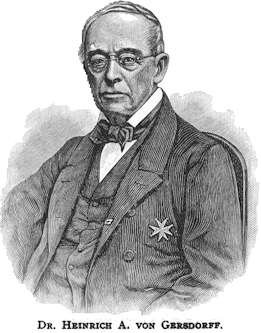
by him and his friend, Count de Gersdorf, who personally obtained
nearly one-half of the symptoms.
The so-called Oil of Amber (used by Dr. Holcombe
in hiccough) is Oleum Succinum, and should not be confounded with
Ambergris.
Characteristics :
For children, especially young girls who are excitable, nervous
and weak ; nervous affections, old people, nerves “worn
out” ; premature senility ; general functional
impairment.
Ailments of both extremes of life.
Lean, thin, emaciated persons who take cold easily ;
“dried up” ; nervous, thin, scrawny women
(Secale) ; nervous bilious temperament.
Great sadness, sits for days weeping.
Great bashfulness, very characteristic ; embarrassed in
company, in sick room.
The presence of others, even the nurse, is unbearable during
stool ; frequent, ineffectual desire, which makes her anxious.
After business embarrassments, unable to sleep, must get up (Act.,
Sep.).
Retires weary, yet wakeful as soon as head touches pillow.
Weakness ; lassitude ; numbness of single parts ;
one-sided complaints.
Ranula with fetid breath (Thuja).
Sensation of coldness in abdomen (Cal.) ; of single parts.
Cannot urinate in presence of other persons (Nat. mur.).
Discharge of blood between periods, at very little accident – a
long walk, after every hard stool, etc. ; nymphomania ;
severe pruritus, especially in lying-in.
Leucorrhśa ; thick, bluish-white
mucus, especially or only at night (Caust., Mer., Nit.
ac.).
Cough violent ; in spasmodic paroxysms, with eructations and
hoarseness ; < talking or reading aloud (Dros., Phos.,
Tub.) ; evening without, morning with expectoration (Bry., Carb.
v., Hep., Hyos., Phos., Puls., Sep.) ; whooping cough, but
without crowing inspiration ; < when many people are present.
Relations :
Antidoted by Camph., Cof., Nux, Puls., Staph., X-ray.
Ambra antidotes Staph., especially the voluptuous itching of
scrotum.
Nux antidotes the potentized Ambra.
Compare :
Calc., Nat. c., Tub. (coldness of abdomen) ; Cast., Asaf.,
Psor., X-ray, Val., defective reaction ; Coca, Fer., bashfulness
and blushing ; Mosch., Val., fainting, hysteric asthma ;
Act., Ign., night cough ; Iod., Nux, Tub., thin, emaciated,
nervous, irritable persons ; Ars., Tub., asthmatic
affections ; Phos., asthma, nervous, excitable, weak, irritable
patient, tall and slender ; Bov., flow every few days midway
between the periods : Lach., Rhus., Sepia, < from
overlifting ; Cof., Croc., China, Ign., Puls., Sec., Staph.,
Sulph., nervous hysterical affections ; Kali bi., Iod., itching
behind sternum in violent, racking, paroxysmal cough.
Carbo veg. and Petr. in lack of reaction in acute disease.
In cases of women who are excessively nervous and fail to react in
acute sickness.
Aggravation :
Warm drinks, warm room ; in the evening ; lying,
especially on the painless side (Arn., Bry., Calc., Puls.,
Rhus.) ; reading or talking aloud ; music ; the
presence of many people ; after waking (Lach., Sep.).
Amelioration :
After eating ; in the cold open air ; cold food and
drinks ; rising from bed, resting upon affected parts.Pains : tearing, drawing, sticking ;
with sensation of pressure.
The infant is weak, peevish and mentally deficient, thin and
emaciated, the image of a little dried-up old man.
The hair turns gray and falls ; the memory grows
unreliable ; comprehension is dull ; hearing, smell and
sight begin to fail ; nervousness, anxiety, melancholy ;
aversion to company or indifference to family and the affairs of
life are gradual steps in the path to senility. From defective
assimilation the tissues become impoverished ; from weak
circulation there is coldness of the extremities, numbness and
vertigo. These signs of senile decrepitude may be found to a greater
or less extent in any stage of life, and this is the sphere of
Ambra. –Farrington.
Mind :
Memory impaired.
Comprehension slow, has to read
everything three or four times and then does not understand it.
Is not able to reflect upon anything
properly, feels stupid.
Confusion of the head ; of the occiput.
Difficult thinking in the morning.
Distorted images, grimaces ;
diabolical faces crowd upon his fancy.
She is excited, loquacious ; erratic talking fatigues
her ; was unable to sleep at night, or averse to talking and
laughing.
Great sadness ; despondent, does not want to live.
Forced to dwell upon most disagreeable things ; sleepless in
consequence.
Melancholy, sits for days weeping ;
with great weakness, loss of muscular power and pain in the small of
the back and constipation.
Fears of becoming insane.
Despair ; loathing of life.
Anguish and sweat all over, at night.
Anxiety, oppression, nervous weakness with irritability and
impatience.
After business embarrassment cannot
sleep, must get up and walk about (Rhus r., Sep.).
Hurries too much while engaged in mental labor.
Embarrassed manner in company ;
blushing, bashful (Fer., X-ray, Tub.).
Cough worse when many persons are present.
The presence of other people aggravates the symptoms.
Sensorium :
Vertigo with feeling of weight on the
vertex ; < after sleep, < after eating.
She had to lie down on account of vertigo
and sensation of weakness in the stomach.
Music causes the blood to rush to the head.
Great weakness in the head with vertigo.
Head :
Pressure in forehead and vertex with fear of becoming crazy.
Tearing : in forehead ; in left temple up to
vertex ; in right frontal eminence and behind left ear.
Extremely painful tearing on top of head and apparently in whole
upper half of brain, with paleness of face and coldness of left hand.
Pressive drawing, ascending from nape of neck, and extending
through head towards forehead, considerable oppression remaining in
lower part of occiput.
Dullness in occiput.
Tearing pains predominate in head.
Rush of blood to head caused by music.
Weakness in head with vertigo.
Falling off of hair, hair turns gray
early.
On the right side of the head, a spot,
where the hair when touched pains, as if sore.
The scalp feels sore in morning, when awaking ; this is
followed by a sensation of numbness, extending over the whole body.
Eyes and Sight :
Dullness of vision, as if from looking through a mist.
Pressure and smarting in eyes, as from dust ; lachrymation.
Pressure on eyes, which are difficult to open, and pain in eyes as
if they had been closed too firmly, particularly in the morning.
Itching on eyelid as if a stye were forming.
Ears and Hearing :
Roaring and whistling in ears, in
afternoon.
Deafness of one ear.
Crackling in left ear (like the sound made when winding a watch).
Hearing decreases ; with cold
sensation in abdomen.
Violent tearing pain in and behind right auricle.
Tearing in right ear.
Crawling, itching and tickling in ears.
Music aggravates the cough.
Listening to music brings on congestion
to head.
Nose :
Dried blood gathered in nose.
Bleeding of the nose early in the
morning.
Nosebleed with menses.
Copious nosebleed early in bed, several
successive days.
Nose stopped up and paining as if sore internally.
Long continued dryness of the nose, frequent irritation as from
sneezing.
Face :
Paleness of face with headache.
Flushes of heat in face.
Heat in face with chill of other parts.
Tearing in the upper part of the face, particularly near the right
ala nasi.
Pimples, and itching in whiskers.
Painful swelling of the cheek on upper jaw, with throbbing in the
gums.
Jaundiced color of the face.
Spasmodic twitching of the facial muscles, lower part of
face ; in the evening in bed.
Lips hot.
Lips numb and dry, in the morning on awaking.
Cramp of the lower lip.
Teeth and Gums :
Drawing pain now in one and again in another tooth ;
increased by warmth, momentarily removed by cold ; not < by
chewing and passes off after a meal ; at the same time the inner
portion of the gums was swollen.
Bleeding of gums.
Mouth :
Bitter taste in mouth in morning and awaking.
Sour taste after drinking milk.
Pain as if sore, folds under the tongue, like small growths.
Ranula.
Tongue, bluish, lead colored (Ars.).
Fetor of mouth, worse mornings.
Blisters in mouth, pain as if burnt ; under the tongue, lumps
like small growths, which pain like excoriation ; smarting and
cracked painful condition of mouth ; on account of pain she could
not eat anything hard.
Accumulation of water in the mouth with cough.
Rasping, smarting pain in mouth when eating solid food (Phos.
ac.).
In the morning on awaking, tongue, mouth and lips as if numb and
dry (sensation of numbness in throat, Mag., Sulph.).
Tongue coated grayish-yellow.
Throat :
Sensation of rawness in region of velum
pendulum palati.
Rawness in throat with cough.
Tearing pain in palate, extending into left ear.
Dryness of throat in morning.
Sore feeling in throat during deglutition, and from outward
pressure, not when swallowing food, with tension of glands of throat
as if swollen.
Sore throat after exposure to a draught
of air ; stitching from the throat into right ear ; pains
particularly from motion of the tongue.
Tickling in throat which induces coughing.
Tickling in throat and thyroid body, during act of coughing.
Accumulation of grayish phlegm in throat,
which is difficult to hawk up, accompanied by rawness.
Hawking the phlegm from fauces produces vomiting and choking.
Papular-like eruption in pharynx.
Smarting at the back of the fauces when not swallowing.
When hawking up mucus in the morning, almost unavoidable retching
and vomiting.
Stomach :
Thirstlessness.
After breakfast, nausea.
After eating :
cough and gaping or gagging ;
anxiety ; pressure in pit of stomach, as if the food stuck and
would not go down (food descends slowly and gets into the larynx, Kali
carb.) ; food is felt until it enters the stomach (Alum., Bry.,
Phos.).
Aggravation from warm drinks, especially
from warm milk.
Better after eating : toothache ; oppression in
chest ; chill, etc.
After drinking milk : sour taste ; heartburn.
Belching with and after cough.
Eructations either empty, sour or bitter.
When walking in the open air heart-burn with balked eructations.
Eructations with cough, so as almost to
cause choking.
Belching removes pressure under scrobiculum.
Hiccough.
Sensation of coldness in the stomach.
After exposure to the cold in a sleigh-ride, had suffered
continually, summer and winter, for 14 years, with sensation of
coldness in the stomach ; has used all kinds of pads and warmers
without relief ; cured in 24 hours.
Heartburn : with abortive eructations ; when walking in
the open air ; from drinking milk, especially warm milk.
Every evening, sensation of disordered stomach and acrid risings
up to larynx.
Nausea after breakfast.
Vomiting and choking when hawking phlegm from fauces.
Pressure and burning under scrobiculum ; belching removes it.
Pressure in stomach and hypochondria.
Tension and pressure or stitches and pressure in the stomach.
Concussion in pit of stomach with the cough.
Weakness in stomach accompanying vertigo ; must lie down on
account of vertigo and a sensation of weakness in the stomach.
Abdomen :
Pressing pain in a small spot in the upper right side of the
abdomen, though not felt to touch.
Tearing pain in the region of the spleen, as if something were
torn away.
Pain in right hypochondriac region >
while lying upon it.
Tension and distension in abdomen after every mouthful he eats,
even after every mouthful of fluid.
Distended abdomen ; accumulation of much flatus, which
subsides without being passed.
Sensation of coldness in the abdomen.
Coldness of one side of the abdomen
(left) ; also with the deafness.
Colic, sometimes followed by diarrhśa.
Pressure deep in the hypogastrium after the evacuation.
Stool and Anus :
First copious, soft, light brown stools, after a few days’
constipation.
Constipation : Frequent ineffectual urging as in Nux vomica,
but attended by much anxiety at stool and a sense of marked coldness
in the abdomen, the patients being put to a great distress by the
presence of others in the room (near presence of others unbearable
while urinating, Nat. m.) ; after stool, aching deep in
hypogastrium ; itching and smarting in anus relieved by rubbing.
Diarrhśa preceded by colic.
Stool not hard, though large.
Frequent ineffectual desire for stool ;
this makes her very anxious, at
this time the presence of other persons becomes unbearable.
Large flow of blood with the stool.
Itching in anus.
Stitches in anus.
After the evacuation pressure deep in the hypogastrium.
Urinary Organs :
Frequent micturition at night (Lyc.) and in the morning after
rising.
Pain in bladder and rectum simultaneously.
Urine sour smelling ; urine turbid even when first passed.
Urine when emitted is clouded,
yellowish-brown and deposits a brownish sediment, after which the
urine looks clear and yellow ; coffee ground sediment.
Sour smelling urine.
Urinates three times as much as the drink taken, especially in the
morning ; followed by a dull pain in the region of the kidneys.
Sensations as if a few drops passed through the urethra.
During urination, burning, smarting,
itching and titillation in the urethra and vulva.
Male Sexual Organs :
A man, ćt. 80, gets asthma when
attempting coition.
Impotence.
Violent morning erections without desire, with numbness in the
parts.
Internal, strong, voluptuous sensation in genital organs.
Itching pimples over male genitals.
Sore rawness between the thighs.
Voluptuous itching on scrotum.
Female Sexual Organs :
Nymphomania : often with discharge of bluish-white mucus,
< at night, stitching in vagina preceding discharge.
Burning in sexual parts, with discharge
of a few drops of blood.
Stitches in ovarian region, when drawing
in abdomen or pressing upon it.
Discharge of blood between the
periods, at every little accident, at every hard stool or after a walk
a little longer than usual.
Menses early, the left leg becomes quite blue from distended
varices, with pressive pain in the leg.
Lying down aggravates the uterine symptoms.
Is said to cause uterine atony.
Suppressed catamenia.
Menses too early and too profuse.
Menses appear seven days before time.
Severe itching on the pudenda, must rub
the parts.
Soreness and itching, with swelling of
the labia.
During urination : itching,
titillation, burning of vulva and urethra.
Thick, mucous leucorrhśa, increased from
day to day, or leucorrhśa at night, of bluish-white mucus ;
preceding each discharge, a stitch in the vagina.
During pregnancy : nervous, restless ; pruritus vulvć.
Impending abortion.
Puerperal eclampsia.
Lessens the severity of the labor-pains.
In childbed obstinate constipation and
tenesmus ; abdomen puffed, causing much anxiety ; so nervous
she cannot attempt a stool in the presence of other people, not even
the nurse.
Revillout compares the general action of Ambra with that of Kali
bromatum.
The effect appears quicker after Ambra, but that of Kali bromatum
continues longer.
Ambra, therefore, is preferable for the removal of severe reflex
actions, infantile spasms, puerperal eclampsia.
Ambra quiets beautifully the nervous restlessness of pregnancy and
thus prevents convulsions ; it also retards uterine contractions.
Revillout recommends Ambra in pregnancy :
1. To prevent eclampsia.
2. To diminish too severe
labor-pains.
3. In too early labor or threatening
abortion.
But Ambra given too frequently and in too large a dose may also
produce uterine atony.
Ambra given in large doses may generally remove convulsions, from
whatever cause, and by diminishing nervousness acts favorably on
nervous persons, infants and young girls.
Here, then, is another case of involuntary Homśopathy.
Ambra produces in the healthy burning in the sexual parts, with
discharge of a few drops of blood ; menses set in a few days too
soon ; it produces discharge of blood at other times than the
catamenia, also fluor albus, and also perhaps ovaritis.
It also produces twitchings in muscular parts, spasms,
restlessness, infirmity, anxiety, oppression, nervous weakness with
irritability and impatience, twitching and jerkings in the
extremities, with coldness of the body and great debility, a state so
often found in females and excitable, weakly children, combined with
sleeplessness ; many dreams, frightened awaking, restless sleep
at night, general restlessness, irritability, anxiety and despair.
Respiration :
Titillation in larynx with spasmodic
cough.
Titillation in throat, larynx and
trachea, causing violent cough.
Hoarseness and roughness of the voice, with accumulation of thick,
tough mucus, easily thrown off by coughing.
Itching, scraping, and soreness of the
larynx and trachea.
Reading aloud or talking aggravates the cough.
Itching in thyroid gland ; itching behind the sternum causing
cough.
Tightness of the chest, cannot take a deep breath or yawn deeply.
Oppression felt in chest, and between
scapulć ; it subsides for a short time after eating.
Feeling of pressure in chest worse during exhalation.
Asthma of old people and children.
Asthma comes on while he is attempting
coition.
Whistling in chest during breathing.
Get out of breath with the cough, which
is spasmodic ; rush of blood to the head.Cough :
Spasmodic cough, loses her breath ; with rush of blood to the
head ; finally some phlegm comes up.
Cough in spasmodic paroxysms.
Hollow, spasmodic, barking cough ;
worse from talking or reading aloud ; with gagging after eating.
Spasmodic cough of elderly or emaciated
persons.
Paroxysms of cough coming from deep in
chest, excited by violent tickling in throat, evening without, morning
with expectoration, generally of grayish-white, seldom of yellow
mucus, of salty or sour taste ; tough grayish mucus ; worse
in the morning.
Violent spasmodic cough, with frequent
eructations and hoarseness ; with pain in region of spleen as if
something were torn off.
Lifting a heavy weight aggravates the cough.
Cough only at night, produced by an
excessive irritation in the throat.
Cough with eructations of gas so as almost to choke the patient
(Lach.).
Cough every evening with pain under the
left ribs, as if something was torn loose there.
Accumulation of grayish mucus, difficult to hawk up, accompanied
by rawness and almost unavoidable retching and vomiting.
Cough worse when many persons are present.
Cough causes concussion in pit of stomach.
Cough with emaciation.
A kind of whooping cough ;
paroxysmal but without crowing inspiration < after lying down.
Deep dry cough, with accumulation of
water in mouth, and subsequent rawness of the throat.
Choking and vomiting when hawking up
phlegm from the fauces.
Sputa yellow-white, cream-like ; a “sputum coctum.”
Collection of phlegm in the throat difficult to cough up.
Old coughs.
Scraping and tickling in the throat, larynx, down along the
windpipe causing violent cough with sensation of tightly adhering
mucus in the windpipe ; during breathing whistling in the
chest ; rough and hoarse voice ; collection of mucus in the
throat, difficult to cough up.
Cough mostly only at night from violent irritation, with
concussion of the pit of the stomach ; cough sometimes in
spasmodic paroxysms, with oppression of the chest, getting out of
breath, great restlessness, and afterwards a great deal of belching, a
kind of whooping cough.
In nervous persons it causes titillation in the larynx and
spasmodic paroxysms of cough ; whistling in the chest ;
spasmodic short breathing ; cardiac anguish and spasmodic
palpitation.
Chest and Lungs :
Pain in lower part of right chest relieved by lying on the back.
Lancination in chest extending to back.
Oppression of the chest extending to back between the scapulć.
Relieved a short while by eating.
Sensation of pressure deep in right
chest ; also in left chest or in upper part of chest.
Wheezing in the chest.
Sensation of rawness in chest.
Tearing pressure in left side of the chest.
Itching in chest.
Tightness of the chest, can neither yawn nor breathe deeply.
Sensation of a lump in chest.
Aching in the chest over epigastrium, as if parts had been
beaten ; relieved by eructations.
Violent, dull stitching pain in right mamma, interrupting
breathing.
Burning in the external parts of the chest.
Pressure in upper part of the chest, coming in regular paroxysms.
Heart and Pulse :
Anxiety at the heart, causing oppression
of breathing, with flushes of heat, oppression beginning in the heart.
Palpitation when walking in the open air, with paleness of face.
Violent palpitation, with pressure in
chest, as if a lump lay there, or as if the chest was stuffed up.
Pulse accelerated, with ebullitions.
He perceives the pulse in the body ; it feels like the tick
of a watch.
Outer Chest :
Burning on the chest.
Neck and Back :
Glands of the throat tense as if swollen.
Burning in left scapula.
Tearing in the left, or in both shoulders.
Rheumatic pains in the right side of the back.
Painful tension in the lumbar muscles.
Stitches in small of back, when sitting.
Stiffness in small of back after sitting.
Pain in small of back, with loss of muscular power and
constipation.
Upper Limbs :
Tearing in left shoulder joint.
Drawing, as if sprained and lame in the shoulder.
The arms go to sleep when lying on them,
when carrying anything in the hands or at night ; with numbness
especially of the left arm in rest, tingling in the thumb.
Tearing pains in the shoulder, elbow, forearm and hand.
Weakness of the fingers at night.
Stinging in hands and fingers, as from insects.
Drawing in fingers, and thumb.
Itching in palms of hands.
Cramps in hands, sometimes only when taking hold of anything.
Tips of fingers are shriveled.
Tearing, lancinating or itching in tips of fingers and thumb.
Skin on the fingers feels tense.
Long lasting icy coldness of hands.
Coldness of left hand with headache.
Finger nails brittle, with a very old
man ; they got soft ; elastic and pink.
Lower Limbs :
Tearing pain, first in left, than in right hip joint.
Sensation of contraction in right thigh ; the limb seems to
be shortened.
Tearing in nates, hip, knee, leg, ankle and foot.
Heaviness of the legs.
Strumming sensation in legs.
Sensation as if “gone to sleep” in both legs ; has
no firm step.
Cramps in legs and calves nearly every night.
Cold feet.
Gouty pain in ball of great toes.
Itching on inner border of sole of the right foot, not relieved by
scratching.
Sore and raw between the thighs,
and in the hollow of the knees.
Left leg becomes blue from distended varices during menses.
Tearing or rheumatic pains, in parts of all the limbs.
Uncommon twitching and coldness of the body, at night.
Uneasiness, like a crawling, with anxiety, only by day.
Weariness, with painful soreness of all the limbs.
Nerves :
Trismus neonatorum.
Restlessness.
Jerks and twitches.
Convulsions.
Epilepsy.
Infantile spasms.
Spasms and twitches in the muscular
parts.
Spasmodic complaints.
Arms and limbs “go to sleep”
easily.
Great lassitude, especially mornings in
bed.
Fainting.
Weakness of the whole body ; of the
knees, as if they would give way ; of the feet, with loss of
sensation ; in the stomach, so that she must lie down.
Great prostration after lingering fevers.
Chlorosis.
Loss of muscular power.
Vertigo and nervous apoplexy.
Paralytic complaints.
Numbness of the whole body.
When walking in the open air, an uneasiness in the blood and more
rapid circulation, with greater weakness of the body.
Conversation causes fatigue, heaviness of the head, sleepless,
oppression of the chest, sweat, anxiety ; tremor and
quivering ; nervousness and irritability.
B. W., ćt. 58, stout, florid, right side paralysed for five
years, walks with difficulty, dragging right foot ; vertigo, with feeling of great weight on vertex for
five years ; worse after sleeping ; sleepless after 1 A.
M. ; loss of memory ; loss of sense of smell ; numbness
of right side ; cold sweat on extremities, right foot colder than
left ; nausea in abdomen ; has had much grief, Ign., Con.,
Ver. b. ; little relief.
Ambra 200 (two doses dry) removed pain in vertex, vertigo and
nausea.
Sleep :
Cannot sleep, must get up ;
worriment from business embarrassment ; insomnia of business men.
Cannot sleep at night, yet knows not why.
Sleepy on retiring ; but as soon as
head touches the pillow is wide awake for hours, restless, tossing, or
simply unable to close the eyes.
Restless sleep, with anxious dreams.
Vexatious, anxious dreams and talking in
sleep ; awaken frightened.
Sleepless after 1 A. M.
Worse from too little sleep.
Twitching of limbs preventing sleep, and coldness.
Uneasy sleep from coldness and twitching.
Nearly every night cramp in calves.
Worse after sleep ; vertigo ; weight on vertex ;
whooping cough ; feels weak ; mouth dry ; weary, eyes
feel as if they had been closed too tightly.
When awaking : soreness of scalp ; lips numb and
dry ; bitter taste in mouth.
Early in bed ; nosebleed ; great lassitude.
Temperature and Weather :
< from warmth : toothache.
> from cold : toothache.
< in warm room : cough.
> from motion in open air.
< from warm drinks.
After exposure to draft of air ; sore throat.
When walking in open air : heartburn ;
palpitation ; uneasiness in the blood ; < weakness.
Took cold and had perspiration checked, after a thunder-storm, by
north wind in face ; tormenting cough for several weeks.
Fever :
Chill in forenoon, with lassitude and
sleepiness ; relieved by eating ; skin of whole body cold,
except face and genitals.
Chill of single parts of the body, with heat of the face.
Anxious flushes of heat returning every
quarter hour ; most violent towards evening.
Profuse sweat at night, worse after midnight and most on the
affected side.
Profuse sweat, particularly on the abdomen and thighs, during
exercise.
Malignant fevers.
Skin :
Itching.
Jaundiced color of face.
Burning in skin ; the tips of the fingers become shriveled.
Soreness of a wart on the finger.
Numbness of the skin.
Burning herpes.
Leprous complaints.
Itching pimples in whiskers.
Sore and raw between legs and in hollow of knees.
Distended varices on leg during menses.
Reproduces the itch-eruption.
Nervous itching over the whole body, especially the mucus outlets
of the body.
Article