Some
Reflections On The Origins Of Hahnemann’s Ideas
by Peter MorrellPortwrinkle, 26 July 1999
‘The publication [in 1797] of Friedrich Schelling’s ‘First Draft of a
System of Natural Philosophy’ was contemporary with the records in which Hahnemann neatly
and conscientiously assembled and numbered his observations of the symptoms excited in
himself and his children by the most varied of medicines.’ [Gumpert, p.114]——o0o——
Immanuel Kant [1724-1804]With regard to the origin of Hahnemann’s ideas, there are two themes,
which we can briefly explore. One relates to the influence of Kant upon his writing, and
indeed of other eighteenth century German idealists. Second, there is the weird
philosophical milieu of Germany in the 1780s and 1790s, which could best be described as
ambiguous. Both themes seem considerably to pervade Hahnemann’s ideas.In relation to the first of our two themes we can say that probably no
other single event in the history of philosophy, and in the history of German philosophy,
was as important as the publication in 1781 of Kant’s Critique of Pure Reason, which
‘raised him to the foremost position among living philosophers’ [Rogers, p.376]. It placed
him in the firmament of German Idealists for all time. At that time, Hahnemann was just
embarking upon his ‘systematic disenchantment’ with allopathy and wondering, no doubt, if
there would ever be found any clear ‘guiding principles’ for the practice of medicineIt seems that it was probably Kant’s work that inspired Hahnemann to
formulate his homeopathic ideas into an aphoristic style. He cannot really have failed to
have seen Critique of Pure Reason and probably read it.‘…for Kant, the truths of the intellect are subordinate to the
truths of the practical will…scientific reason [has] the right to induce belief.’
[Rogers, p.398]These were ideas that would most certainly have found fertile ground in
the thinking of Samuel Hahnemann in the 1780s and 1790s. Indeed, we read in Hobhouse
[pp.104-5] that Hahnemann liked Kant’s writings and expressed this in a letter to von
Villers.‘Not a word is mentioned about Goethe or Schiller.’ [Haehl, vol. 1,
p.250]‘From his schooldays onwards he had followed Descartes, Spinoza and
Leibnitz…and then proceeded to vitalism and to the naturalism of Schelling and
Hegel…Wunderlich says in his ‘History of Medicine’ that the naturalist philosophy of
Hegel and Schelling movement actually afforded help to the rise of homeopathy…’ [Haehl,
vol. 1, pp.251-2]Yet any influence by Hegel must have been minimal, for he comes just too
late to have any big impact. His first major work, ‘The Phenomenology of Mind‘,
appeared in 1807,
by which time homeopathy was already up and running, and the Organon all but written.
Kant’s influence therefore still seems central [see also Ledermann, 1944, pp.82-6; 1961,
pp.274-6; 1957, p.169; and Ledermann, 1970, for in-depth discussion].Hahnemann clearly intended his Organon (first published 1810) to
become refined over time such that its principles could be amplified, clarified and updated,
to be elevated eventually to the status of ‘natural laws’. That he wrote a further five
editions over the next thirty years, might well be seen as good evidence of this tendency to
revise and elevate. The Organon was clearly modelled on some profound philosophical
works [e.g. Bacon’s Novum Organum; see Close, p.15, pp.27-28, pp.248-9] and he seems
to have
regarded the veracity of its aphorisms as sacrosanct:‘…the ‘Organon of the Art of Healing’ – is presented in sections
after the manner of a legal code. [its]…sections manifest the notable and intimidating
terseness of legal paragraphs, which, despite their unequivocal and final character, can
scarcely be understood without prolific commentaries. Many authoritative minds have
expounded them, and have read into them profound significance or nonsense, according to
their own estimate.’ [Gumpert, p.133]It is also true that this tendency to formulate natural laws was at that
time very common, for example in Optics and Chemistry in particular, but also in natural
science generally. Moreover, Hahnemann was keenly aware of all developments taking place in
science, especially his beloved chemistry. Post-Enlightenment, it was a time of great
systematisation of knowledge in all fields and the building up of grand systems for the
first time.Thus, quite apart from Kant, the Organon actually has two origins.
First, it was Hahnemann’s personal idea to formulate his ideas and system of medicine into a
series of aphorisms, to make it into a system of medicine based upon clear principles, which
in his view allopathy certainly was not. This stemmed very largely from the dogmatic, fussy,
high-principled or pedantic side of his nature. Second, he had around him in the world,
hosts of other scientists doing exactly the same thing in various other fields of endeavour.
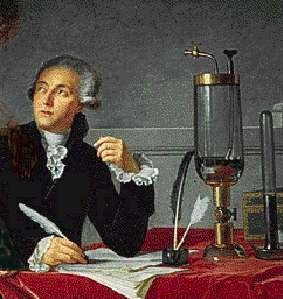
Antoine Lavoisier [1743-94]These include Michael Faraday [1791-1867], Joseph Priestley [1733-1804],
John Dalton [1766-1844], Antoine Lavoisier [1743-94] and Karl Scheele [1742-86] in
Chemistry. Hahnemann is reported to have met Lavoisier in Dresden c.1786, and to have
corresponded with him [Hobhouse, 1933, p.59].In Botany, there was Carolus Linnaeus [1707-78], in Zoology, Georges
Cuvier [1769-1832] and Jean-Baptiste Lamarck [1744-1829] and in Geology, Sir Charles Lyall
[1797-1875]. This 18th century phase of prolific experimentation was in turn founded upon
the pioneering work of earlier figures like Bacon [1561-1626], Galileo [1564-1642],
Descartes [1596-1650] and Newton [1642-1727], who first set thinkers down the road towards
experimentation, and away from Church dogma, as sources of ideas and their confirmation.“Galileo established a new criterion for truth: truth was only
that what [in principle] everyone could test for himself and see to be true. The means
used for this was the experiment, that magnificent invention of the western world, brought
to perfection by Galileo…before Galileo, theoretical definition was the prime criterion
for truth…the completely new element brought in by Galileo had to do not so much with
method as such, but rather with truth and authority…’the leitmotiv of Galileo’s work as
I see it was his passionate opposition to belief based on authority.'[Einstein]…”
[Pietschmann, pp.156-7]
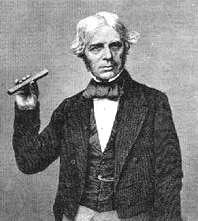
Michael Faraday [1791-1867]Therefore, the development of his ideas into a grand system was not only
his own idea, but also part of a ‘tide of the times’ or ‘zeitgeist’: an impulse pushing many
others along. Experimentation led to the establishment of principles and laws and in this
manner the fabric of science theory was gradually woven c.1700-1900 [see Russell, 1943;
Rogers, 1935; and Tarnas, 1996]. Hahnemann undoubtedly drew on the atmosphere of his times.In relation to our second theme, the following quote from Berlin supports
the view that Hahnemann was not only living through a time of medical uncertainty, but also
through a period of general ‘intellectual directionlessness’, which pervaded the heart and
soul of Germany at that time.‘This faith in the powers of reason and science was by no means
universally held, even in the mid-eighteenth century in western Europe…the first
formidable attack upon it, uncompromising, violent and fraught with lasting consequences,
came from Germany…a backlash against the French cultural domination of the western
world…a growing consciousness of their own provincialism…a sense of inferiority…the
pietists, profoundly unpolitical in temper, contemptuous of the world and its
varieties…suspicious of hierarchy, ritual, learning and rational explanation …much of
this sentiment was probably at the root of the revulsion against the materialism,
utilitarianism, ethical naturalism and atheism of the French lumieres, which one finds in
such thinkers as Hamann, Lavater, Herder and, indeed, Kant himself. They and their
disciples Jacobi, Fichte, Schelling, Baader, were in fact the philosophical wing …of
pre-romanticism and, indeed, romanticism itself.’ [Berlin, 1997, pp.164-5]
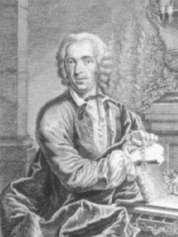
Carolus Linnaeus [1707-78]An ambiguity arose because of strongly anti-rationalist elements emerging
at that time in German culture, and a general backlash against firstly the general eagerness
with which so many were embracing the ‘new certitudes’ of the Enlightenment and secondly
against the French intellectual domination which the Enlightenment involved.‘[The Organon] gives clear expression of Hahnemann’s originality,
but is also the product of a mind steeped in the ideas of the eighteenth-century
Enlightenment, and informed by the liberal humanitarianism of Jean-Jacques Rousseau…’
[Handley, 1990, p.3]
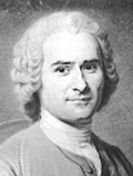
Jean-Jacques Rousseau
[1712-1778]This was a time of the emergence of a great divide between Enlightenment
and Romantic philosophers [Tarnas, pp.367-75] and it seems likely to me that in its origins
and its general flavour, homeopathy became imbued with strong elements of both movements,
while being neither entirely one nor the other. In this respect, exactly in Berlin’s sense
as stated above, Hahnemann’s system very accurately mirrors the history of his day, its
underlying ambivalence and uncertainty, and the ‘cultural schizophrenia’ of his fellow
countrymen in the latter half of the 18th century.On the one hand, homeopathy arose as a powerfully rational critique and a
genuinely scientific revision of ‘Old Physic’, and yet on the other it happily retains
nebulous heresies like ‘spiritualised substance’, ‘potency energy’, succussion, ‘case
totality’ and ‘vital forces’, ideas which are entirely alien to rational science.‘Day after day, he tested medicines on himself and others. He
collected histories of cases of poisoning. His purpose was to establish a physiological
doctrine of medical remedies, free from all suppositions, and based solely on
experiments.’ [Gumpert, p.92]
Georges Cuvier [1769-1832]In one sense, therefore, homeopathy tilts strongly towards Enlightenment
and Reason – chiefly through using empirical investigations like provings – and in the other
it embraces the blurred mysticism and dreamy pastoralism of the Romantics. And even today,
it still retains this weird ambivalence which gives it an almost equal appeal both to
rationalists and to romantics. Thus, it is no surprise to still find a somewhat divided
movement, with rational scientists residing at one pole, and assorted New Age dreamers and
Druids at the other. It still seems as ideologically split as a movement as it was in its
origin. That combination still makes it a very attractive and very interesting ideology.The Essence of Hahnemann’s Spirit of Inquiry
John Dalton [1766-1844]By way of summary, we can state several important features about
Hahnemann and the foundation of homeopathy. Firstly, he was clearly in possession of a
formidable intellect, brilliant linguistic skills and he was very absorbed by science, even
in the modern sense. He was scientific in that primary and fundamental sense of boldly
rejecting received dogmas from the past about the nature of truth and the world, and
strongly favoured the confirmation of ideas through experiment and observation in the outer
world. Hahnemann certainly possessed that elevation of sense data and observations as the
sole arbiters of truth, which lies at the very heart of natural science. In that sense he
was profoundly scientific and probably more scientific than most of his medical
contemporaries. In this sense, he was also typical of the Enlightenment. Like Kant, he also
felt that profound truths could be laid out in a logical framework of aphorisms.That he thoroughly detested medical systems of ideas and speculations is
very apparent in all his writings:‘No learned brains could unravel the skein of hypotheses and
theories which entangled the professors and set them all at odds…there were no
experiments, there was no painstaking research; there were only odd and eccentric systems
which were exalted into dogmas, without any possibility of testing senseless methods of
treatment.’ [Gumpert, p.15]Hahnemann’s clear understanding of the dismal value of ‘medical systems’
is yet further illustrated by the following quotes:‘There was now the influence of the stars, now that of evil spirits
and witchcraft; anon came the alchymist with his salt, sulphur and mercury; anon Silvius,
with his acids, biles and mucus…our system-builders delighted in these metaphysical
heights, where it was so easy to win territory; for in the boundless region of speculation
every one becomes a ruler who can most effectually elevate himself beyond the domain of
the senses.’ [Aesculapius in the Balance, 1805, in Lesser Writings, p.421-2]‘Physiology…looked only through the spectacles of hypothetical
conceits, gross mechanical explanations, and pretensions to systems…little has been
added…what are we to think of a science, the operations of which are founded upon
perhapses and blind chance?’ [Aesculapius In the Balance, 1805, in Lesser Writings,
pp.423-6]‘…because they placed the essence of the medical art, and their
own chief pride, in explaining much even of the inexplicable…this was the first and
great delusion they practised upon themselves and on the world. This was the unhappy
conceit which, from Galen’s time down to our own, made the medical art a stage for the
display of the most fantastic, often most self-contradictory, hypotheses, explanations,
demonstrations, conjectures, dogmas, and systems, whose evil consequences are not to be
overlooked…’ [On the Value of the Speculative Systems of Medicine, 1808, in Lesser
Writings, pp.489-90]
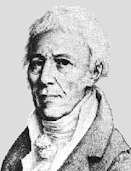
Jean-Baptiste Lamarck
[1744-1829]Yet, there is no doubt that he did have a distinct ‘system-building’
tendency of his own. like many of his contemporaries, he seems to have enjoyed the
aesthetics of delineating great principles and building them up into a tower of ideas. His Organon
is undoubtedly the best testament to that impulse. It is unfortunate that some historians
continue, even today, in simplistically interpreting this impulse as the sole basis for
Hahnemann’s ‘invention’ of homeopathy as just another ‘medical system’:‘The manner in which critical methods undermined the old order is
well illustrated by the history of homeopathy. This system was established in Germany
during the last days of the ‘naturphilosophie’, and was characterized like the others by a
monistic pathology and therapeutics. All diseases save two were viewed as forms of psora
or ‘the itch’ and a single scheme of treatment was recommended for all cases…’ [Shryock,
1936, p.160]‘Hahnemann had cast homeopathy in substantially the same eighteenth
century mold that had given shape to the systems of Cullen, Brown and Rush; as regular
physicians assessed it, homeopathy offered an unambiguous example of extreme rationalism
informing a dogmatic system of practice with dire consequences.” [Warner, 1986,
pp.52-3]Yet it is fairly clear that, unlike many of his contemporaries, he
conceived this impulse not as an end in itself, to create a ‘medical system’ based upon
speculation-an approach he detested-but springing directly from his practical
experimentation.“Samuel Hahnemann was not only a physician at war with the
medical practices of his time, he was also a great experimental scientist. He observed and
collected his observations until gradually a pattern showed itself…observation alone is
not sufficient, it must be coupled with right relating, relating in right order until we
arrive in the Goethean sense at the idea, the underlying principle or pattern of a thing –
the ‘urphenomenon’.” [Brieger, p.241]From Hahnemann’s Preface to the 2nd Organon:
‘…the splendid juggling of so-called theoretical medicine, in
which a priori conceptions and speculative subtleties raised a number of proud
schools…the art of medicine was merely a pseudo-scientific fabrication, remodelled from
time to time to meet the prevailing fashion.’ [ibid., p.xv]In Aphorism 6, he bemoans the
‘…futility of transcendental speculations which can receive no
confirmation from experience..’ [ibid., p. 32]And, as Dr. Krauss candidly states in his Introduction to the 2nd Organon:
‘Hahnemann was, in all essentials, a flawless experimenter.’ (p.
xxiv)‘The era of scientific medical experimentation begins with Hahnemann
and nobody else. Scientific to the core, Hahnemann experimented scientifically for
scientific observation…’ [ibid., p. xxvii]Finally, Hahnemann states in the Preface to his 2nd Organon:
‘The true healing art is in its nature a pure science of experience,
and can and must rest upon clear facts and on the sensible phenomena pertaining to their
sphere of action.’ and that it ‘…dares not take a single step out of the sphere of pure,
well-observed experience and experiment, if it would avoid becoming a nullity, a farce.’
[ibid., p. xiv]
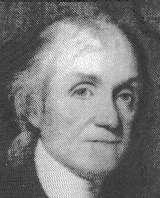
Joseph Priestley [1733-1804]These quotes clearly demonstrate that we should regard Hahnemann as a
scientist in the most modern sense and in no way did he devise or invent homeopathy as a
speculative ‘system’ in the manner Warner suggests. Yet, the temptation for Hahnemann to
have simply ‘thrown in the towel’ and revert to the allopathic mode of practice, must, at
times, have been overwhelmingly strong. We can only admire Hahnemann’s astonishing
determination to get on with the task he had set himself and to be wholly undistracted by
every force, which tried to oppose him. His will-power and drive must have been exceptional
and there are many people who would have broken under the pressure he faced or who would
simply have done something else less arduous. He firmly believed that he was creating a
revolutionary new system of medicine for humanity. Frustratingly for his followers, he was
addicted to experimentation and improvement and never stopped changing his ideas and
techniques right up to the last [see Handley, 1997]. The significance of this is that while
most speculators freeze their ideas into a dogmatic system they are then most unwilling ever
to change, Hahnemann proved his credentials as primarily an experimentalist, by constantly
revising his medical system in the light of new experience.Sources
Berlin, Isaiah, 1997, Against the Current – Essays in The
History Of Ideas, Pimlico, London
Brieger, Dr Johanna, 1961, Methodological Obstacles In Homeopathic Research, BHJ 50,
pp.239-45
Close, Stuart, 1924, The Genius of Homeopathy, Lectures and Essays On Homeopathic
Philosophy, Jain Reprint, India
Einstein, Albert, 1952, Preface to Galileo’s Dialogue of the Two Principal World Systems,
German edition
Gumpert, Martin, 1945, Hahnemann – The Adventurous Career of a Medical Rebel, L B Fischer
Publ. Corp, New York, translated from the German by Claud W Sykes
Hahnemann, Samuel, 1805, Aesculapius in the Balance, in Lesser Writings,
p.421-2 [Hahnemann’s Lesser Writings, 1851, Edited by R E Dudgeon, London, Jain reprint]
Hahnemann, Samuel, 1808, On the Value of the Speculative Systems of Medicine, in Lesser
Writings, pp.489-90
Hahnemann, Samuel, 1841, The Organon, combined 5th/6th Edition Edited by Boericke and
Dudgeon, Jain Reprint,
Haehl, Richard, 1922, Samuel Hahnemann His Life & Work, 2 volumes, Jain Reprint
Handley, Rima, 1990, A Homeopathic Love Story, North Atlantic Books, USA
Handley, Rima, 1997, In Search of the Later Hahnemann, Beaconsfield, UK
Hobhouse, Rosa, 1933, Life of Samuel Hahnemann, Harjeet, India
Ledermann, E K, 1944, The Philosophical and Scientific Basis for Allopathic &
Homeopathic Medicine, BHJ 34:2/3, Sept 1944, pp.76-94
Ledermann, E K, 1957, Implications of Hahnemannian Homeopathy, BHJ 46:4, October 1957,
pp.166-70
Ledermann, E K, 1961, Body, Mind & Spirit, BHJ 50:4, October 1961, pp.273-81
Ledermann, E.K, 1970, Philosophy and Medicine, Tavistock/Lippincott, London/Philadelphia
Morrell, Peter, 1998, Hahnemann As Scientist, Similia, Australia
Pietschmann, Dr Herbert, 1983, Medicine – A Discipline Between Art & Science, BHJ 72.3,
July 1983, pp.155-61
Rogers, Arthur Kenyon, 1935, A Student’s History of Philosophy, MacMillan, New York
Russell, Bertrand, 1943, A History of Western Philosophy, Unwin, London,
Shryock, Richard Harrison, 1936, The Development of Modern Medicine, Univ. Penns Press, USA
Tarnas, Richard, 1996, The Passion of the Western Mind, Pimlico, London
Warner, John Harley, 1986, The Therapeutic Perspective, Medical Practice, Knowledge and
Identity in America 1820-85, Harvard Univ. Press, USA
Article